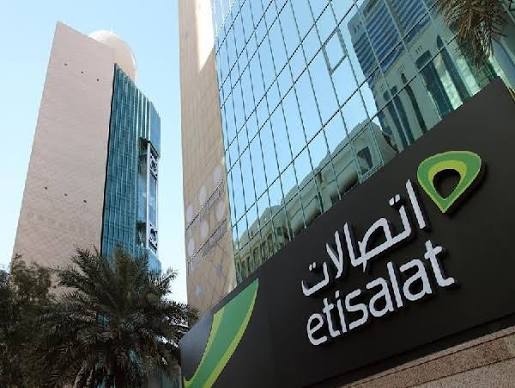
For decades, almost everyone in the UAE knew Etisalat as a telecommunications company.
It connected homes.
It provided mobile services.
It helped build the communications infrastructure that supported the country’s rapid development.
That business remains enormously important.
But the company now known as e& wants to be understood very differently.
The group is transforming itself from a national telecom operator into a global technology organisation operating across telecommunications, enterprise digital services, fintech and consumer technology.
That transition makes e& one of the most interesting corporate transformation stories in the UAE.
The Company Began With Connectivity
The group’s history dates to 1976.
At the time, telecommunications meant fixed telephone infrastructure far more than smartphones, cloud platforms or artificial intelligence.
The UAE itself was still at an early stage of development.
Telecommunications infrastructure became essential as new cities, businesses and government institutions expanded.
Over several decades, the company helped connect a rapidly growing country.
Mobile networks later transformed communication again.
Broadband and fibre created another wave.
Each technological generation expanded the company’s role.
The Rebrand Signalled a Much Bigger Ambition
Moving from Etisalat Group to e& was more than a visual rebranding exercise.
The name change reflected a strategic decision to build a broader technology group.
Traditional telecom operators face a difficult problem.
Connectivity remains essential, but mobile and broadband markets eventually mature.
Growth slows when almost everyone already has a phone subscription and internet connection.
Digital services offer another route.
Payments, cloud technology, cybersecurity, AI and enterprise solutions can grow beyond the limitations of traditional telecom.
e& is increasingly pursuing all of them.
Telecommunications Still Provides the Foundation
The transformation does not mean the core telecom business has become unimportant.
Quite the opposite.
Telecommunications provides the scale, cash flow, network infrastructure and customer relationships supporting the wider strategy.
By the second quarter of 2026, the group reported approximately 251.5 million subscribers.
The UAE operation alone served around 16.5 million subscribers.
This enormous user base gives e& something technology startups often spend years trying to build: direct relationships with hundreds of millions of customers.
The International Footprint Is Huge
e& operates across dozens of markets spanning the Middle East, Asia, Africa and Central and Eastern Europe.
This geographic reach changes the company’s economics.
It reduces dependence on the relatively small UAE population.
It creates exposure to markets where mobile data consumption and digital services can continue growing rapidly.
It also gives the group a platform through which new financial or technology products can potentially be distributed.
A successful digital service developed in one country may eventually be expanded across several others.
Revenue Is Increasing Alongside the Transformation
e& generated consolidated revenue of AED 38.1 billion during the first half of 2026.
Its subscriber base continued expanding, while EBITDA reached AED 17.7 billion.
These figures demonstrate that the transformation is being carried out from a position of substantial financial strength.
The company does not need to abandon telecommunications in order to pursue technology.
Instead, the telecom business can help finance new growth areas.
This is a major advantage compared with younger technology companies dependent on continual external funding.
The UAE Network Remains Strategically Important
Within its home market, e& continues investing heavily in network technology.
The UAE has consistently pursued advanced mobile and fibre infrastructure.
This supports far more than consumer internet use.
Factories, autonomous systems, smart-city applications, logistics platforms and AI-enabled services all depend on connectivity.
As 5G develops and research toward 6G continues, the distinction between telecom infrastructure and national digital infrastructure becomes increasingly small.
Networks are becoming the foundation on which other technologies operate.
AI Is Becoming Part of the Network Itself
Artificial intelligence is influencing e& at several levels.
It can improve customer support and personalise services.
It can also optimise network performance.
Telecommunications networks generate enormous volumes of data.
AI systems can analyse traffic, identify potential faults and allocate resources more efficiently.
Looking further ahead, next-generation networks are expected to integrate AI far more deeply into their architecture.
This means e& is not simply using AI as another software application.
Artificial intelligence could become part of how the network operates.
Enterprise Technology Is a Major Growth Opportunity
e& enterprise serves governments and large organisations undergoing digital transformation.
This business includes cloud services, cybersecurity, data, AI and other advanced digital solutions.
The opportunity is significant.
Every organisation is becoming more technology-dependent.
Banks need secure digital platforms.
Governments need connected infrastructure.
Retailers need data systems.
Healthcare providers require secure information networks.
Industrial companies are increasingly automating operations.
Instead of selling these organisations only connectivity, e& can provide larger portions of the technology stack.
Cybersecurity Is Becoming Essential
The more digital an economy becomes, the more exposed it becomes to cyber risk.
Governments, banks, hospitals and businesses cannot simply connect everything without protecting those systems.
Cybersecurity therefore forms a natural extension of a telecommunications and enterprise technology business.
e& already manages large networks where security is critical.
Expanding into managed cybersecurity allows the group to use that experience as a commercial service for other organisations.
Demand is likely to increase as cyber threats become more sophisticated.
Cloud Services Expand the Relationship With Businesses
Companies increasingly move computing workloads away from local servers and into cloud environments.
This changes the role of telecom providers.
Instead of supplying only internet connections between offices and data centres, technology groups can help manage the infrastructure itself.
Cloud services create longer and deeper customer relationships.
A business may depend on its technology provider for networking, applications, cybersecurity and data management simultaneously.
This model can produce significantly more value than selling bandwidth alone.
Fintech Opens an Entirely Different Market
Financial technology represents another important part of the strategy.
Digital wallets and payment platforms are becoming common across emerging markets.
Telecommunications groups have an advantage because they already serve enormous customer populations and process recurring payments.
e& money is one example of the group moving beyond telecom into financial services.
Digital financial products can include payments, salary solutions, transfers and other everyday services.
If executed successfully, fintech can become an important ecosystem around the telecom customer relationship.
Financial Services Can Reach Underserved Customers
This opportunity becomes even larger internationally.
In some markets, consumers may have a mobile phone before they have a conventional bank account.
Mobile financial platforms can therefore provide services to customers who are poorly served by traditional financial institutions.
Telecom companies have demonstrated this model successfully in several parts of Africa and Asia.
For e&, its international footprint provides potential access to these kinds of opportunities.
Consumer Technology Extends the Brand Beyond Connectivity
e& is also building consumer digital products that are not simply mobile subscriptions.
Entertainment, applications, fintech and other services can make the company part of a customer’s everyday digital life.
This is strategically important.
Traditional telecom relationships can be relatively invisible.
Customers care about connectivity primarily when it stops working.
Digital services create more frequent interactions.
The company becomes something customers actively use rather than infrastructure operating quietly in the background.
International Investments Accelerate Expansion
Rather than building every new market position organically, e& has increasingly used investments and acquisitions.
This allows the group to gain exposure to established telecom and technology businesses much faster.
International expansion also provides access to new expertise and customer segments.
However, operating across many countries creates complexity.
Regulation differs.
Currencies fluctuate.
Political and economic conditions vary.
The challenge is converting geographic scale into consistent value.
Technology Groups Need Talent as Much as Infrastructure
The transition from telecom operator to technology company also changes the workforce.
Network engineers remain essential.
But the company increasingly needs AI specialists, cybersecurity professionals, cloud architects, software developers and data scientists.
Competition for these skills is global.
The UAE’s broader effort to attract technology talent therefore directly supports companies such as e&.
A successful technology strategy ultimately depends on people capable of designing and operating the systems.
The UAE Provides an Ideal Home Market
The UAE is unusually supportive of e&’s transformation.
Government services are highly digital.
Consumers adopt technology rapidly.
Smart-city initiatives create demand for connected infrastructure.
Businesses invest heavily in AI and cloud systems.
The country also serves as a regional headquarters for multinational companies.
This gives e& a sophisticated home market in which it can test and develop new services before expanding them internationally.
6G Could Create the Next Major Shift
Telecommunications technology continues evolving.
5G is still expanding, but research has already moved toward 6G.
Future networks are expected to support far more connected devices, intelligent automation and extremely advanced low-latency services.
The exact commercial applications will develop over time.
However, previous generations show how important these changes can be.
3G helped expand mobile internet.
4G enabled streaming and app-based businesses.
5G supports much more advanced machine connectivity.
6G could create another wave of entirely new industries.
The Brand Has Become Much Bigger Than Its Original Name
The transformation from Etisalat into e& reflects a wider change in the technology sector.
Telecom companies once sold calls and data.
Now they increasingly compete in cloud services, finance, cybersecurity, digital entertainment and artificial intelligence.
The network remains the foundation, but the opportunity above the network is much larger.
e& is attempting to capture that opportunity before traditional telecom growth becomes limiting.
Why e& Matters
e& matters because few UAE companies touch as many people every day.
Its networks connect millions of local customers and hundreds of millions internationally.
Its enterprise operations support companies and governments.
Its financial technology businesses are entering payments and digital finance.
Its investments in AI, cloud and future networks connect it directly to the next stage of the UAE’s digital economy.
The company’s original mission was essentially connectivity.
Its new ambition is much broader.
e& wants to become one of the global technology groups through which people communicate, work, pay and interact with digital services.
If that transformation succeeds, the company once known primarily as the UAE’s telephone operator could become one of the country’s most internationally influential technology businesses.
Contributed by GuestPosts.biz.