Islamic banking was once viewed by some international investors as a specialised corner of finance.
That description is becoming increasingly outdated.
Across the Gulf, Sharia-compliant banking has moved firmly into the financial mainstream.
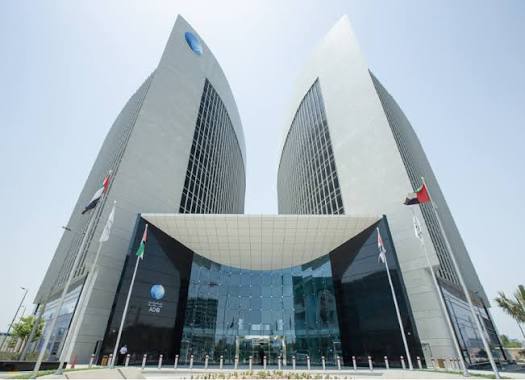
Abu Dhabi Islamic Bank, better known as ADIB, is one of the clearest examples.
The bank now serves retail customers, corporations, institutions and wealthy individuals while operating with a balance sheet exceeding AED 300 billion.
Its growth demonstrates that Islamic finance no longer needs to choose between religious principles and modern banking scale.
It can compete directly on technology, customer experience, profitability and product innovation.
ADIB Has Become One of the UAE’s Largest Banks
ADIB crossed a major milestone in the first half of 2026 when total assets reached AED 304 billion.
That represented year-on-year growth of 17 percent.
Gross customer financing reached AED 210 billion, while customer deposits increased to AED 246 billion.
These numbers place ADIB firmly among the UAE’s major financial institutions.
Scale matters in banking.
A larger balance sheet allows the bank to finance bigger businesses, participate in major transactions and invest heavily in technology.
It also creates the financial resilience required to compete in increasingly sophisticated markets.
Islamic Banking Follows a Different Financial Framework
The most obvious difference between ADIB and a conventional bank is the structure of its products.
Islamic finance avoids interest in the traditional sense and instead uses Sharia-compliant structures such as Murabaha, Ijara and other financing arrangements.
The underlying principle is that financial transactions should be connected to real economic activity and follow Islamic ethical rules.
For customers, the practical experience may sometimes resemble conventional banking.
They can finance a home, buy a car, use cards or manage savings.
The financial structure behind the product is different.
This allows ADIB to serve customers seeking banking services consistent with Islamic principles without asking them to give up modern convenience.
The Customer Base Is Growing Quickly
ADIB added approximately 125,000 new customers during the first half of 2026 alone.
That growth is important because banking relationships often last for many years.
A customer may begin with a salary account.
Later, they may require home finance, investments, business services or private banking.
Acquiring a customer therefore creates opportunities far beyond the first product.
Rapid customer growth also suggests Islamic banking is appealing to a broad audience rather than remaining limited to a narrow group.
Retail Banking Remains a Core Strength
ADIB has a strong retail franchise.
Its services cover accounts, cards, car finance, home finance and other everyday financial products.
This is particularly valuable in the UAE.
Population growth continuously creates new banking demand.
Professionals relocating to Abu Dhabi or Dubai need accounts quickly.
Families may later require home financing.
Consumers use cards and digital-payment services.
The bank can expand simply by participating effectively in the country’s growing population and economy.
Retail Financing Has Expanded Significantly
By the middle of 2026, ADIB’s retail financing portfolio had reached approximately AED 104 billion.
This growth reflects demand across several customer categories.
Personal finance, property and vehicle purchases all contribute.
Retail lending can provide attractive returns, but it also requires disciplined risk management.
Thousands of individual customers create a very different risk profile from a handful of large corporate borrowers.
The bank therefore needs strong credit systems capable of evaluating customers efficiently while managing defaults.
Wholesale Banking Is Growing Even Faster
ADIB is not simply a consumer bank.
Wholesale financing increased strongly in the first half of 2026.
The bank participates in financing for large corporations, government-related entities and institutional customers.
This is strategically important because Abu Dhabi is home to some of the region’s largest companies.
Energy, infrastructure, real estate, healthcare and industrial projects frequently require substantial funding.
A major Islamic bank can structure Sharia-compliant financing for these activities.
This allows Islamic finance to operate at the same scale as conventional corporate banking.
Government-Related Entities Form an Important Part of the Portfolio
ADIB’s financing portfolio includes significant exposure to government-related organisations.
In the UAE, this can connect the bank to large strategic projects.
Government-linked companies operate across energy, transportation, property, utilities and technology.
Financing these organisations gives the bank exposure to projects linked directly to national development.
However, concentration still needs to be managed carefully.
Even strong institutional customers need disciplined credit analysis.
Deposits Provide a Strong Funding Base
Customer deposits reached AED 246 billion by the middle of 2026.
A strong deposit base is one of the most valuable assets a bank can possess.
Deposits provide funding that can then be used for financing activities.
Current and savings accounts are particularly attractive because they often have lower funding costs.
ADIB reported that these accounts represented approximately 64 percent of total deposits.
This gives the bank a relatively stable and cost-efficient funding structure.
Profitability Has Remained Exceptionally Strong
ADIB reported net profit before tax of AED 4.3 billion for the first half of 2026.
Profit after tax reached AED 3.8 billion.
Revenue increased to AED 6.5 billion.
Perhaps more strikingly, return on equity remained around 28 percent.
ROE measures how effectively a company generates profit from shareholder capital.
A figure at this level is unusually strong for a large bank.
It demonstrates how profitable ADIB’s combination of financing growth, deposits and fee income has become.
Fee Income Makes the Business More Diversified
Banks do not want to depend entirely on financing margins.
ADIB generated approximately AED 2.4 billion of non-funded income during the first half of 2026.
This includes income from cards, foreign exchange, trade finance and investments.
Non-funded income represented more than one-third of overall revenue.
This diversification is valuable because financing margins can change when interest rates or market conditions shift.
Fee-based activities create additional earnings streams.
Cards Are Becoming a Bigger Part of the Banking Relationship
Card income increased strongly during 2026.
This reflects broader changes in consumer behaviour.
Cash use continues declining.
Customers increasingly use cards, digital wallets and online payments.
Every transaction becomes part of the financial relationship between the customer and the bank.
Banks can use cards not only to generate fees but also to create loyalty through rewards and partnerships.
Competition in this area is intense because customers can easily compare offers.
Digital Banking Is Becoming the Main Branch
The importance of physical branches is gradually declining.
Customers increasingly expect most banking services to be available through a mobile application.
They want instant transfers, account opening, card controls and financing information without visiting a branch.
ADIB has invested heavily in digital banking as part of its growth strategy.
This is particularly important in the UAE, where customers are accustomed to highly advanced government and commercial digital services.
A bank with a poor digital experience can lose customers even if its financial products are competitive.
Technology Investment Is Increasing
ADIB’s operating expenses have risen partly because the bank continues investing in technology, digital capabilities and talent.
This may reduce short-term efficiency slightly, but technology investment is essential for long-term competitiveness.
Banks need stronger cybersecurity.
They need faster digital onboarding.
AI is becoming more important.
Transaction systems need to process enormous volumes reliably.
The challenge is to invest enough without allowing costs to grow faster than revenue.
AI Could Transform Islamic Banking Too
Artificial intelligence does not distinguish between Islamic and conventional banking.
The same technologies can improve both.
AI can help detect unusual transactions.
It can identify fraud.
It can support credit analysis.
It may allow customer-service systems to answer questions more efficiently.
Banks can also use AI internally to analyse documents and improve staff productivity.
For ADIB, the opportunity is to combine these modern technologies with Sharia-compliant financial structures.
Asset Quality Has Improved
Rapid growth can become dangerous if banks allow credit standards to weaken.
ADIB’s recent asset-quality figures suggest the opposite trend.
Its non-performing asset ratio fell to a record low of approximately 2.2 percent during the first half of 2026.
Coverage also improved.
This is important because a bank’s headline growth means little if large amounts of financing later become unrecoverable.
Strong underwriting remains the foundation of sustainable banking.
Vision 2035 Sets a Longer-Term Direction
ADIB has introduced a long-term strategic framework known as Vision 2035.
The strategy is designed around sustained growth, technology, customer expansion and long-term value creation.
A long planning horizon makes sense in banking.
Customer relationships develop over decades.
Technology platforms require continuous investment.
International expansion takes time.
Regulatory requirements evolve slowly but significantly.
The bank therefore needs to prepare for financial markets well beyond the next quarterly result.
Private Banking Is Another Growth Opportunity
The UAE is attracting increasing numbers of wealthy entrepreneurs and investors.
This creates demand for Islamic wealth management.
High-net-worth customers may want Sharia-compliant investment products, financing and estate-planning solutions.
The opportunity extends beyond UAE nationals.
Wealthy individuals from across the Islamic world increasingly use Abu Dhabi and Dubai as financial bases.
ADIB can potentially benefit from this movement.
International Operations Extend the Franchise
ADIB also operates outside the UAE, including in Egypt and Iraq.
International markets provide access to much larger populations.
Islamic banking demand in many of these countries can be significant.
However, expansion also brings different regulatory, currency and economic risks.
The bank must adapt products to local markets while maintaining consistent risk standards.
International growth can therefore provide diversification, but it needs to be managed carefully.
Islamic Finance Has Global Potential
The global Muslim population numbers in the billions.
Yet Islamic financial services remain underdeveloped in many markets.
This creates long-term opportunity.
Islamic banks can expand through retail finance, sukuk, asset management and corporate banking.
The sector can also appeal to customers interested in ethical finance even when religious considerations are not their primary motivation.
Greater standardisation and digital distribution could make Islamic products easier to access globally.
Sukuk Connect Islamic Finance With Capital Markets
Sukuk are one of the most important parts of modern Islamic finance.
They provide companies and governments with a Sharia-compliant alternative to conventional bonds.
The Gulf has become one of the world’s major sukuk markets.
Large Islamic banks can help arrange, distribute and invest in these instruments.
This allows them to participate directly in infrastructure and corporate financing beyond traditional bank lending.
Why ADIB Matters
ADIB demonstrates how far Islamic banking has evolved.
It now has more than AED 300 billion in assets.
It serves retail, corporate and institutional customers.
It generates strong profitability while maintaining improving asset quality.
Its digital investments allow Sharia-compliant banking to compete directly with the most modern conventional institutions.
Most importantly, the bank shows that Islamic finance does not need to remain a specialised alternative.
In the UAE, it is increasingly part of the financial mainstream.
As Abu Dhabi grows and Islamic capital markets continue expanding globally, ADIB is positioned to play an important role in both.
Contributed by GuestPosts.biz.