Some of the world’s most aggressive digital banks are startups.
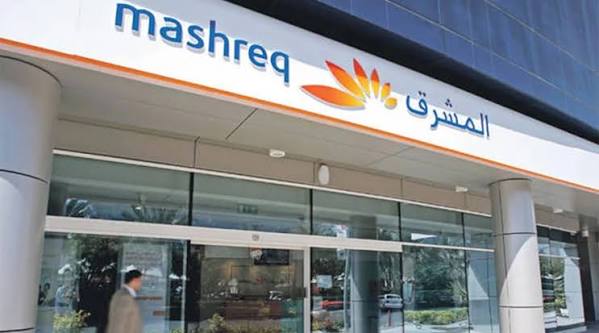
Mashreq is taking a very different route.
Founded in Dubai in 1967, the bank has existed through almost the entire modern economic history of the UAE.
It witnessed the country’s transformation from a relatively small regional trading economy into an international centre for finance, aviation, tourism, property and technology.
Yet Mashreq increasingly presents itself less like a traditional institution protecting its past and more like a technology-driven challenger attempting to reinvent banking.
That contrast is what makes the company particularly interesting.
Its history provides scale, customer relationships and institutional knowledge.
Its future increasingly depends on artificial intelligence, digital banking, global transaction services and technology capable of making an established bank move with the speed of a fintech company.
The Bank Grew Alongside Dubai
Mashreq began operations in 1967, originally as Bank of Oman.
Dubai looked dramatically different at the time.
Modern financial districts had not yet been built.
The city had not become a global tourism destination.
Its population was only a fraction of today’s level.
Banking activity was closely connected to trade and the gradual expansion of the regional economy.
As Dubai grew, Mashreq expanded with it.
The bank moved into new Emirates, opened international operations and gradually developed a much broader range of financial services.
This historical relationship gives Mashreq an unusual perspective on the UAE economy.
It has operated through almost every major stage of the country’s development.
Innovation Has Been Part of the Brand for Decades
Mashreq’s technology focus did not begin with smartphones.
The bank introduced one of the UAE’s earliest ATMs in the 1980s and later became an early adopter of telephone and online banking.
This matters because digital transformation can be difficult for established financial institutions.
Banks often operate large legacy technology systems.
They have extensive branch networks.
Regulation makes rapid experimentation more complicated.
Mashreq has repeatedly attempted to overcome this problem by adopting new customer technologies relatively early.
Its current AI strategy is therefore part of a much longer pattern.
Mashreq Neo Changed the Retail Banking Conversation
One of the bank’s most important modern initiatives was Mashreq Neo.
Launched in 2017, Neo was positioned as a full-service digital bank.
The timing was important.
Customers were increasingly comfortable managing their lives through smartphones, yet many banking processes still required paperwork and branch visits.
Neo attempted to make the mobile application the centre of the banking relationship.
That model has since become much more common.
Today, almost every major UAE bank emphasises digital onboarding and app-based services.
Mashreq was one of the institutions pushing strongly in that direction relatively early.
Digital Banking Is No Longer an Optional Channel
The distinction between a digital bank and a conventional bank is becoming increasingly meaningless.
Customers simply expect banking to be digital.
Transfers should happen immediately.
Cards should be controllable through an app.
Accounts should be opened quickly.
Customer support should be available without visiting a branch.
Banks therefore cannot treat their mobile applications as secondary services.
For many customers, the app effectively is the bank.
This changes where financial institutions need to invest.
Software engineers and cybersecurity specialists become nearly as important as branch employees.
Mashreq Is Increasing Its Bet on Artificial Intelligence
AI has become a central part of the bank’s technology strategy.
The opportunity extends far beyond chatbots.
Banks process huge amounts of structured and unstructured information.
Artificial intelligence can help analyse financial documents.
It can detect unusual transaction patterns.
It can assist relationship managers.
It can automate internal processes.
It may improve credit decisions and identify fraud faster.
For a bank operating at Mashreq’s scale, automation can have major economic effects.
Saving a few minutes on one task may sound insignificant.
Saving those minutes across millions of transactions can materially improve productivity.
The Real AI Opportunity Is Internal
Customer-facing AI attracts attention because it is visible.
The larger economic opportunity may be inside the organisation.
Thousands of employees perform analysis, compliance checks, document reviews and administrative tasks.
Generative AI can potentially accelerate many of these processes.
Employees may use intelligent tools to retrieve internal information or summarise complex reports.
Compliance teams could analyse documents more efficiently.
Corporate bankers could prepare customer information faster.
The objective is not necessarily to remove people.
It is to increase the amount of work each employee can complete.
Cybersecurity Becomes More Important as Banking Becomes More Digital
Every digital improvement creates another security requirement.
Banks hold financial information, identity data and transaction histories.
That makes them attractive targets for cybercriminals.
Phishing, account takeover, malware and payment fraud are constant threats.
AI may intensify this problem by making fraudulent communication more convincing.
Banks therefore need to invest heavily in authentication, transaction monitoring and cyber defence.
Mashreq’s digital strategy can only succeed if customers trust the systems supporting it.
Convenience without security has little value in banking.
The Corporate Business Is Just as Important as Retail
Mashreq is often visible to consumers through its cards and digital products, but corporate banking forms another major pillar.
Businesses need trade finance, payments, working capital, lending and treasury services.
Large multinational companies may move money through several countries every day.
Managing these flows efficiently can be more complex than ordinary retail banking.
Mashreq’s international footprint gives it an opportunity to serve companies operating across the Middle East, Asia, Europe, Africa and North America.
Dubai’s Trade Economy Created a Natural Strength
Dubai has always been deeply connected to trade.
Goods move through Jebel Ali.
Companies use the city as a regional distribution centre.
Entrepreneurs import and export products across multiple markets.
Banks supporting this activity need strong trade-finance capabilities.
Letters of credit, guarantees and foreign-exchange services become essential.
Mashreq’s long presence in Dubai gave it decades to develop expertise in this area.
Trade remains important even as technology and financial services become more visible parts of the economy.
Transaction Banking Can Be Extremely Valuable
Large companies need systems for managing payments and cash across multiple subsidiaries.
This is known broadly as transaction banking.
The business may not attract public attention, but it can create deep relationships between banks and corporate customers.
Once a company integrates its payment infrastructure with a bank, changing providers becomes operationally difficult.
This can make transaction banking a stable source of fees and deposits.
Mashreq has continued strengthening this part of its business.
Deposits Grew 28 Percent in One Year
By June 2026, customer deposits had reached AED 227.2 billion.
That represented year-on-year growth of 28 percent.
Deposits are fundamental to banking economics.
They provide funding for loans and investments.
Mashreq reported that current and savings accounts represented 63 percent of its deposit base.
These deposits are particularly attractive because their funding cost is often lower.
A strong deposit franchise can therefore support both growth and profitability.
Lending Has Expanded Almost as Quickly
Customer loans reached AED 169.1 billion during the first half of 2026.
That represented year-on-year growth of 26 percent.
Rapid lending growth can be positive when it reflects strong customer demand and disciplined underwriting.
It can become dangerous when banks chase volume at the expense of credit quality.
Mashreq’s asset-quality figures suggest it has maintained strong discipline so far.
Its non-performing loan ratio was only 0.9 percent.
That is exceptionally low by historical banking standards.
Coverage Provides Another Layer of Protection
Mashreq reported non-performing loan coverage of 271 percent.
Coverage measures the reserves held against problematic credit exposures.
A higher ratio provides greater protection if borrowers ultimately fail to repay.
Strong coverage is particularly valuable when a bank is expanding lending quickly.
It gives the balance sheet greater resilience if economic conditions deteriorate.
Banking is ultimately a risk-management business.
Revenue growth receives attention, but disciplined credit decisions determine whether that growth survives over time.
H1 2026 Produced Record Profit
Mashreq reported profit before tax of AED 4.8 billion for the first half of 2026.
That represented year-on-year growth of 18 percent.
Operating income reached AED 6.8 billion.
Net profit after tax was approximately AED 4 billion.
Return on equity remained around 21 percent.
These results demonstrate strong profitability despite continued investment in technology.
The bank has managed to expand while maintaining relatively high returns on shareholder capital.
Non-Interest Revenue Is Becoming More Important
Net interest income remains central to most banks, but Mashreq has also increased non-interest earnings.
During H1 2026, non-interest income rose 17 percent to AED 2.6 billion.
That represented 38 percent of operating income.
The category includes fees, commissions and activities such as transaction banking, trade finance and treasury.
Diversification matters because banking margins can move significantly with interest rates.
Fee income provides another source of earnings.
Treasury and Global Markets Add Another Business Engine
Large banks maintain substantial treasury operations.
They manage liquidity, foreign exchange, interest-rate exposure and investment portfolios.
They also provide financial-market services to customers.
Mashreq’s Treasury and Global Markets business recorded strong income growth in the first half of 2026.
This illustrates how modern universal banks operate through several different engines simultaneously.
Retail lending may slow while markets activity increases.
Corporate fees may rise while interest margins compress.
Diversification makes the overall institution more resilient.
International Expansion Has Always Been Part of Mashreq
Mashreq began expanding outside the UAE relatively early in its history.
Today, its network reaches important financial centres across several regions.
The bank has operations or offices across the Middle East, Asia, Europe, Africa and the United States.
This international presence supports customers whose businesses cross borders.
A UAE company investing in Asia may need financing there.
An Asian corporation entering the Middle East may want a banking partner familiar with both regions.
Mashreq can position itself as a bridge between these markets.
India Has Become Particularly Important
India and the Gulf have deep economic ties.
Millions of Indian professionals live in the UAE.
Trade between the countries continues expanding.
Indian companies increasingly establish regional operations in Dubai and Abu Dhabi.
UAE companies are also investing more heavily in India.
This creates demand for banks capable of connecting the two economies.
Mashreq has built substantial operational capabilities in India, including technology and service functions.
The relationship could become even more important as bilateral investment expands.
Egypt Provides Another Large Market
Mashreq has operated in Egypt for decades.
Egypt offers a fundamentally different opportunity from the UAE.
Its population is much larger, creating enormous long-term potential in consumer and corporate banking.
The macroeconomic environment can be more volatile, but the potential scale is significant.
Digital platforms can make customer acquisition easier because banks do not need to build enormous branch networks before expanding.
The Cost Base Is Increasingly Technology-Oriented
Mashreq’s cost-to-income ratio stood at about 31 percent in H1 2026.
That is relatively efficient for a large full-service bank.
Importantly, the bank has maintained this efficiency while continuing to invest in technology.
Digitalisation can initially increase expenses because new systems need to be developed.
Over time, however, successful automation can reduce the cost of serving each customer.
That economic leverage is one of the strongest arguments for digital banking.
Branches Are Becoming Less Central
Traditional banks once competed partly through the number of branches they operated.
That advantage is weakening.
A customer who completes almost every transaction digitally may rarely visit a branch.
This changes the optimal banking infrastructure.
Some physical locations remain important for complex transactions and customer advice.
But routine services increasingly move online.
Capital that once went into expanding branch networks can instead be invested in software, AI and cybersecurity.
Wealth Management Is Another Opportunity
The UAE is attracting increasing numbers of high-net-worth individuals.
Entrepreneurs are relocating to Dubai.
Family offices are establishing local operations.
International investors are using the city as a base.
These clients require sophisticated financial services.
They may hold assets in several countries.
They need investment products, financing and cross-border expertise.
Mashreq’s international network and Dubai heritage give it an opportunity to compete strongly in this market.
The Bank Still Thinks Like a Challenger
One of the more unusual aspects of Mashreq’s corporate identity is its emphasis on maintaining a challenger mindset despite being one of the country’s oldest banks.
That philosophy matters.
Financial institutions can become conservative as they grow.
Processes become more complicated.
Decision-making slows.
New technology becomes harder to adopt.
Mashreq’s challenge is preserving enough institutional stability for a regulated bank while maintaining enough urgency to compete with fintech companies.
Those two objectives can easily conflict.
Why Mashreq Matters
Mashreq demonstrates that corporate age does not automatically determine technological ambition.
The bank began in 1967.
It introduced early banking technologies decades ago.
It later launched a major digital banking platform.
Now it is embedding artificial intelligence across operations while expanding internationally.
At the same time, its balance sheet has reached AED 365.7 billion and H1 2026 profit before tax reached a record AED 4.8 billion.
The most interesting part of the story is therefore not that Mashreq has survived for nearly six decades.
It is that a bank with nearly six decades of history is still trying to behave like a challenger.
In a financial industry being reshaped by AI, fintech and digital payments, that willingness to keep changing may become more valuable than history itself.
Contributed by GuestPosts.biz.