Food delivery once looked like a relatively simple internet business.
A customer opened an app.
They selected a restaurant.
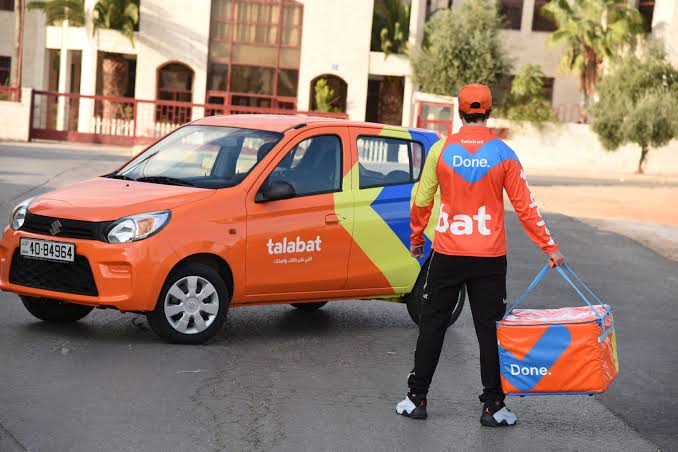
A rider collected the order.
Food arrived at the door.
Talabat is now trying to turn that basic transaction into something much larger.
The Dubai-headquartered company wants customers to use its platform not only when they want dinner, but also when they need groceries, pharmacy products, flowers, pet supplies, beauty items or other everyday essentials.
In other words, Talabat is attempting to evolve from a food-delivery app into what it calls an “everyday app.”
That shift could dramatically change the economics of the business.
Instead of competing for a few meal orders each week, Talabat wants to become part of customers’ daily routines.
Talabat Began in Kuwait
Talabat was founded in Kuwait in 2004.
At the time, online food ordering in the Middle East was still at an early stage.
Smartphones had not yet transformed consumer behaviour.
Restaurants depended much more heavily on telephone orders.
Digital payments were less common.
The company gradually built an online marketplace connecting customers with restaurants.
As internet and smartphone penetration increased, the addressable market expanded rapidly.
The business eventually moved into additional Gulf countries and other Middle Eastern markets.
Today, Talabat operates across eight markets in the Middle East and North Africa.
Its footprint includes the UAE, Kuwait, Qatar, Bahrain, Oman, Egypt, Jordan and Iraq.
Dubai Became the Corporate Centre
Talabat is now headquartered in Dubai.
That makes sense strategically.
Dubai provides access to capital, technology talent and regional corporate headquarters.
The city also offers an unusually attractive market for on-demand services.
Its population is highly digital.
Residents are accustomed to app-based commerce.
Disposable incomes are relatively high.
A large expatriate population means consumers are familiar with many cuisines and retail categories.
The combination makes the UAE a useful laboratory for new delivery products.
The Platform Is Really a Three-Sided Marketplace
Talabat does not simply connect restaurants and customers.
Its business depends on three major groups functioning simultaneously.
Customers create demand.
Restaurants and retailers provide products.
Riders provide the physical delivery network.
If any one part becomes weak, the marketplace deteriorates.
Customers leave if selection is poor.
Restaurants lose interest if there are not enough customers.
Customers become frustrated if there are too few riders and deliveries take too long.
The platform therefore needs to balance all three sides.
By Q2 2026, Talabat had approximately 97,000 active partners and around 189,000 active riders.
That scale creates a substantial network effect.
Scale Makes the Marketplace Stronger
A large marketplace can improve itself as it grows.
More restaurants attract more customers.
More customers make the platform more attractive to restaurants.
Higher order volumes create more work for riders.
A larger rider network can reduce delivery times.
Better delivery performance attracts additional customers.
This creates a reinforcing loop.
However, network effects are not automatic.
Customers can install several delivery apps.
Restaurants can list on competing platforms.
Riders may work across multiple services.
Talabat therefore needs to keep every side of the marketplace sufficiently satisfied.
Food Delivery Remains the Core Business
Despite the broader strategy, food is still central.
Restaurants generate enormous order volumes across the region.
Customers have become accustomed to ordering meals digitally.
The pandemic accelerated this behaviour, but demand remained strong even after restaurants reopened fully.
Convenience changed consumer expectations.
A customer who once considered delivery an occasional luxury may now view it as part of everyday life.
Talabat’s challenge is maintaining leadership while controlling the cost of incentives, marketing and delivery.
Delivery Economics Are More Difficult Than They Appear
A food order may be worth only a modest amount.
From that transaction, several parties need to earn money.
The restaurant needs sufficient revenue.
The rider needs compensation.
The platform needs to cover technology, customer service, payment processing and marketing.
Customers also expect delivery fees to remain low.
This makes unit economics difficult.
A delivery company cannot simply raise prices without risking demand.
Scale, route efficiency and additional revenue streams therefore become essential.
Commissions Are Only One Source of Revenue
Talabat generates revenue through several different channels.
Restaurant and retailer commissions remain important.
Customers pay delivery fees and service fees.
Talabat Pro generates subscription revenue.
The company operates its own grocery business through Talabat Mart.
Advertising provides another growing source of income.
This diversification matters.
The more revenue Talabat can generate from each order without making the customer experience unattractive, the stronger the business model becomes.
Advertising Is Becoming Increasingly Valuable
Restaurants compete for visibility inside the app.
A customer opening Talabat may see hundreds of possible options.
Being displayed near the top of search results can materially affect sales.
This creates an advertising market inside the platform.
Partners can pay to increase visibility or promote offers.
Talabat reported that advertising revenue reached approximately 3.4 percent of GMV in Q2 2026.
That may appear small, but on billions of dollars in transactions it becomes meaningful.
Advertising can also carry attractive margins because it does not require an additional physical delivery.
The App Is Becoming Digital Real Estate
A delivery app effectively owns valuable digital shelf space.
In a supermarket, brands pay for prominent placement.
In Talabat, restaurants and retailers compete for attention on a smartphone screen.
Search rankings, recommendation sections and promotional banners all influence customer behaviour.
This creates an advertising business layered on top of the marketplace.
The more frequently customers open the app, the more valuable that digital real estate becomes.
This is another reason Talabat wants to expand beyond food.
More use cases mean more visits.
Grocery Is the Biggest Strategic Expansion
Food delivery may be frequent, but grocery purchases can be even more fundamental.
Every household needs food and household products repeatedly.
Talabat has therefore invested heavily in its Grocery & Retail business.
Customers can order from supermarkets and local retailers.
They can also purchase directly through Talabat Mart.
The objective is to make the platform useful throughout the week rather than only around meal times.
Talabat Mart Changes the Economics
Talabat Mart differs from a traditional marketplace.
Instead of simply connecting a customer with a third-party store, Talabat operates its own dark stores.
These facilities are designed specifically for online orders.
There is no need for attractive supermarket displays or traditional checkout areas.
Inventory can be organised around fast picking and delivery.
This gives Talabat more control over product availability and the customer experience.
It also means the company takes on more operational responsibility.
Owning Grocery Inventory Creates Both Opportunity and Risk
Marketplace businesses can be relatively asset-light because third-party sellers own the products.
A dark-store model is different.
Talabat needs facilities, inventory systems and supply-chain infrastructure.
Products can expire.
Demand needs to be forecast accurately.
Stock shortages hurt customer experience.
Excess inventory wastes money.
The potential reward is greater control and higher revenue per transaction.
The risk is a more complicated and capital-intensive business.
The InstaShop Acquisition Strengthened Grocery
Talabat acquired InstaShop in February 2025 for approximately $32 million.
InstaShop had already developed a strong presence in online grocery and convenience delivery.
The acquisition strengthened Talabat’s position in a category it had identified as strategically important.
Buying an established platform can be faster than building every capability internally.
Talabat gains technology, customer relationships and retailer partnerships immediately.
The challenge is integrating the two businesses without confusing customers or duplicating unnecessary costs.
The Strategy Is No Longer About Meals
Talabat now defines Grocery & Retail broadly.
Customers can order groceries, pharmacy products, health and beauty items, small electronics, flowers and pet supplies.
This is why the phrase “everyday app” matters.
The company wants to solve many small daily needs through a single platform.
The model resembles the evolution of super apps in parts of Asia.
The more categories customers use, the more difficult it becomes for a competitor to replace the relationship.
Multi-Category Customers Are Particularly Valuable
By Q2 2026, approximately 75 percent of Talabat’s GMV came from customers ordering across more than one category.
That figure is strategically important.
A customer using Talabat only for restaurant delivery has a limited relationship with the company.
A customer using food delivery, groceries and other retail categories interacts far more frequently.
More interactions can produce higher lifetime value.
They also generate more data about customer preferences.
The platform becomes increasingly embedded in everyday behaviour.
Talabat Pro Is Designed to Deepen Loyalty
Subscription programmes are another major part of the strategy.
Talabat Pro offers members benefits such as reduced delivery costs and other advantages.
By Q2 2026, more than one in four active customers subscribed to Talabat Pro.
Pro members accounted for 51 percent of GMV generated on the Talabat platform.
That is a powerful result.
Subscribers generally have an incentive to order more frequently because they want to maximise the value of their membership.
Subscriptions Change Customer Psychology
A customer paying for every individual delivery may reconsider whether an order is worth the fee.
A subscription reduces that friction.
Once the customer has already paid for membership, placing another order feels cheaper.
This can increase frequency.
The same principle has worked successfully in entertainment, e-commerce and transportation.
For Talabat, subscriptions can simultaneously increase loyalty and make customer behaviour more predictable.
The 2026 Investment Programme Is Deliberately Reducing Short-Term Margins
Talabat approved a $120 million strategic investment programme for 2026.
The money is being used to expand the everyday-app ecosystem.
Around $75 million was allocated to operating expenses, with approximately $45 million directed toward capital and lease expenditures.
The programme focuses on Talabat Mart, Talabat Pro and new retail or adjacent services.
This investment has a clear financial consequence.
Short-term margins are lower because the company is spending now in pursuit of future growth.
Profitability Fell Even While Revenue Increased
This trade-off was visible in the second quarter of 2026.
Revenue increased 16 percent year-on-year to approximately $1.14 billion.
However, adjusted EBITDA declined 13 percent to $147 million.
Net income fell 18 percent to $100 million.
These figures might appear negative in isolation.
But management had deliberately planned a period of elevated investment.
The key question is whether today’s spending creates enough future customer activity to justify the lower short-term profitability.
H1 GMV Reached $5.6 Billion
Gross merchandise value measures the total value of products and services sold through the platform.
Talabat generated approximately $5.6 billion in GMV during the first half of 2026.
That represented 15 percent year-on-year growth at constant currency.
Revenue reached approximately $2.19 billion, up 19 percent.
The fact that revenue grew faster than GMV reflects changes in the business mix, particularly the growing contribution from own-grocery sales and advertising.
GMV Is Different From Revenue
This distinction matters.
If a restaurant sells a $30 meal through Talabat, the company does not necessarily record the full $30 as revenue.
Much of the value belongs to the restaurant.
Talabat records the commissions, delivery fees and other applicable income.
For products sold directly through Talabat Mart, accounting can be different because Talabat acts more like the retailer itself.
This explains why business mix affects the relationship between GMV and reported revenue.
Non-GCC Markets Are Growing Much Faster
One of the most interesting H1 2026 trends was geographic.
Talabat’s GCC markets still generated the majority of GMV.
But non-GCC markets grew much faster.
In Q2, GMV from Egypt, Jordan and Iraq rose 41 percent year-on-year to $642 million.
Their share of total GMV increased to 22 percent from 17 percent a year earlier.
This provides Talabat with a significant growth opportunity outside its more mature Gulf markets.
Egypt Creates Enormous Long-Term Potential
Egypt has a population exceeding 100 million.
Even relatively modest increases in online-delivery penetration can create significant order volumes.
Consumer spending power is lower than in Gulf markets, and currency volatility can create challenges.
But the addressable customer base is enormous.
Digital platforms can scale rapidly once smartphone adoption, logistics density and payment infrastructure reach sufficient levels.
For Talabat, Egypt may eventually become one of its most strategically important markets.
Iraq Is Another Emerging Digital Market
Iraq has a large, young population and a digital economy that remains relatively underdeveloped compared with the Gulf.
That creates risk but also opportunity.
Consumers increasingly use smartphones and online services.
A platform that establishes strong network effects early may gain an important advantage.
Infrastructure and payment systems can be more challenging than in the UAE, but rapid growth from a smaller base can compensate.
The Gulf Still Provides the Financial Foundation
The GCC represented approximately 78 percent of Talabat’s Q2 2026 GMV.
The UAE, Kuwait, Qatar, Bahrain and Oman therefore remain central to the business.
These markets generally offer higher purchasing power and mature digital behaviour.
Order values can be attractive.
Payment infrastructure is strong.
Urban density can support efficient delivery.
Profits generated in mature markets can help fund expansion into faster-growing markets elsewhere.
Riders Are the Physical Infrastructure Behind the App
Talabat may be a technology platform, but every physical order still needs someone or something to move it.
Approximately 189,000 active riders supported the platform by Q2 2026.
This makes rider operations one of the most important parts of the company.
Recruitment, safety, scheduling and compensation all affect service quality.
Customers experience the app digitally but judge the service partly according to whether the rider arrives quickly and reliably.
Rider Economics Are Also a Social Issue
Gig-economy labour has become a major policy debate globally.
Delivery riders often work flexible hours, but their income and employment protections can differ from traditional jobs.
Hot weather creates additional challenges in Gulf countries.
Platforms therefore face increasing expectations around rider welfare and safety.
For Talabat, maintaining a large delivery network sustainably is not only an operational issue.
It can influence reputation and regulation.
Route Optimisation Can Have Huge Effects
A rider completing more orders per hour improves economics dramatically.
The customer receives faster service.
The rider can potentially earn more.
Talabat reduces delivery cost per order.
Artificial intelligence can help by matching riders with orders, predicting preparation times and selecting efficient routes.
At the scale of hundreds of thousands of riders and millions of orders, even small algorithmic improvements become valuable.
AI Is Already Embedded in Marketplace Decisions
Talabat operates an environment perfectly suited to machine learning.
The platform needs to predict what customers may want.
It needs to rank restaurants and shops.
It needs to forecast demand.
Rider supply needs to be matched with order volumes.
Estimated delivery times must be calculated continuously.
Fraud needs to be identified.
Pricing and incentives need optimisation.
These decisions occur millions of times.
Human management alone cannot handle them at that scale.
Algorithms effectively become part of the operating infrastructure.
Personalisation Can Increase Order Frequency
Two customers opening Talabat do not need to see the same interface.
One may frequently order healthy food.
Another may favour burgers.
One may have children.
Another regularly buys pet supplies.
A personalised platform can surface options most likely to generate an order.
This improves convenience for the customer while increasing conversion for Talabat.
The growing number of categories gives the company even more information to personalise the experience.
The Platform Also Creates Value for Restaurants
Restaurants gain access to a large customer audience without building their own delivery technology.
A small restaurant can potentially reach thousands of nearby consumers.
Talabat handles ordering infrastructure, payment and delivery.
This lowers the barrier to entry for food businesses.
However, restaurants also pay commissions and compete intensely for visibility.
The relationship can therefore contain tension.
Platforms need healthy partners because restaurants ultimately provide much of the product customers want.
Partner-Funded Promotions Have Become Enormous
During H1 2026, Talabat’s partners funded a record $404 million in customer savings.
These discounts can help restaurants and retailers acquire customers or increase order volumes.
Promotions are a powerful marketplace tool.
But excessive discounting can train customers to wait for deals.
The platform therefore needs to balance incentives with sustainable economics.
Growth generated only through permanent subsidies is difficult to maintain.
The IPO Turned Talabat Into a Major UAE-Listed Technology Company
Talabat completed its listing on the Dubai Financial Market in December 2024.
The IPO was one of the most significant technology-related listings in the UAE.
It gave local and international investors access to a large regional digital consumer platform.
For Dubai’s capital markets, this was strategically important.
The local exchange historically contained many banks, property companies and traditional industries.
Talabat adds exposure to foodtech, digital commerce and platform economics.
Delivery Hero Remains the Controlling Shareholder
Talabat continues to operate as a subsidiary of Germany-based Delivery Hero.
This relationship provides access to international technology, operational experience and knowledge developed across many markets.
Delivery Hero operates similar platforms globally.
Ideas around logistics, subscriptions and grocery can therefore potentially be shared.
At the same time, Talabat maintains its own regional identity and public listing.
This creates an unusual combination of local capital-market presence and global strategic ownership.
Free Cash Flow Is One of Talabat’s Stronger Financial Characteristics
Platform businesses are often associated with years of cash losses.
Talabat is different.
It generated $266 million in free cash flow during the first half of 2026 despite the significant investment programme.
Cash conversion was 96 percent of adjusted EBITDA.
Strong free cash flow gives the company greater strategic flexibility.
It can invest in expansion while still returning substantial capital to shareholders.
The Dividend Policy Is Unusually Generous for a Technology Company
Talabat maintains a policy targeting distribution of approximately 90 percent of net income through dividends.
This makes the company unusual compared with many technology businesses.
High-growth tech firms often reinvest almost all earnings.
Talabat is trying to combine growth with significant shareholder distributions.
That is possible because the core marketplace already generates cash.
The challenge is ensuring dividends do not restrict investment opportunities.
Share Buybacks Add Another Capital-Return Tool
Talabat also launched a share-buyback programme in 2026.
By August, it had repurchased more than 108 million shares for approximately $35 million.
Buybacks can support shareholder value by reducing the number of shares outstanding.
They can also signal that management believes shares are attractively valued.
However, buybacks need to be weighed against other potential uses of capital.
For a company still expanding aggressively, reinvestment may sometimes generate higher long-term returns.
Competition Remains Intense
Food delivery has low customer switching costs.
A consumer can keep several apps on one phone.
A competitor offering a better promotion can win the next order immediately.
Restaurants may list on multiple platforms.
This means Talabat’s market leadership cannot be taken for granted.
The everyday-app strategy partly addresses this problem.
A customer using Talabat across multiple categories and subscribing to Pro has more reasons to remain loyal.
The Biggest Competitor May Eventually Be General E-Commerce
The boundary between delivery categories is disappearing.
Traditional food platforms are moving into grocery and retail.
E-commerce companies are offering faster delivery.
Supermarkets operate their own apps.
Pharmacy chains deliver directly.
The competition is therefore broader than restaurant delivery.
Talabat ultimately competes for the consumer’s decision about which app to open when they need something quickly.
That makes convenience itself the market.
Speed Can Become a Competitive Moat
Consumers increasingly value time.
Waiting two days for a household product may feel unnecessary if the same item can arrive in thirty minutes.
This behaviour creates the quick-commerce opportunity.
Dark stores and local retailer networks can provide near-immediate fulfilment.
But speed is expensive.
The company needs enough local demand to keep inventory and riders productive.
High urban density makes the model much more attractive.
Cities such as Dubai are therefore ideal markets.
The Physical Network Matters as Much as the Software
Talabat is often described as a technology company, but its competitive advantage increasingly includes physical infrastructure.
Dark stores need to be positioned close to customers.
Rider networks need sufficient density.
Supply chains need to replenish inventory.
Merchant networks take years to build.
A new competitor can develop an app relatively quickly.
Replicating the entire operational network is much harder.
This is where Talabat’s scale may provide its strongest defence.
Why Talabat Matters
Talabat represents a different side of the UAE corporate economy.
It does not operate oilfields.
It does not build skyscrapers.
It does not run ports.
Instead, it connects millions of ordinary consumer decisions through software and logistics.
That makes it one of the region’s most important digital consumer platforms.
Its next stage is more ambitious than food delivery.
Talabat wants to become the app people open whenever they need something in everyday life.
The company is investing $120 million in 2026 to accelerate that transformation.
H1 GMV reached $5.6 billion.
Revenue rose to $2.19 billion.
Its network expanded to around 97,000 active partners and 189,000 active riders.
Most importantly, three-quarters of GMV now comes from customers already using more than one category.
That suggests the transition has begun.
The question is whether Talabat can turn convenience into genuine long-term loyalty.
If it succeeds, the company’s future may have much less to do with delivering restaurant meals and much more to do with becoming the digital storefront for everyday life across the Middle East.
Contributed by GuestPosts.biz.