The UAE has identified more than 5,000 products to be made locally over the next decade and has set up a dedicated fund to help smaller manufacturers build supply-chain resilience, a senior Ministry of Industry and Advanced Technology (MoIAT) official said on the opening day of the Sharjah Investment Forum (SIF) 2026 on Wednesday.
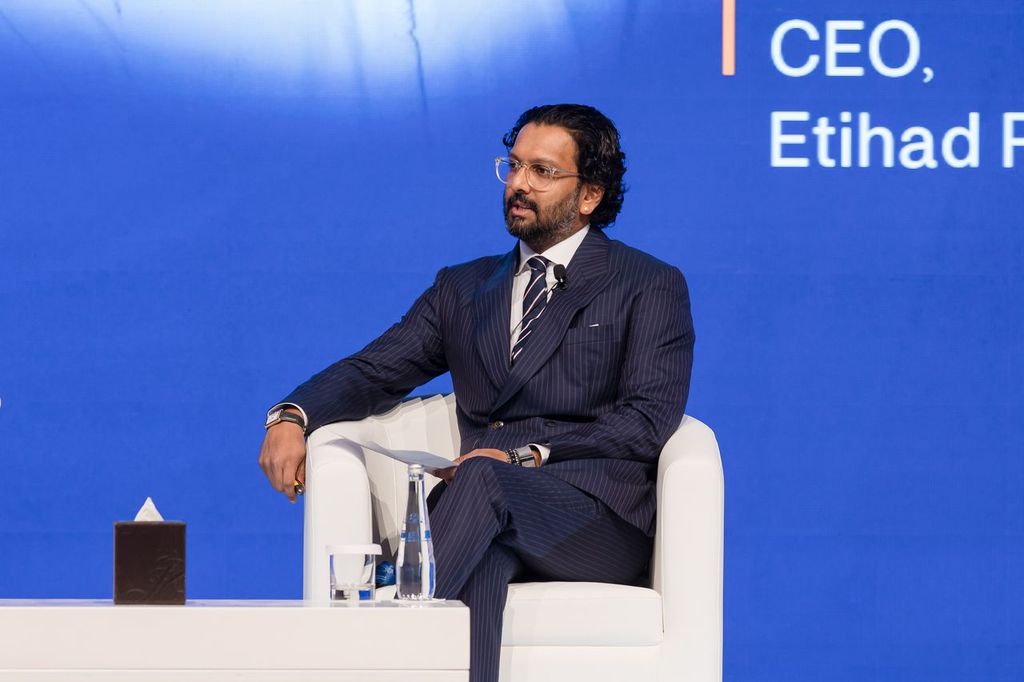
H.E. Dr Farah Ali AlZarooni, Assistant Undersecretary for Standardization Affairs Sector at MoIAT, outlined the plans during a panel titled “Supply Chains Under Pressure: Strengthening Resilience Against Global Shocks”. She was joined by Omar Alsebeyi, CEO of Etihad Rail Freight, and Ritesh Ramakrishnan, MD of Transworld, both of whom spoke about how recent disruptions have made rail, the UAE’s east-coast ports and reliability central to how cargo moves in and out of the country.
Standards as a passport to export
During the session, Dr AlZarooni said MoIAT has identified 12 priority industrial sectors under the national industrial strategy. She further elaborated how through the Make it in the Emirates programme, the country – earlier this May – announced an AED 180 billion ($49 billion) industrial procurement and offtake package, creating opportunities across the industrial sector. She said international standards act as a “passport” for UAE manufacturers entering new markets.
“Often a final product couldn’t be produced because manufacturers failed to procure two smaller parts in the supply chain, for instance” she said. “We have identified more than 5,000 products to be localised within the UAE in the coming decade and allocated a fund for that, including the National Industry Resilience Fund (NIRF) – a billion dirham financial initiative – for smaller players. Our regulatory framework is agile, aligned with international standards, and designed to anticipate what may come. In autonomous vehicles and robotics, for example, we are not waiting for the future; we are helping create it.”
She also cited MoIAT’s frameworks for novel foods and halal certification, which she described as among the first in the region.
Rail freight and eastern ports now of strategic importance
Alsebeyi said Etihad Rail Freight moved its rolling stock from the national network to the east coast within days of the disruption, raising train deployments from 4 to around 250 a month. The network has connected the main ports, including Fujairah and Khorfakkan in Sharjah, since 2023.
He spoke about how during a nine-day period in March, Etihad Rail Freight, a subsidiary of Etihad Rail, operated more than 100 freight train trips, transporting over 459,000 tonnes of cargo and 7,900 containers across the UAE’s national railway network – most of them from Khorfakkan in Sharjah, which sits outside the Strait of Hormuz.
“Our job is to be an enabler of trade. Our mandate is to support trade to continue and the supply chain to continue,” Alsebeyi said, explaining how the company has also built specialised containers for critical goods during this time. “We don’t compete with trucks; we complement them. We work hand in hand with the ports, the shipping lines and the ship owners, and through RailDirect, our subsidiary, we bring the port closer to small businesses with customs clearance and cross-border solutions. Our goal is to help those small businesses grow big.”
Reliability now outweighs price
For businesses managing international cargo, the changing frequency of supply chain disruptions is reshaping how transport decisions are made. Cost remains important, but reliability and the ability to secure delivery when goods are needed have become increasingly central considerations, said Ramakrishnan, whose company operates 35 vessels today, many of those lying in the Strait.
“The question used to be what’s the cheapest way to move something from X to Y. Now it is how sure I can be that it will reach,” he said, explaining why higher insurance and operating costs were likely to remain a challenge in the near term, requiring shipping companies to work closely with customers on pricing and planning. “Reliability is front and centre. If you need something then and there, you need it.”
The MD of the UAE conglomerate also spoke about how rail was becoming a more compelling option with infrastructure and multimodal connections improving. “None of what the UAE has done [in recent months] is by accident; it has always had a plan A, B, C, D and all of it without us ever realising it.”
Organised by the Sharjah FDI Office (Invest in Sharjah) in collaboration with the UAE Ministry of Investment, SIF 2026 is being held under the theme ‘Building Adaptive Economies’. The forum will feature more than 80 speakers and over 140 activities, including 80 direct business meetings designed to facilitate connections between investors, companies and decision-makers.
Together, the programme aims to examine how governments and businesses can respond to changing global conditions, strengthen competitiveness and identify new avenues for investment and long-term growth.
The session was moderated by Inzamam Rashid, Gulf Correspondent at Monocle.