Before a camera moves or a comic panel is finalised, many of the most important creative decisions have already been made on paper.
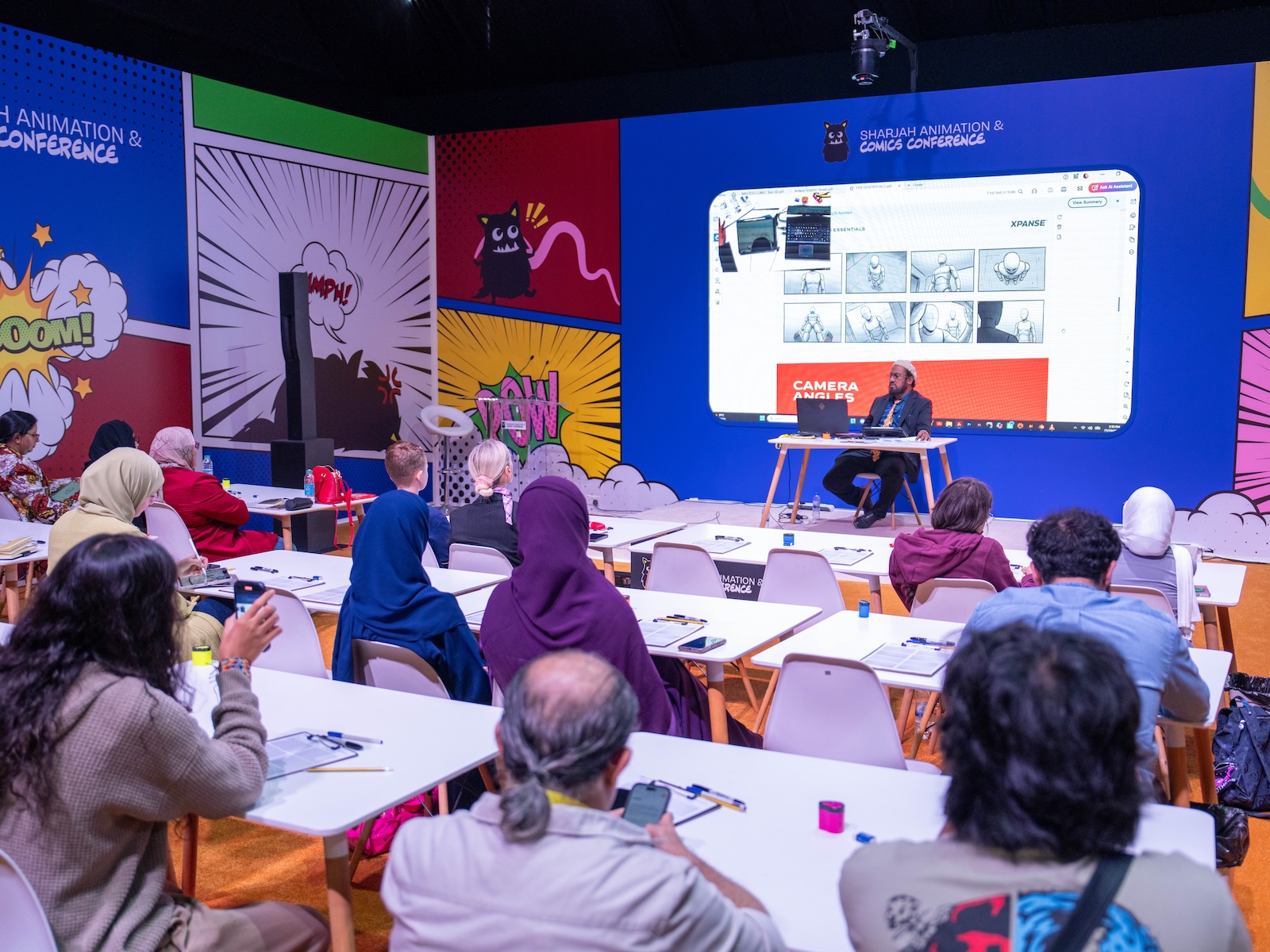
At the Sharjah Animation and Comics Conference (SACC 2026), comic book artist, filmmaker, and entrepreneur Ashraf Ghori demonstrated how storyboards translate scripts and ideas into visual sequences that guide character development, camera angles, pacing and production planning.
During the hands-on workshop, Concept Art and Storyboarding for Comics and Film, held on the conference’s opening day, Al Ghory showed how early sketches establish the look and mood of characters and settings, while storyboards help directors and production teams decide how each moment should unfold visually.
He compared character development to casting, explaining that artists must define not only how a character looks, but also how that character should be understood by producers, designers and other members of the creative team.
“Storyboarding gives the entire production team a common understanding of what you’re trying to create. The more detail you put into your drawings, the easier it becomes for everyone, from the producer to the people working on locations and costumes, to understand your vision,” Al Ghory said.
The workshop also examined how the same story moment can be treated differently in comics and film. Al Ghory demonstrated how composition, sequencing and framing can convey movement, emotion and emphasis even with minimal dialogue.
Participants were introduced to shot sizes ranging from wide shots to extreme close-ups, as well as overhead and over-the-shoulder angles. Al Ghory also explored how camera movements such as push-ins, pull-outs and dolly zooms can change perspective and emotional intensity.
“Every shot has a purpose. A wide shot tells the audience where they are, while a close-up directs their attention to something specific. When you plan these shots in a storyboard, you’re already making decisions about how the audience will experience the story,” he explained.
Al Ghory also demonstrated how digital tools can extend this planning process, using Blender to visualise scenes in 3D and compare early concepts with finished visuals.
“You don’t need a finished drawing to start planning a scene. Even a simple sketch can communicate an idea, and tools like Blender can help you explore how that scene might look before you begin production,” he said.
Based in Dubai, Al Ghory is known for creating Xero Error, described as the UAE’s first CGI science-fiction film, and the Arabic graphic novel Antara.