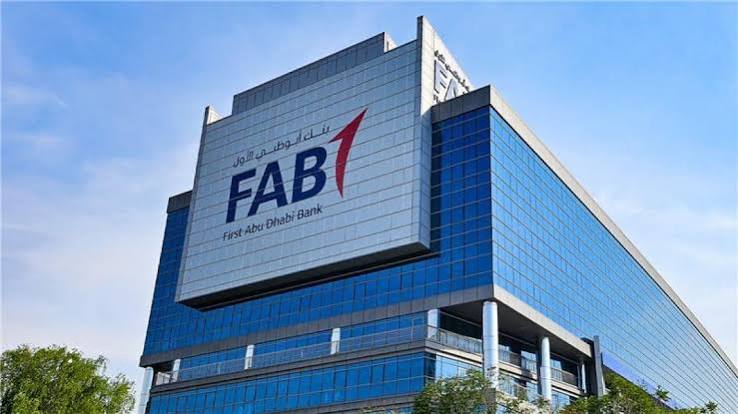
First Abu Dhabi Bank is one of the clearest examples of how the UAE has built companies capable of operating far beyond the country’s borders.
Known simply as FAB, the Abu Dhabi-headquartered bank combines enormous domestic scale with an increasingly international role in corporate banking, investment markets, wealth management and trade finance.
Its importance is closely linked to the transformation of the UAE itself.
As Abu Dhabi has expanded investment in infrastructure, energy, technology, real estate and international assets, the country has needed financial institutions capable of supporting increasingly complex transactions.
FAB has evolved into one of those institutions.
The Bank Was Created Through a Major Merger
FAB was formed in 2017 through the merger of National Bank of Abu Dhabi and First Gulf Bank.
Both institutions were already significant players.
Combining them created a much larger bank with greater lending capacity, a broader customer base and stronger access to international markets.
The merger also reflected a broader trend in Gulf banking.
As companies and governments began financing increasingly large projects, scale became more important.
Larger banks could participate in bigger transactions, invest more heavily in technology and compete with international financial institutions.
FAB became one of the strongest examples of this consolidation strategy.
Scale Is One of FAB’s Biggest Advantages
By the end of June 2026, FAB reported total assets of approximately AED 1.41 trillion.
That puts the bank among the largest financial institutions in the region.
Its customer deposits reached AED 853 billion, while net loans and advances stood at AED 661 billion.
Scale creates several advantages.
It allows the bank to support large corporate borrowers.
It provides the balance-sheet strength needed for major infrastructure financing.
It also allows FAB to participate in global capital markets and syndicated transactions where individual deals can involve billions of dollars.
For the UAE, having a domestic bank with this capacity is strategically important.
Corporate Banking Is Central to the Business
FAB serves individuals, but its corporate and institutional banking operations are particularly important.
Large UAE companies need financing for acquisitions, construction, expansion and international investment.
Governments and government-related entities require sophisticated financial services for infrastructure and strategic development.
Multinational companies entering the UAE need access to local banking expertise.
FAB sits between these groups.
Its relationships with corporations, sovereign entities and investors allow it to participate in transactions that influence entire sectors of the economy.
Investment Banking Extends Its Role Beyond Lending
Modern banks do far more than provide loans.
FAB is also active in debt capital markets, advisory services and securities.
A company wanting to raise billions of dirhams may issue bonds or sukuk rather than rely entirely on bank lending.
A government-related company may need help structuring a major financing programme.
An international corporation may require advice on entering Gulf capital markets.
These activities give FAB another way to participate in the UAE’s economic expansion.
They also allow the bank to generate income without relying only on traditional interest margins.
International Assets Are Becoming More Important
FAB increasingly describes itself as the UAE’s global bank.
That positioning is supported by its international operations.
At the end of the first half of 2026, international assets reached AED 437 billion, representing roughly 31 percent of total group assets.
This international exposure has strategic value.
The UAE is deeply connected to global trade corridors linking the Middle East, Asia, Europe and Africa.
Companies based in Abu Dhabi frequently invest overseas.
International corporations use the UAE as a regional headquarters.
A bank with operations and relationships across these markets can support customers wherever their business takes them.
The UAE’s Global Investment Ambitions Create Opportunities
Abu Dhabi’s sovereign investors and major corporations have become increasingly active internationally.
They invest in technology, infrastructure, energy, logistics, real estate and advanced manufacturing around the world.
These transactions need financing, currency services, risk management and capital-market expertise.
A UAE-based institution such as FAB can support those flows.
This means the bank benefits not only from domestic economic growth but also from the increasing globalisation of UAE capital.
Profitability Has Remained Strong
FAB reported net profit of AED 10.73 billion for the first six months of 2026.
Profit before tax reached AED 13.2 billion.
Operating income rose to AED 19.5 billion.
These results came from a combination of interest income and non-interest revenue.
That mix matters.
A diversified banking model is less dependent on one source of earnings.
Interest-rate changes can affect lending margins.
Capital markets can move through different cycles.
Fee income and investment-banking activities provide additional sources of revenue.
Deposits Provide the Foundation
Banks ultimately depend on confidence.
Customers and institutions place deposits with banks because they trust those institutions to remain stable.
FAB’s deposit base exceeded AED 850 billion by mid-2026.
This gives the bank an enormous pool of funding.
Strong deposits can support lending without forcing the institution to depend excessively on more expensive wholesale borrowing.
Liquidity therefore becomes one of the hidden strengths of a large universal bank.
Customers rarely think about it when using an app or making a transfer, but it influences everything from lending capacity to resilience during financial-market stress.
Credit Quality Still Matters
Rapid loan growth can become dangerous if banks reduce lending standards.
This is why asset quality remains an important measure.
FAB reported a non-performing loan ratio of 2.2 percent at the end of June 2026.
Maintaining credit quality while expanding the balance sheet is crucial.
The UAE economy has grown strongly, but banks still need to manage risks across property, corporate lending, consumer finance and international markets.
Strong growth is most valuable when it remains disciplined.
High Credit Ratings Support Global Expansion
FAB continues to hold strong investment-grade credit ratings from major international rating agencies.
This matters because banks borrow substantial amounts themselves.
A strong rating can lower funding costs and make international investors more comfortable purchasing the bank’s debt.
It also influences how counterparties view the institution.
For a bank positioning itself as an international financial bridge between the UAE and global markets, credibility is essential.
Sustainable Finance Is Becoming a Major Business
The banking industry is also becoming deeply involved in the energy transition.
Companies require huge amounts of capital to build renewable energy, lower-emission infrastructure and climate-related projects.
FAB has set significant sustainable and transition-finance ambitions.
By the middle of 2026, the bank said it had facilitated AED 395 billion in sustainable and transition financing toward its 2030 target.
This demonstrates how environmental goals are becoming part of mainstream banking rather than a separate niche.
Banks ultimately determine which projects receive capital.
Their role in the energy transition is therefore substantial.
Blue Finance Adds Another Dimension
FAB has also expanded into blue finance, which focuses on protecting and sustainably using oceans and water-related ecosystems.
This is particularly relevant to the UAE.
The country has extensive coastlines, important marine environments and major industries connected to ports and maritime trade.
Financing projects that improve water management, marine conservation or sustainable coastal development could become increasingly important.
FAB has established a substantial blue-finance target as part of this strategy.
Artificial Intelligence Is Changing Banking
Technology is another major area of investment.
Modern banks process enormous quantities of data.
AI can be used in fraud detection, customer service, credit analysis, compliance and internal productivity.
FAB has increased investment in artificial intelligence and digital capabilities as part of its growth strategy.
The objective is not simply to automate customer interactions.
AI can also help a bank understand risk, analyse markets and process complex information more efficiently.
For a financial institution operating at FAB’s scale, even small efficiency improvements can have significant effects.
Tokenised Banking May Reshape Financial Infrastructure
One of the most interesting areas of experimentation involves tokenised deposits and blockchain-based financial infrastructure.
FAB has participated in live transaction initiatives involving tokenised bank money.
This matters because traditional cross-border financial systems can be slow and operationally complex.
Tokenisation could eventually improve settlement and allow certain financial transactions to occur more quickly.
The technology is still developing, but major banks are increasingly taking it seriously.
For the UAE, early experimentation supports the country’s ambition to become a centre for future financial infrastructure.
Retail Banking Remains Important
Despite its enormous corporate operations, FAB still serves individual customers.
Retail banking includes mortgages, credit cards, savings products, personal loans and wealth services.
The UAE’s population growth provides significant opportunities here.
New residents need bank accounts.
Homebuyers need mortgages.
Entrepreneurs need financing.
Affluent customers require investment and wealth-management services.
A universal bank benefits by serving customers across different stages of their financial lives.
Wealth Management Has Strong UAE Potential
The UAE has become an increasingly important destination for high-net-worth individuals.
Entrepreneurs, investors and family offices from around the world are relocating or establishing a presence in Abu Dhabi and Dubai.
This creates demand for private banking.
Clients may require investment advice, estate planning, international asset allocation and financing across multiple jurisdictions.
FAB’s international network gives it the opportunity to compete for this growing wealth-management business.
FAB Reflects Abu Dhabi’s Financial Ambitions
The development of FAB parallels the transformation of Abu Dhabi itself.
The Emirate is no longer defined only by hydrocarbons.
It has become a major investor in technology, renewable energy, healthcare, financial services and global infrastructure.
These sectors require increasingly sophisticated financial institutions.
FAB provides part of that infrastructure.
The bank helps connect domestic capital with global opportunities while also helping international businesses access the UAE.
Why FAB Matters
FAB is important because it has moved beyond being simply a large domestic bank.
Its balance sheet exceeds AED 1.4 trillion.
It finances corporations and infrastructure.
It participates in international capital markets.
It supports sustainable finance and experiments with new financial technology.
It serves retail customers while also working with some of the world’s largest institutions.
The merger that created FAB gave Abu Dhabi greater financial scale.
What has happened since then is even more significant.
FAB is increasingly becoming one of the institutions through which the UAE connects its economy, companies and capital with the rest of the world.
Contributed by GuestPosts.biz.