Dubai’s transformation into one of the world’s most connected cities is impossible to separate from the growth of Emirates Group.
The company did not simply build an airline.
It helped build a global economic model around connectivity.
Passengers travel through Dubai between Europe and Asia.
Cargo moves through the city between manufacturers and consumers.
Tourists arrive for holidays.
Executives connect through the airport on international business trips.
Aircraft are serviced, flights are catered and baggage is handled through businesses belonging to the same wider aviation ecosystem.
At the centre are Emirates airline and dnata.
Together, they have turned Emirates Group into one of the largest aviation businesses anywhere in the world.
For the financial year ended March 2026, the group reported record revenue of AED 150.5 billion and record profit before tax of AED 24.4 billion.
Those numbers reveal the financial scale.
The more interesting story is how a company launched in a relatively small Gulf city became infrastructure for globalisation itself.
The Emirates Story Began With Only Two Aircraft
Emirates began flying in 1985.
Its initial fleet contained just two leased aircraft.
Dubai did not have the enormous domestic population available to airlines based in countries such as the United States or China.
That apparent disadvantage ultimately influenced the airline’s strategy.
Instead of building primarily around local passengers, Emirates used Dubai as a connecting hub.
Travellers from one country could pass through the city while travelling to another.
The model allowed Emirates to address a market vastly larger than the UAE population.
Geography Became a Competitive Advantage
Dubai sits within flying distance of enormous populations across Europe, Africa and Asia.
That location allows the airline to connect cities that may not have enough demand for direct flights between them.
A passenger travelling from Europe to Southeast Asia can transfer in Dubai.
So can someone travelling from Africa to India.
Thousands of city pairs can therefore be connected through a single hub.
This creates what aviation economists call network effects.
Every new destination can make existing destinations more valuable because passengers gain additional connection possibilities.
Dubai International Airport Became Part of the Product
An airline hub works only if transfers are efficient.
Dubai invested heavily in airport infrastructure as Emirates expanded.
Terminals, baggage systems, lounges and ground operations were developed around enormous passenger volumes.
The airport and airline grew together.
This relationship became one of Dubai’s most powerful economic advantages.
An attractive airline brings passengers.
Passenger volumes justify larger airport investment.
Better airport infrastructure makes the airline more competitive.
The cycle reinforces itself.
Wide-Body Aircraft Defined the Network
Emirates built much of its reputation around large long-haul aircraft.
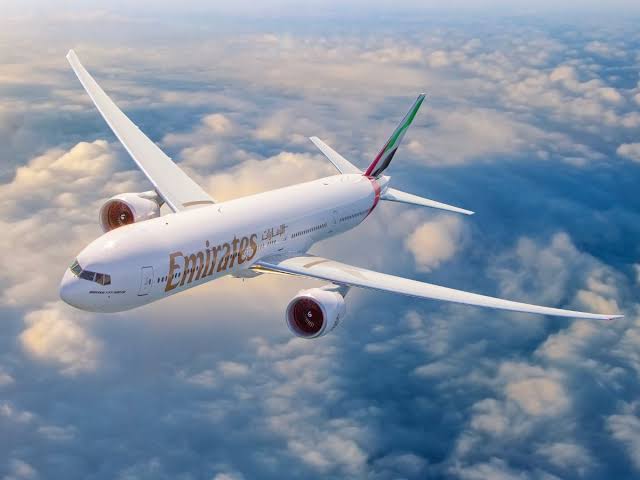
Its Boeing 777 fleet became one of the largest in the world.
The airline also became synonymous with the Airbus A380.
The giant double-deck aircraft allowed Emirates to move enormous numbers of passengers through major airports with limited landing slots.
On high-demand routes, one A380 can replace the capacity of several smaller aircraft movements.
That works particularly well for a hub carrier concentrating passengers onto major international connections.
The A380 Became a Marketing Asset
Aircraft are usually tools.
The A380 became part of Emirates’ brand.
Its size made it distinctive.
Premium cabins, onboard lounges and other features turned the aircraft into a symbol of the airline’s positioning.
This differentiation mattered because airlines sell a product that can otherwise appear relatively similar.
Most competitors can transport passengers between major cities.
Emirates attempted to make the journey itself part of the reason customers selected it.
A New Fleet Era Has Started
The fleet is now changing.
Emirates has begun introducing Airbus A350 aircraft.
The smaller wide-body gives the airline flexibility to serve markets that may not require A380-level capacity.
It can also support longer thin routes where demand is strong enough for a direct service but not for the airline’s largest aircraft.
By late September 2026, Emirates had received 11 new A350s during the year, with additional deliveries scheduled.
The A350 is becoming an important part of the airline’s next generation.
The Order Book Shows the Scale of Future Growth
At March 31, 2026, Emirates had 367 aircraft on order.
That included A350s, Boeing 777X aircraft, Boeing 787s and new 777 freighters.
Deliveries stretch well into the next decade.
An order book of this size is effectively a statement about Dubai’s future aviation ambitions.
Aircraft ordered today may still be flying in the 2040s.
Emirates is therefore committing billions of dollars based on the belief that international travel through Dubai will continue growing for decades.
The 777X Could Eventually Become the New Backbone
The Boeing 777X is intended to provide very high capacity while offering significantly improved efficiency compared with older aircraft.
For Emirates, this makes it strategically important.
The airline needs large aircraft because Dubai is a concentrated connecting hub.
Yet fuel efficiency and operating economics matter enormously.
The 777X could eventually perform many routes currently served by older Boeing 777s while complementing the A380.
Delivery delays have complicated planning, but the aircraft remains central to the long-term fleet strategy.
Retrofitting Existing Aircraft Bridges the Gap
Emirates cannot simply wait for new aircraft.
It has therefore launched one of the industry’s largest cabin retrofit programmes.
Existing A380s and Boeing 777s are being refurbished with updated interiors.
By late September 2026, more than 100 aircraft had completed the programme.
This extends the useful life of existing aircraft while giving passengers newer products.
Retrofitting also allows the airline to standardise its customer experience while awaiting new fleet deliveries.
Premium Economy Created a New Cabin Category
One of the most important product changes has been the rollout of Premium Economy.
Traditional airline cabins created a large gap between Economy and Business Class.
Premium Economy targets customers willing to pay more for comfort without purchasing a full Business Class ticket.
For Emirates, this creates another pricing layer.
The same aircraft can serve more customer segments.
By late 2026, Premium Economy was available across dozens of destinations and continued expanding with the retrofit programme.
Starlink Is Changing Connectivity in the Air
Emirates has also begun installing Starlink satellite internet across its fleet.
By late September 2026, close to 50 aircraft had already been equipped.
High-speed connectivity could fundamentally change the passenger experience.
Travellers increasingly expect to remain connected everywhere.
Business passengers may work throughout the flight.
Families communicate with people on the ground.
Streaming and messaging become possible at speeds closer to what customers experience on land.
Internet access is moving from an airline extra toward expected infrastructure.
The Group Generated AED 150.5 Billion in Revenue
For the 2025-26 financial year, Emirates Group reported record revenue of AED 150.5 billion.
Profit before tax reached AED 24.4 billion.
EBITDA reached AED 41.1 billion.
Cash assets increased to a record AED 59.6 billion.
These figures demonstrate extraordinary financial strength for an industry historically known for thin margins and recurring crises.
Airlines face fuel shocks, pandemics, geopolitical disruption and economic recessions.
Large cash reserves therefore provide strategic protection.
Emirates Airline Produced Most of the Profit
The airline itself generated AED 130.9 billion in revenue.
Profit before tax reached AED 22.8 billion.
Profit after tax was AED 19.7 billion.
Emirates described itself as the world’s most profitable airline for the 2025-26 reporting period.
The airline carried 53.2 million passengers during the year.
Its passenger seat factor stood at 78.4 percent.
These results demonstrate how profitable the hub-and-spoke model can become when demand, network scale and pricing align.
Fuel Remains One of the Biggest Costs
Airline economics remain highly sensitive to fuel.
Fuel represented approximately 29 percent of Emirates’ operating costs in 2025-26.
The annual fuel bill was AED 31.2 billion.
A change of only a few percentage points in fuel prices can therefore move billions of dirhams.
Emirates uses hedging strategies to reduce some volatility.
But no airline can fully escape energy prices.
Efficiency remains essential.
Cargo Gives Passenger Aircraft Another Revenue Source
Passenger aircraft carry more than travellers.
The belly holds underneath the cabin transport cargo.
This creates additional revenue using flights that are already operating.
Emirates SkyCargo has developed into a major global air-freight business.
Dubai’s location is equally useful for cargo as it is for passengers.
High-value products can move rapidly between Asia, Europe, Africa and the Middle East.
Pharmaceuticals, electronics, perishables and e-commerce goods all depend heavily on air freight.
Dedicated Freighters Expand the Cargo Opportunity
Passenger aircraft cannot handle every type or volume of freight.
Emirates is therefore expanding its dedicated freighter fleet as well.
New Boeing 777 freighters are entering service.
The airline’s order book includes additional cargo aircraft.
This strengthens Dubai’s position as a logistics hub.
Cargo can move between air transport, Jebel Ali Port and regional road networks, creating a multimodal supply chain.
dnata Makes Emirates Group More Than an Airline
The second major pillar of Emirates Group is dnata.
The company operates airport ground handling, cargo, catering and travel services across international markets.
It serves airlines other than Emirates.
This is strategically important.
The group can earn aviation revenue even when a passenger never flies on an Emirates aircraft.
An international airline may still use dnata for baggage handling or catering.
That diversifies the group beyond the performance of its own carrier.
dnata Has Become Highly International
dnata generated record revenue of AED 23.6 billion in 2025-26.
Profit before tax reached AED 1.6 billion.
Approximately 77 percent of dnata’s revenue came from international businesses.
Its operations extend across major aviation markets including Europe, Australia, the United States and other regions.
This geographic diversification makes Emirates Group much broader than its Dubai headquarters might suggest.
Airport Ground Handling Is Critical but Invisible
Passengers rarely think about ground handling unless something goes wrong.
Baggage needs to move from check-in to the correct aircraft.
Cargo needs loading.
Aircraft must be pushed back.
Cabins need servicing.
Flights depend on hundreds of precisely timed tasks.
dnata specialises in this hidden operational layer.
A delay in one part can disrupt an entire flight schedule.
Operational reliability therefore becomes a competitive advantage.
Catering Is an Industrial Operation
Airline meals may appear simple from the passenger seat.
Producing millions of them safely is not.
Food needs to be prepared, packaged, transported and loaded onto aircraft under strict time and temperature requirements.
Emirates Flight Catering and dnata’s international catering businesses operate at enormous scale.
In Dubai alone, Emirates Flight Catering also serves numerous external airline customers.
The business combines food production with highly complex logistics.
Dubai Benefits Far Beyond Emirates Group’s Own Profit
The group’s importance cannot be measured only through its financial statements.
International connectivity helps attract multinational companies.
Tourists fill hotels.
Events become easier to host.
Property becomes more attractive to international buyers.
Air cargo supports trade.
Professionals can travel rapidly between Dubai and major business centres.
A global airline effectively reduces the economic distance between the UAE and the rest of the world.
This creates indirect value across almost every major Dubai industry.
Aviation Supports Dubai’s Tourism Strategy
Millions of Emirates passengers do not simply connect through Dubai.
They enter the city.
The airline markets Dubai globally and provides direct access from major source markets.
More flight capacity can therefore translate into more hotel stays, restaurant spending and attraction visits.
Emirates and Dubai’s tourism industry reinforce each other in the same way the airline and airport do.
The destination creates passenger demand.
The airline creates access.
The Future Move Toward Dubai World Central Is Enormous
Dubai plans to shift much of its future aviation growth toward Al Maktoum International Airport at Dubai World Central.
The eventual airport vision is enormous.
For Emirates, such infrastructure provides room to grow beyond the physical constraints of the current Dubai International Airport.
The transition will be one of the most complicated aviation projects ever attempted.
Moving a global hub cannot happen overnight.
But over the longer term, DWC could provide the capacity Emirates needs for its next several decades.
Sustainability Is Aviation’s Hardest Challenge
Long-haul aviation is difficult to decarbonise.
Battery technology cannot currently power large commercial aircraft across intercontinental distances.
Hydrogen remains technologically challenging.
Sustainable aviation fuel can reduce lifecycle emissions but remains expensive and limited in supply.
Fleet modernisation therefore remains one of the most practical near-term tools.
New aircraft consume less fuel per passenger.
Better routing and weight reduction can produce additional improvements.
Efficiency Is Financially and Environmentally Aligned
For airlines, reducing fuel consumption has an immediate economic benefit.
Using less fuel reduces costs.
It also lowers carbon emissions.
This creates unusual alignment between sustainability and profitability.
Emirates’ investment in newer aircraft therefore serves both objectives.
The challenge is that fleet replacement happens slowly because aircraft remain in service for decades.
The Biggest Risk Is Global Exposure
Emirates’ international network is a tremendous advantage.
It is also a source of risk.
War can close airspace.
Currency movements affect revenue.
Economic weakness in one market reduces travel demand.
Pandemics can stop international aviation entirely.
The airline therefore needs a geographically diversified network and substantial financial reserves.
The record cash balance provides protection against precisely these uncertainties.
Why Emirates Group Matters
Emirates Group matters because it demonstrates how transportation infrastructure can become an economic-development strategy.
The company started with two aircraft.
It now generates more than AED 150 billion in annual revenue.
Emirates carries more than 50 million passengers a year.
dnata operates aviation services around the world.
Hundreds of new aircraft are on order.
Existing aircraft are undergoing one of the industry’s largest retrofit programmes.
The impact extends far beyond aviation.
Emirates helped make Dubai accessible to businesses, tourists, investors and workers from almost every major world region.
Dubai created the environment in which Emirates could grow.
Emirates, in turn, helped create the global Dubai the world recognises today.
Few companies are as closely connected to the economic identity of their home city.
Contributed by GuestPosts.biz.