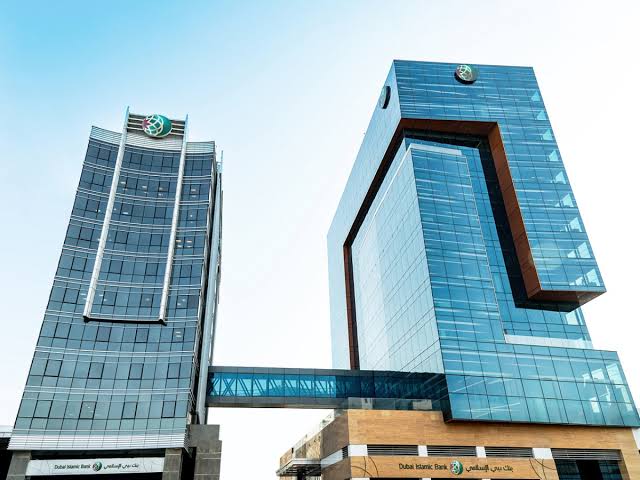
When Dubai Islamic Bank was established in 1975, Islamic banking was still an experimental idea in modern finance.
The global banking system was built almost entirely around conventional interest-based products.
Creating a bank that operated according to Islamic financial principles while competing commercially required a different approach.
More than fifty years later, Dubai Islamic Bank, commonly known as DIB, has demonstrated how far the concept has evolved.
The institution has grown into the UAE’s largest Islamic bank and one of the most important Sharia-compliant financial groups in the world.
Its balance sheet now exceeds AED 400 billion.
It serves millions of customers.
Its products extend from everyday consumer banking to corporate finance, property financing and international capital markets.
The story of DIB is therefore not only about one bank.
It is also about the transformation of Islamic finance from an alternative model into a mainstream global financial industry.
DIB Was a Pioneer
The bank’s establishment was significant because it attempted to translate Islamic commercial principles into a modern banking institution.
Islamic finance avoids conventional interest and instead uses structures connected to assets, trade, leasing and shared economic activity.
These products have to meet Sharia requirements while also functioning in competitive financial markets.
That is more difficult than simply removing interest from a conventional loan.
Contracts need to be structured differently.
Banks require specialised governance.
Products need to remain understandable and convenient for customers.
DIB became one of the institutions that helped prove this model could operate at significant scale.
Dubai Provided the Ideal Environment
The growth of DIB is closely connected to Dubai itself.
The Emirate developed into a major centre for trade, property, tourism and financial services.
Each of these sectors creates demand for banking.
Residents need accounts and home finance.
Businesses require working capital.
Property developers need funding.
International companies need trade finance.
Investors require capital-market services.
DIB was able to grow alongside this expanding economy while providing products structured according to Islamic principles.
The Balance Sheet Has Reached Enormous Scale
By June 2026, DIB’s total assets had reached approximately AED 423 billion.
Customer deposits stood at AED 327 billion.
Net financing assets reached AED 281 billion.
These figures illustrate how completely Islamic finance has moved beyond niche status.
DIB operates with the scale expected from one of the country’s major banks.
It can support individual customers while also financing large companies and sophisticated institutional transactions.
Consumer Banking Remains Fundamental
Millions of individual customers form the foundation of the franchise.
They use DIB for salary accounts, cards, vehicle finance, home finance and savings.
The UAE’s population growth supports this business continuously.
Every professional relocating to Dubai becomes a potential customer.
Families require increasingly complex financial products as they establish longer-term lives in the country.
A basic current account can therefore become the beginning of a relationship lasting decades.
Home Finance Is Particularly Important in Dubai
Property ownership has become increasingly attractive to UAE residents.
Long-term visas and population growth have encouraged more expatriates to consider purchasing rather than renting.
Islamic home finance provides an alternative structure for customers who do not want a conventional mortgage.
Housing demand therefore connects DIB directly with one of Dubai’s strongest economic sectors.
The bank has also developed partnerships with housing and property organisations to make financing more accessible.
Islamic Finance Can Serve Non-Muslim Customers Too
One misconception is that Islamic banks serve only Muslim customers.
In practice, the products can be used by anyone.
A customer may select an Islamic bank because of pricing, service, ethical preferences or digital experience rather than religion.
This expands the potential market considerably.
For DIB, success depends on competing with every major bank in the UAE.
Sharia compliance is part of the proposition, but it cannot substitute for good service.
Customers still expect competitive products and modern technology.
Corporate Banking Gives DIB Access to Larger Transactions
DIB also provides financing to businesses and institutions.
Corporate customers may require working capital, project finance, trade services or long-term financing.
Islamic structures can support these needs at substantial scale.
This is important because the UAE hosts enormous companies operating in property, aviation, infrastructure, logistics and energy.
Islamic banking therefore needs to function not only for consumers but also for sophisticated corporate transactions.
DIB has developed the balance sheet and expertise required to compete in this environment.
Sukuk Have Connected Islamic Finance With Global Capital Markets
One of the most important developments in Islamic finance has been the rise of sukuk.
Sukuk provide governments and companies with a Sharia-compliant way of raising capital from investors.
The Gulf has become one of the largest global centres for this market.
DIB can participate as issuer, arranger and investor.
This creates another business beyond traditional financing.
It also connects the bank to international institutional investors who want exposure to Islamic financial assets.
Sustainable Sukuk Bring Two Trends Together
Islamic finance and sustainable finance increasingly overlap.
In late 2025, DIB issued a major sustainability-linked financing sukuk.
This type of instrument connects funding with environmental or sustainability objectives.
The development demonstrates how Islamic finance continues evolving rather than remaining fixed around traditional products.
Sharia-compliant banking can participate directly in renewable energy, efficient buildings and other parts of the sustainability transition.
H1 2026 Revenue Passed AED 12 Billion
DIB reported gross revenue of AED 12.4 billion during the first half of 2026.
This represented year-on-year growth of 10 percent.
Pre-tax profit reached AED 4.3 billion, while profit after tax stood at AED 3.7 billion.
The scale of these numbers demonstrates how profitable a mature Islamic banking franchise can become.
Revenue was supported by both funded and non-funded activities, giving DIB a more diversified earnings model.
Fee Income Reduces Dependence on Financing Margins
Banks earn money from more than the difference between financing income and funding costs.
Cards, trade services, foreign exchange, wealth management and other activities generate fees.
These non-funded income streams become particularly valuable when benchmark rates decline and financing margins face pressure.
A diversified bank is better positioned to manage different interest-rate environments.
DIB has increasingly focused on broadening these sources of revenue.
Asset Quality Has Continued Improving
Growth is only valuable when financing remains recoverable.
DIB’s non-performing financing ratio improved to around 2.4 percent by mid-2026.
This is an important indicator of credit quality.
Banks can produce impressive short-term growth by financing weak borrowers.
The problems appear later.
Disciplined underwriting therefore matters enormously.
Improving asset quality while increasing the financing portfolio suggests the bank has been able to grow without sacrificing credit standards significantly.
Deposits Give DIB a Strong Foundation
Customer deposits reached AED 327 billion by the end of the first half of 2026.
Deposits are one of a bank’s most important competitive advantages.
They provide funding for financing activity.
A broad retail franchise can offer relatively stable deposits compared with depending entirely on wholesale markets.
Liquidity is particularly valuable when financial conditions become volatile.
A bank with strong deposits has more flexibility to continue supporting customers during difficult periods.
Capital Strength Protects the Bank
Banks operate with leverage.
This makes regulatory capital critical.
DIB maintained strong capital ratios during 2026.
The bank also raised additional capital through an Additional Tier 1 sukuk.
Capital provides a buffer against unexpected losses.
It also determines how much a bank can grow.
A strong capital base allows DIB to expand financing while maintaining regulatory resilience.
Digital Banking Has Become Essential
DIB’s founders could never have imagined modern customers managing almost their entire financial lives through smartphones.
Yet digital banking is now one of the most important competitive battlegrounds.
Customers want immediate transfers.
They want to control cards digitally.
They expect financing applications to be simple.
They want services available outside branch hours.
A bank may have excellent financial products but still lose customers if the digital experience is frustrating.
DIB therefore needs to compete with conventional banks and fintech companies simultaneously.
Artificial Intelligence Could Reshape Customer Service
AI creates opportunities across banking.
Chatbots can answer routine questions.
Fraud systems can analyse transaction patterns.
Credit teams can use data to identify risks.
Employees can process documents faster.
Marketing can become more personalised.
For DIB, AI needs to operate within both financial regulation and Sharia governance.
Technology may become more advanced, but the underlying product structures still need to remain compliant.
Cybersecurity Becomes More Important as Banking Moves Online
Digital banking also creates risk.
A branch-based transaction requires physical interaction.
Online banking can potentially be attacked from anywhere in the world.
Banks therefore need enormous investment in cybersecurity.
Fraud detection, identity verification and secure authentication become essential.
A serious cyber incident could damage customer confidence rapidly.
For a financial institution, trust remains the most important asset.
DIB Has Expanded Beyond the UAE
The bank’s international presence extends its growth opportunity.
Islamic finance has potential across markets with large Muslim populations.
International subsidiaries and investments provide access to millions of customers who may be underserved by modern Sharia-compliant banks.
However, entering foreign markets introduces currency, regulatory and economic risk.
International expansion therefore needs to be selective.
The objective is not simply geographic size but profitable, sustainable growth.
The UAE Is Becoming a Global Centre for Islamic Finance
Dubai has long aimed to strengthen its role in the global Islamic economy.
Banking forms a major part of that ambition.
The city already provides financial infrastructure, capital markets and international connectivity.
Large institutions such as DIB give the ecosystem credibility.
A global company wanting to issue sukuk or obtain Islamic financing can access expertise locally.
This helps Dubai compete with other major Islamic-finance centres.
Ethical Finance Could Broaden the Audience
Islamic finance contains principles that may resonate beyond religious customers.
Transactions are structured around real economic assets.
Certain industries are excluded.
Excessive uncertainty and speculation are restricted.
These ideas overlap in some ways with the growing global interest in responsible finance.
The terminology may differ, but both approaches ask questions about what capital supports and how financial returns are generated.
This creates potential for Islamic products to appeal to a wider international audience.
DIB’s Half-Century Creates an Important Advantage
Financial services depend heavily on trust and track record.
DIB has operated for more than fifty years.
This history gives it credibility that newer financial companies cannot reproduce quickly.
Customers know the institution has survived multiple economic cycles.
The bank has experienced property booms, financial crises, pandemics and major technological changes.
Longevity itself becomes part of the brand.
The Challenge Is Remaining a Pioneer
Being first does not guarantee remaining first.
New Islamic banks have emerged.
Conventional banks now offer Islamic windows and subsidiaries.
Fintech companies are entering financial services.
Customers can change banks more easily than before.
DIB therefore cannot depend on its historical position.
It needs to continue improving technology, service and product design.
The institution that pioneered modern Islamic banking now has to pioneer its next stage as well.
Why Dubai Islamic Bank Matters
DIB matters because it helped demonstrate that Islamic banking could operate as a fully competitive modern financial system.
It serves millions of customers.
Its assets exceed AED 400 billion.
It finances consumers and corporations.
It participates in international sukuk markets.
It increasingly combines Sharia principles with digital technology and sustainable finance.
What began in 1975 as a pioneering idea has become one of the pillars of the UAE financial system.
The next challenge is larger still.
DIB now has the opportunity to help make Islamic finance not only a regional success but a much more significant part of global banking.
Contributed by GuestPosts.biz.