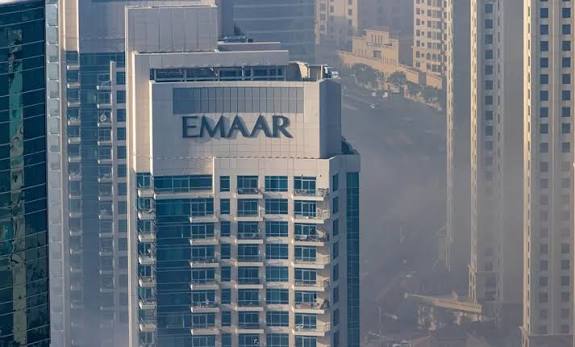
It is difficult to tell the story of modern Dubai without telling the story of Emaar Properties.
The company’s developments have become part of the visual identity of the city.
Burj Khalifa dominates the skyline.
Dubai Mall became one of the world’s most recognisable shopping and entertainment destinations.
Downtown Dubai developed into an international tourism and residential district.
Dubai Marina, Dubai Hills Estate, Arabian Ranches and Dubai Creek Harbour have helped shape entirely different parts of the city.
Emaar’s significance therefore extends well beyond individual buildings.
The company has helped define how Dubai approaches large-scale urban development.
Emaar Builds Communities Rather Than Individual Towers
One of Emaar’s most important strategies has been master-planned development.
Instead of constructing an isolated residential building and moving on, the company frequently develops entire districts.
Homes are combined with retail, schools, parks, hotels, restaurants and entertainment.
This changes the economics of property development.
A successful community can create value over decades.
New phases can be launched as the population grows.
Retail assets can generate recurring income.
Hotels attract visitors.
Public spaces make the location more desirable.
The developer effectively creates an ecosystem around the property.
Downtown Dubai Became the Ultimate Example
Downtown Dubai demonstrates this strategy more clearly than almost anywhere else.
Burj Khalifa became the centrepiece, but the district includes much more.
Dubai Mall attracts residents and tourists.
Hotels bring international visitors.
Residential towers create a permanent population.
Restaurants and entertainment venues keep the district active throughout the day and evening.
This combination transformed a development project into a destination.
The value of one component strengthens the others.
Someone may visit for the mall and later consider living nearby.
A hotel guest may return as a property investor.
The district becomes its own economic engine.
Burj Khalifa Changed Dubai’s Global Image
Burj Khalifa is more than Emaar’s most famous development.
It became a symbol of Dubai’s ambitions.
The tower demonstrated that the city wanted to compete globally not only in trade and aviation but also through architecture and urban development.
Landmarks have economic value because they attract attention.
Burj Khalifa appears in advertising, films, social media and tourism campaigns around the world.
Millions of people recognise it even if they have never visited the UAE.
Very few private-sector developments achieve that level of global branding.
Dubai Mall Became a Business in Its Own Right
Dubai Mall illustrates another dimension of Emaar.
Retail assets provide recurring revenue rather than depending only on selling property.
A mall of this scale becomes a destination rather than simply a collection of shops.
Visitors can shop, eat, visit attractions and spend hours inside the development.
Dubai’s tourism economy supports this model particularly well.
International visitors often spend significant amounts on retail and entertainment.
A major shopping destination therefore benefits from both the local population and millions of tourists.
This gives Emaar exposure to consumer spending as well as real estate.
Recurring Revenue Makes the Business More Resilient
Property development can be cyclical.
Sales rise and fall according to interest rates, economic conditions and investor confidence.
Emaar has reduced some of this dependence by developing recurring-income businesses.
Shopping centres generate rental income.
Hotels produce hospitality revenue.
Commercial leasing creates additional cash flow.
Entertainment attractions add another stream.
This diversification can help stabilise the group during periods when residential property sales slow.
It also means Emaar continues earning from developments long after construction has finished.
Dubai’s Population Growth Supports Long-Term Demand
Dubai continues attracting residents from around the world.
Population growth creates demand for housing.
Professionals relocating to the city need apartments and villas.
Families eventually look for larger homes.
Companies expanding operations create demand for commercial space.
Schools, shops and other services follow the residents.
Large developers with substantial land banks are positioned to benefit from this structural growth.
Emaar’s challenge is not simply to build more.
It must create communities that customers continue choosing even as competition intensifies.
Dubai Hills Estate Shows How the Model Has Evolved
Dubai Hills Estate represents a newer generation of master planning.
The community combines villas, apartments, schools, green areas, golf, retail and healthcare.
Rather than functioning purely as a residential development, it is intended to support most parts of everyday life within one broader district.
This type of development has become increasingly popular in Dubai.
Customers want more than a property.
They want access to parks, shops and services.
Community design therefore becomes part of the product.
Dubai Creek Harbour Creates Another Long-Term Growth Area
Dubai Creek Harbour gives Emaar another major development platform.
Large master plans are important because they provide developers with years of potential inventory.
Infrastructure can be built first.
Residential districts can then be launched gradually according to demand.
This allows the project to evolve with the city.
Waterfront developments also carry substantial pricing appeal in Dubai.
Views, promenades and access to leisure environments can make properties more attractive to both residents and international investors.
The Company’s Sales Backlog Provides Visibility
One unusual characteristic of large property developers is the importance of backlog.
A customer may purchase an off-plan home years before completion.
The developer records the sale, but revenue is recognised progressively according to accounting rules and project execution.
This creates future revenue visibility.
By June 2026, Emaar’s property-sales revenue backlog had reached approximately AED 164.9 billion.
That backlog represents a substantial amount of contracted business expected to convert into revenue as projects progress.
It gives investors greater visibility into future earnings.
H1 2026 Demonstrated the Scale of the Business
Emaar reported AED 26.6 billion in property sales during the first half of 2026.
Group revenue reached AED 23.9 billion.
EBITDA rose to AED 12.9 billion, while net profit before tax reached AED 12.8 billion.
These figures illustrate the enormous scale of Dubai’s property economy.
They also demonstrate that Emaar is no longer simply a prominent local developer.
It operates as one of the Middle East’s largest real-estate companies.
The Land Bank Provides Decades of Development Potential
Land is the raw material of real estate.
Developers with large, strategically located land holdings have greater flexibility to create new communities as demand evolves.
Emaar reports a land bank of hundreds of millions of square feet across the UAE and international markets.
This provides substantial long-term development capacity.
The key question is how that land is used.
Launching too much supply at once can damage pricing.
Moving too slowly can allow competitors to capture demand.
Successful development therefore requires careful timing.
Hospitality Extends the Emaar Experience
Emaar also operates hotels and hospitality brands.
This business fits naturally with Dubai’s tourism economy.
Hotels allow the group to monetise locations differently from residential development.
A visitor staying for several days generates hospitality revenue without purchasing property.
Luxury hotels can also strengthen the positioning of surrounding developments.
Branded residences and hospitality increasingly overlap as wealthy customers seek properties connected with recognised service standards.
Tourism Strengthens Multiple Parts of the Group
Dubai’s tourism growth benefits Emaar in several ways simultaneously.
Visitors shop at its retail destinations.
They stay in hotels.
They visit attractions.
Some later purchase property.
This creates a powerful relationship between tourism and real estate.
A city attracting millions of international visitors effectively markets its property sector to potential buyers every year.
Emaar’s most prominent assets place the company directly in front of those visitors.
International Expansion Adds Another Growth Route
Although Emaar is most closely associated with Dubai, it has developed projects in multiple international markets.
Its international presence has included countries across Asia, the Middle East, North Africa and other regions.
Global development creates opportunities but also additional risk.
Local regulations differ.
Currencies can move.
Economic conditions may be less predictable.
The Emaar brand therefore needs to travel without assuming that every market behaves like Dubai.
The Emaar Name Has Become Part of the Product
Real estate is unusual because customers may pay substantial sums years before a building is completed.
Brand trust becomes crucial.
Buyers need confidence that the developer can deliver the project.
A strong track record therefore becomes economically valuable.
Emaar can launch off-plan developments partly because customers already recognise the brand.
This lowers one of the biggest psychological barriers to purchasing unfinished property.
The developer’s name becomes part of what the buyer is paying for.
Luxury Is Becoming Increasingly Important
Dubai’s property market has moved strongly toward high-end and ultra-luxury development.
Wealthy residents are relocating to the city.
International investors are purchasing second homes.
Entrepreneurs and family offices increasingly establish themselves in the UAE.
This has expanded demand for villas, branded residences and highly exclusive communities.
Emaar has responded with increasingly ambitious premium developments.
The opportunity is substantial, but luxury customers are demanding.
Design, privacy, service and community quality all need to justify premium pricing.
An AED 200 Billion Vision Shows the Next Scale of Ambition
In 2026, Emaar announced plans for an enormous new Dubai master-planned development with an estimated value of around AED 200 billion.
Projects at this scale demonstrate how the company continues thinking in terms of entire urban districts rather than individual buildings.
A masterplan of this size could influence traffic patterns, surrounding land values, retail demand and population distribution.
Major developers effectively participate in city-building.
That creates enormous commercial opportunity but also considerable responsibility.
Sustainability Is Becoming Part of Property Value
Buildings consume substantial amounts of electricity and water.
In Dubai’s climate, cooling is particularly important.
Developers therefore face increasing pressure to design more efficient communities.
Energy-efficient buildings can reduce operating costs for residents.
Green spaces can improve liveability.
Smart infrastructure can optimise consumption.
Sustainability is gradually moving from a marketing feature toward an essential part of modern property development.
For a company delivering developments at Emaar’s scale, small efficiency improvements can have significant cumulative effects.
Technology Is Changing How Property Is Sold
The property business is becoming increasingly digital.
Customers can explore developments virtually.
Payments can be managed online.
Data can help developers understand which unit types and locations are attracting demand.
AI may eventually influence pricing, design, customer service and property management.
Large developers possess enormous amounts of information about customers and communities.
Using that data intelligently could become a major competitive advantage.
Competition in Dubai Is Stronger Than Ever
Emaar operates in one of the world’s most competitive property markets.
Developers continuously launch new projects.
Customers compare design, payment plans, locations, amenities and expected investment returns.
This prevents even the largest companies from becoming complacent.
A famous brand may attract initial interest, but each project still needs to convince buyers.
Dubai’s constant development creates opportunity while simultaneously raising customer expectations.
Why Emaar Matters
Emaar matters because it demonstrates how real estate can become part of a city’s global identity.
The company did not simply construct apartments.
It helped create destinations.
Burj Khalifa changed the skyline.
Dubai Mall transformed retail tourism.
Downtown Dubai became an internationally recognised district.
New master-planned communities continue extending the same model across different parts of the city.
The company’s enormous sales backlog suggests this story is far from finished.
As Dubai continues expanding, Emaar will remain one of the companies helping determine what the next version of the city looks like.
Contributed by GuestPosts.biz.