Dubai’s skyline receives much of the attention.
New towers rise, communities expand, hotels open, data centres grow and millions of residents and visitors move through the city every day.
Behind all of this visible development sits infrastructure that receives far less attention but makes almost everything else possible.
Electricity and water.
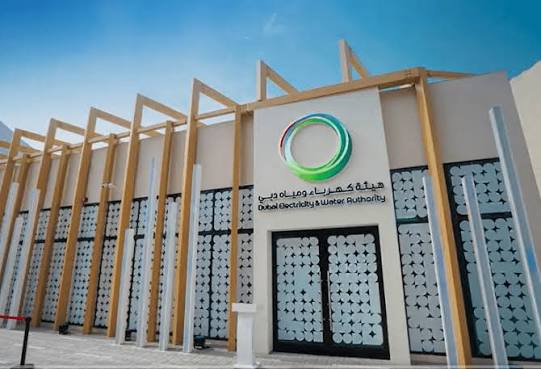
Dubai Electricity and Water Authority, better known as DEWA, is responsible for providing both across the Emirate.
That makes DEWA more than a conventional utility company.
It is one of the fundamental pieces of infrastructure supporting Dubai’s population growth, economic expansion and transition toward cleaner energy.
As the city grows, DEWA has to anticipate demand years before it appears.
Power stations, transmission lines, solar projects and desalination facilities cannot be built overnight.
The company’s real challenge is therefore not simply keeping today’s lights on.
It is building the utility system Dubai will need decades from now.
Dubai’s Growth Creates Constantly Rising Demand
Few cities have expanded as rapidly as Dubai.
New residential communities continue appearing.
Commercial districts are growing.
Tourism infrastructure keeps expanding.
Manufacturing and logistics facilities require additional power.
The rise of digital businesses and artificial intelligence is creating another category of energy-intensive demand.
Every new development eventually connects to DEWA’s system.
This makes population growth and economic growth direct drivers of utility demand.
By June 2026, DEWA had approximately 1.36 million customer accounts.
The number had increased by more than 72,000 during the previous twelve months.
That expansion illustrates how closely the company’s growth follows the development of Dubai itself.
Electricity Is the Invisible Foundation of the City
Almost every modern service ultimately depends on electricity.
Metro systems require power.
Hospitals depend on uninterrupted supply.
Hotels run cooling, lighting and digital systems continuously.
Ports and logistics facilities use increasingly automated equipment.
Banks and technology companies rely on large computing systems.
Residential towers operate elevators, cooling systems and thousands of individual appliances.
The importance of the electricity network becomes most obvious when it fails.
For this reason, reliability is one of the most important measures for a utility company.
Dubai has achieved extremely low levels of electricity interruption compared with many international systems.
That reliability supports the city’s reputation as a place where global businesses can operate confidently.
Summer Creates an Extraordinary Test
Dubai’s climate makes electricity planning especially challenging.
Air conditioning is essential for much of the year.
During the hottest months, cooling systems operate almost continuously across millions of square metres of residential, commercial and industrial property.
Electricity demand therefore rises strongly during summer.
The power system must be capable of handling these peaks even though demand is lower during other periods.
This requires reserve capacity, careful forecasting and a transmission network capable of managing large volumes of electricity safely.
Climate conditions turn electricity reliability from a convenience into a basic requirement.
DEWA’s Generation Capacity Continues to Expand
By the middle of 2026, DEWA’s installed electricity generation capacity had reached almost 18,000 megawatts.
The system includes traditional generation facilities, solar power and waste-to-energy capacity.
Building this scale of infrastructure takes decades.
Each new plant requires financing, engineering, construction and integration with the wider electricity network.
The system must also evolve continuously.
Dubai’s future electricity mix will look increasingly different from its historical one as renewable generation becomes more significant.
The Mohammed bin Rashid Al Maktoum Solar Park Is Central to the Transition
One of DEWA’s most important projects is the Mohammed bin Rashid Al Maktoum Solar Park.
Located in the desert south of Dubai, the project has become one of the world’s largest single-site solar developments.
Its capacity had reached 3,860 megawatts by the middle of 2026.
The project combines different solar technologies and is being developed in multiple phases.
Its ultimate scale has continued increasing as Dubai raises its clean-energy ambitions.
DEWA now expects the solar park to exceed 8,000 megawatts of capacity by 2030.
This is significantly higher than the project’s original target.
Solar Energy Fits Dubai’s Natural Advantages
Dubai has one resource available in enormous quantities: sunlight.
Using solar energy therefore makes strong economic and environmental sense.
Utility-scale solar can produce electricity without consuming fuel during operation.
It can reduce emissions while also lowering exposure to long-term fuel-price changes.
However, solar power introduces another challenge.
Generation varies with sunlight.
Electricity demand does not.
This means the future electricity system needs greater flexibility.
Energy storage will become increasingly important.
Battery Storage Could Change How Solar Power Is Used
DEWA’s planned seventh phase of the solar park demonstrates how quickly the technology is evolving.
The project is expected to include approximately 2,000 megawatts of additional solar generation together with a very large battery-storage system.
The proposed battery system is designed to store electricity produced during periods of strong solar generation and release it later.
This addresses one of renewable energy’s fundamental limitations.
Solar panels produce their maximum output during daylight.
But electricity is still required after sunset.
Large-scale batteries allow part of the daytime production to be shifted into evening hours.
If storage costs continue declining, this could dramatically change the economics of renewable power.
Clean Energy Already Provides a Significant Share of Generation
The transformation is already visible in DEWA’s operating results.
During the second quarter of 2026, clean electricity accounted for almost one-fifth of total power generation.
Installed clean-energy capacity represented more than one-fifth of DEWA’s total generation system.
These percentages are expected to rise substantially.
Dubai’s long-term objective is much more ambitious.
The Emirate aims for all power-generation capacity to come from clean sources by 2050.
Achieving this will require decades of investment.
Water Is Just as Important as Electricity
Electricity receives more attention, but Dubai faces an equally fundamental challenge with water.
The UAE is one of the world’s most water-scarce countries.
Natural freshwater resources cannot support the population and economy at their current scale.
Dubai therefore depends heavily on desalination.
Seawater must be converted into potable water before being distributed across the city.
This process requires enormous infrastructure.
DEWA’s responsibility is not simply producing enough water today.
It must ensure new capacity is available as the population grows.
Desalination Has Historically Required Large Amounts of Energy
Traditional desalination systems can consume significant amounts of energy.
This creates a close relationship between water and electricity.
Producing water may require power, while power stations themselves need substantial infrastructure and resources.
Improving desalination efficiency therefore has strategic importance.
DEWA is increasingly investing in seawater reverse-osmosis technology.
Reverse osmosis can reduce energy consumption compared with older thermal desalination approaches.
This makes future water production more efficient.
Hassyan Represents the New Generation of Water Infrastructure
In 2026, DEWA commissioned the first block of the Hassyan seawater reverse-osmosis plant.
The initial addition increased water-production capacity by 60 million imperial gallons per day.
Further expansion is planned.
Projects such as Hassyan demonstrate how water infrastructure is being redesigned around greater efficiency.
As reverse osmosis makes up a larger share of desalination, Dubai can reduce the amount of energy required to produce each unit of water.
This matters both economically and environmentally.
Water Demand Keeps Rising With the City
Dubai’s water requirements are closely connected to population growth.
Homes need water.
Hotels and restaurants serve millions of visitors.
Landscaping, industry, construction and commercial activities create additional demand.
Utility planners therefore need to forecast growth carefully.
Building excessive capacity too early wastes capital.
Building too little creates supply risk.
Finding the correct balance is one of the fundamental responsibilities of DEWA.
Efficiency Can Reduce the Need for New Infrastructure
Expanding supply is only one solution.
Using existing resources more efficiently is equally important.
DEWA has worked to reduce electricity and water losses across its networks.
Every unit of electricity lost during transmission or every litre of water lost through leakage represents resources that were produced but never reached a paying customer.
Reducing network losses therefore creates benefits without constructing a new power station or desalination plant.
Dubai’s electricity and water loss rates compare favourably with many major international utility systems.
Smart Meters Change How Utilities Operate
Digitalisation has also transformed utility management.
Smart electricity and water meters provide far more detailed consumption information than traditional systems.
Customers can track usage more closely.
DEWA can identify unusual consumption patterns or potential problems.
Billing becomes more automated.
More importantly, the utility gains access to enormous amounts of operational data.
This data can improve forecasting and help engineers understand exactly where demand is changing.
Artificial Intelligence Could Make the Grid Smarter
AI is increasingly becoming part of the utility industry.
A power company produces huge quantities of data from generation facilities, transformers, transmission lines, meters and customer interactions.
Artificial intelligence can analyse these datasets much faster than traditional methods.
Predictive systems can identify equipment that may be approaching failure.
Demand models can forecast electricity consumption more accurately.
AI can also improve customer service and optimise maintenance schedules.
For DEWA, technology is therefore becoming part of physical infrastructure.
Electric Vehicles Create Both Demand and Opportunity
The transition toward electric vehicles introduces another major change.
Every EV effectively shifts part of transportation energy demand from petrol stations to the electricity system.
As the number of electric cars increases, charging infrastructure must expand.
DEWA has been involved in developing Dubai’s EV charging network for years.
This creates a new responsibility for utilities.
They must ensure that large numbers of vehicles can charge without placing unnecessary strain on the grid.
Smart charging may eventually become essential.
Cars could be encouraged to charge during periods when electricity demand is lower or renewable generation is abundant.
Data Centres May Become an Even Bigger Challenge
Artificial intelligence creates another source of electricity demand.
Modern data centres require enormous power.
They also need highly reliable electricity because outages can disrupt digital services used by millions of customers.
The UAE wants to become a major global centre for AI and digital infrastructure.
That ambition will require equally ambitious electricity infrastructure.
Utilities such as DEWA therefore play an indirect but critical role in the country’s technology strategy.
Software may look weightless, but the computers running it consume very real electricity.
District Cooling Adds Another Layer
Cooling represents one of the largest sources of electricity demand in Dubai.
District-cooling systems offer another way to manage this requirement.
Instead of every building operating completely independent cooling equipment, centralised systems can serve larger developments.
DEWA Group has exposure to the district-cooling sector through Emirates Central Cooling Systems Corporation, commonly known as Empower.
This connects DEWA to another strategically important part of Dubai’s infrastructure.
Improving cooling efficiency can reduce the amount of electricity required during the hottest parts of the year.
Waste Can Become an Energy Resource
Dubai is also developing waste-to-energy infrastructure.
Rather than sending all municipal waste to landfill, certain waste streams can be used to generate electricity.
This produces two benefits.
It reduces the amount of waste requiring disposal while creating another source of energy.
DEWA’s system includes generation from Dubai’s waste-to-energy facility.
This contribution remains relatively small compared with conventional generation and solar, but it demonstrates the increasingly diverse nature of the city’s energy system.
DEWA Became a Publicly Listed Company
DEWA reached another important milestone in 2022 when it listed shares on the Dubai Financial Market.
The IPO was one of the largest public offerings in the region.
The listing gave investors access to a company previously owned entirely by the Government of Dubai.
The government retained a large controlling stake.
For Dubai, the transaction formed part of a wider strategy to develop local capital markets and list major government-related companies.
Financial Performance Reflects Dubai’s Expansion
DEWA’s financial results provide another way of measuring the city’s growth.
The company reported record revenue of AED 14.86 billion for the first half of 2026.
Net profit reached AED 3.33 billion.
Both electricity and water demand continued increasing.
Utility growth is unusual because it is directly tied to real economic activity.
When more people move to Dubai, they need electricity and water.
When new hotels and factories open, demand rises again.
DEWA therefore provides an interesting window into the physical expansion of the city.
More Than 1.3 Million Customer Accounts Create Enormous Operational Complexity
Serving more than a million customer accounts requires much more than generating electricity.
Connections need to be established for new properties.
Meters have to be installed.
Bills must be processed.
Maintenance needs to occur without creating significant disruption.
Emergencies require rapid response.
At the same time, the network itself must continuously expand.
The scale of these operations helps explain why utilities increasingly depend on automation and digital services.
Reliability Is DEWA’s Most Important Product
Customers rarely celebrate when electricity works perfectly.
They simply expect it.
This creates an unusual business model.
The best utility experience is often almost invisible.
Power is available whenever needed.
Water pressure remains consistent.
Billing works correctly.
Infrastructure failures are rare.
DEWA has achieved extremely low customer interruption levels by international standards.
This reliability supports much more than household convenience.
It contributes directly to Dubai’s attractiveness as a business destination.
Net Zero Will Require More Than Solar Panels
Dubai’s target of achieving net-zero carbon emissions from power production by 2050 is extremely ambitious.
Solar energy will form a major part of the solution, but the transition will require much more.
Battery storage must expand.
Networks must become smarter.
Energy efficiency needs to improve.
Water production must consume less power.
Buildings and cooling systems need to become more efficient.
New technologies may eventually become commercially viable.
The utility of the future will therefore look substantially different from the utility of today.
DEWA Has to Build for a City That Does Not Yet Exist
Perhaps the most difficult part of DEWA’s role is planning for future Dubai.
The city’s population is expected to continue increasing dramatically over coming decades.
New neighbourhoods will emerge.
Existing districts will become denser.
Transport will become more electrified.
AI and advanced industry could require enormous amounts of power.
Climate conditions may place additional pressure on cooling and water systems.
Infrastructure must be ready before much of this demand arrives.
That requires long-term investment decisions under considerable uncertainty.
Why DEWA Matters
DEWA is one of those companies whose importance becomes clearer when imagining Dubai without it.
Skyscrapers cannot function without electricity.
Hotels cannot welcome millions of tourists without water.
Data centres cannot support AI without reliable power.
Electric vehicles cannot replace petrol cars without charging infrastructure.
New communities cannot expand without utility connections.
Even the city’s transition toward cleaner energy depends on enormous infrastructure investment.
DEWA sits behind all of these developments.
Its power stations, solar fields, desalination plants, transmission networks, smart meters and digital systems form part of the physical machinery that allows Dubai to keep growing.
The company’s greatest achievement may therefore be that most residents rarely think about it.
They turn on a light, open a tap or charge a vehicle and expect the system to work.
Behind that simple action is one of the most important companies in the UAE.
Contributed by GuestPosts.biz.