Petrochemical companies rarely appear in everyday conversations.
Yet their products surround modern life.
Water travels through polymer pipes.
Power cables depend on advanced insulation.
Cars contain lightweight plastic components.
Medical products require carefully engineered materials.
Food and consumer goods rely on packaging.
Borouge sits behind many of these applications.
The Abu Dhabi-based polyolefins business has developed into one of the UAE’s most important industrial companies.
Its products may be less visible than a skyscraper or airline, but they are embedded deeply in the infrastructure that allows modern economies to function.
Borouge Is Built Around Advanced Polyolefins
Borouge specialises primarily in polyethylene and polypropylene.
These materials may sound simple, but their properties can be engineered for highly specific applications.
A polymer used in food packaging needs different characteristics from one designed for a high-voltage power cable.
A pipe carrying water underground needs long-term durability.
Automotive materials need strength while remaining lightweight.
The ability to produce specialised grades is therefore far more valuable than simply producing large quantities of generic plastic.
The Ruwais Complex Provides Enormous Scale
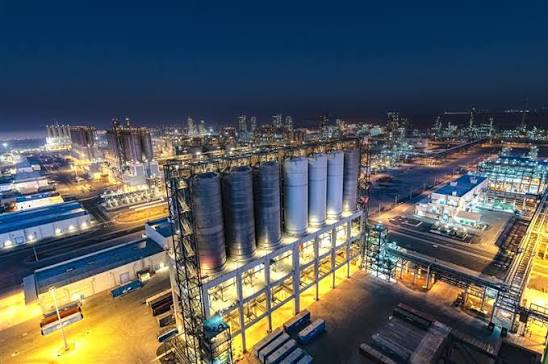
Borouge’s production operations are centred in Ruwais, Abu Dhabi.
The site has grown through several large expansion phases.
Its scale provides a major competitive advantage.
Large integrated plants can achieve lower unit costs through efficient operations.
They can produce multiple product grades.
They also benefit from access to feedstock supplied within the wider Abu Dhabi energy ecosystem.
This combination of scale, technology and feedstock access helped Borouge become one of the world’s most profitable polyolefins producers.
The Company Connects Energy With Manufacturing
Borouge demonstrates how the UAE is moving further down the energy value chain.
Exporting oil or gas captures one level of value.
Converting hydrocarbons into specialised industrial materials captures another.
Those materials can then be sold globally for use in higher-value applications.
This supports the UAE’s industrial diversification.
The country earns not only from extracting resources but also from processing them into manufactured products.
Pipes Are a Major End Market
One of the most important applications for Borouge products is pipe infrastructure.
Polyethylene pipes are used for water and gas distribution.
They are lightweight compared with some traditional materials and can provide excellent corrosion resistance.
This is particularly valuable in environments where infrastructure must operate reliably for decades.
Population growth, urbanisation and water scarcity all increase demand for modern pipeline systems.
Borouge therefore benefits from infrastructure investment far beyond the UAE.
Water Infrastructure Is a Global Growth Market
Many cities around the world are replacing ageing water networks.
Others are constructing entirely new systems as populations grow.
Climate change adds additional pressure.
Water needs to be transported more efficiently.
Leaks need to be reduced.
Desalination projects require extensive pipeline systems.
Advanced polymer materials therefore play an important role in water security.
For Borouge, this creates a long-term market linked to one of the world’s most fundamental infrastructure needs.
Power Cables Create Another High-Value Application
Borouge also supplies materials used in power cables.
This sector is becoming increasingly important as electricity systems expand.
Renewable-energy projects require new transmission connections.
Electric vehicles increase power demand.
Data centres require enormous electricity infrastructure.
Countries are also investing in high-voltage networks capable of moving renewable power across long distances.
Cable insulation is therefore a strategic materials market.
The polymer may represent only one part of a cable, but its performance is essential.
The Energy Transition Can Increase Demand for Petrochemicals
This creates an interesting contradiction.
The world is trying to reduce fossil-fuel emissions, but the energy transition itself requires large amounts of advanced materials.
Solar farms need electrical infrastructure.
Wind farms require cables.
EVs use lightweight polymer components.
New electricity grids require insulation.
Battery systems use specialised plastics.
This means petrochemical demand does not simply disappear as energy systems decarbonise.
The applications change.
Borouge 4 Represents the Next Major Expansion
Borouge 4 is one of the UAE’s largest industrial expansion projects.
The development is designed to add approximately 1.4 million tonnes of polyethylene capacity.
Once fully operational, the broader Ruwais complex will become one of the world’s largest single-site polyolefins facilities.
Scale at this level reinforces Abu Dhabi’s position in global petrochemicals.
It also allows Borouge to supply customers across high-growth markets from one integrated production hub.
XLPE Production Is Particularly Strategic
A new cross-linked polyethylene plant associated with Borouge 4 began contributing commercial production in 2026.
XLPE is used in advanced cable applications.
The plant adds approximately 100,000 tonnes of annual capacity and doubles Borouge’s production capability in this material.
This is particularly relevant to the global expansion of electrical infrastructure.
More renewable power and data centres require stronger transmission systems.
Materials capable of handling high voltages therefore become increasingly valuable.
AI Infrastructure Is Creating New Materials Demand
Artificial intelligence may appear to be a software industry.
Physically, however, AI depends on enormous data centres.
Those facilities require electrical cables, cooling systems and construction materials.
The power grids feeding them require further infrastructure.
This creates indirect demand for petrochemical products.
Companies such as Borouge can therefore benefit from digitalisation even though they do not develop AI software themselves.
Every digital system ultimately rests on physical infrastructure.
Packaging Remains a Major Market
Packaging is another important end use.
Food supply chains depend heavily on materials that protect products during transport and storage.
Good packaging can reduce food waste by extending shelf life.
However, packaging also creates one of the biggest environmental challenges associated with plastic.
This means companies such as Borouge face pressure to improve recyclability and reduce waste.
The future of packaging is likely to involve more circular materials and designs intended for easier recycling.
Circularity Is Becoming Essential
The petrochemical industry cannot ignore the environmental consequences of plastic waste.
Producing more material without addressing what happens at the end of its useful life is increasingly unacceptable to governments and consumers.
Borouge and its wider group are investing in recycled and circular product solutions.
The objective is to keep polymers in productive use longer rather than allowing them to become waste.
This shift could eventually transform the business model from linear production toward more circular material systems.
Mechanical Recycling Has Limits
Recycling plastics is more complicated than simply collecting and remelting everything together.
Different polymers behave differently.
Contamination affects quality.
Some applications require extremely high material standards.
This means recycling technologies need to become more sophisticated.
Manufacturers can help by designing polymer grades and products with circularity in mind from the beginning.
Innovation therefore becomes as important as waste collection.
The Company Has Faced Significant Logistics Challenges
Petrochemical businesses depend heavily on international shipping.
Borouge exports much of its production to customers across Asia and other markets.
Regional geopolitical disruption can therefore affect logistics significantly.
In 2026, the company had to use alternative export routes when conditions around the Strait of Hormuz became difficult.
Despite these challenges, Borouge reported that it was able to ship its available production through alternative logistics channels.
This highlights the importance of supply-chain resilience.
Alternative Export Routes Reduce Concentration Risk
Borouge has also explored additional export infrastructure on the UAE’s east coast.
This has strategic value because ports outside the Strait of Hormuz can provide alternative access to international shipping routes.
Companies moving millions of tonnes of material cannot depend entirely on one logistics corridor.
Redundancy creates resilience.
This principle applies not only to petrochemicals but to almost every major export industry.
Pricing Can Move Dramatically
Petrochemical profitability depends on more than production volume.
Selling prices can fluctuate significantly according to global supply and demand.
In the second quarter of 2026, Borouge reported a sharp increase in average realised prices as global polyolefin supply tightened.
Higher prices supported revenue and profits even during a challenging operating environment.
This demonstrates why commodity-linked industries can experience large changes in earnings from one quarter to another.
Q2 2026 Showed Resilience
Borouge generated approximately $1.4 billion of revenue during the second quarter of 2026.
Net profit reached $191 million, increasing 23 percent compared with the previous quarter.
This came despite higher logistics and feedstock costs.
The result demonstrated the value of differentiated products and operational flexibility.
Specialised materials can sometimes maintain stronger pricing than more generic commodity products.
Dividends Have Become an Important Part of the Investment Case
Borouge has established itself as a significant dividend-paying company.
Shareholders approved $656 million in distributions for the first half of 2026.
Income-oriented investors often value petrochemical companies because strong cash generation can support large dividends.
However, the company also needs substantial capital for expansion.
Balancing shareholder distributions with investment in future capacity remains an important financial decision.
Borouge International Changes the Scale Completely
One of the biggest developments in 2026 was the creation of Borouge International.
The new group brings together Borouge, Borealis and NOVA Chemicals.
This creates a much larger global polyolefins platform spanning the Middle East, Europe and North America.
The combination changes Borouge from a primarily Abu Dhabi and Asia-focused producer into part of a much more globally diversified organisation.
Global Diversification Reduces Regional Dependence
A broader production footprint provides several advantages.
Factories in different regions can serve customers more closely.
Supply-chain disruption in one geography may be partially offset by others.
The product portfolio becomes more diverse.
Research and technology capabilities can be shared.
This creates opportunities for both cost savings and revenue growth.
Borouge International has identified substantial potential synergies from bringing the businesses together.
Technology Is a Major Part of the Competitive Advantage
The petrochemical industry may appear highly commoditised, but technology matters enormously.
Specialised polymer technologies allow manufacturers to produce stronger, lighter or more durable materials.
Borouge historically benefited from Borealis’ Borstar technology.
Combining the broader businesses creates an even larger research and development platform.
Innovation can help the company move away from lower-margin commodity products toward higher-value specialised applications.
Autonomous Operations Are Entering the Factory
Borouge has also begun using AI more extensively in manufacturing.
Industrial AI can analyse production conditions continuously.
It can optimise energy use.
It can predict equipment problems.
It can adjust operations more quickly than traditional manual systems.
Autonomous systems could gradually increase output while reducing downtime.
In a massive production complex, even small efficiency improvements can create substantial financial benefits.
Why Borouge Matters
Borouge matters because it represents a deeper stage of UAE industrialisation.
The country is not simply exporting hydrocarbons.
It is converting those resources into specialised materials used in global infrastructure, mobility, healthcare and packaging.
Borouge 4 will increase production scale significantly.
Advanced cable materials connect the company to renewable power and AI infrastructure.
Circularity investments address the environmental challenges associated with plastics.
And Borouge International gives the business an entirely new global footprint.
The products may be largely invisible to ordinary consumers.
But inside water systems, power cables, cars, medical equipment and packaging, Borouge materials are helping build the physical infrastructure of modern life.
Contributed by GuestPosts.biz.