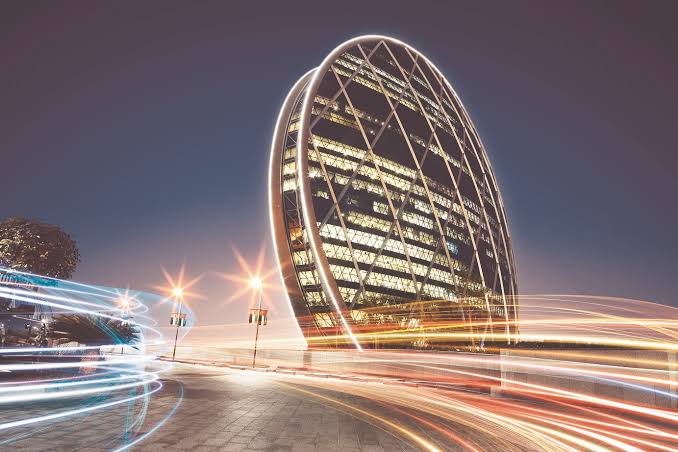
Abu Dhabi’s transformation is increasingly visible through the places where people live, work, shop, study and spend their leisure time.
Few companies have influenced that transformation as directly as Aldar.
The Abu Dhabi-based property group has developed some of the Emirate’s most recognisable destinations while gradually evolving into something much broader than a conventional real-estate developer.
Today, Aldar combines property development with a large portfolio of income-generating assets spanning offices, retail, residential communities, education and hospitality.
It has also expanded outside the UAE through businesses in Egypt and the United Kingdom.
That combination makes Aldar one of the most interesting examples of how a UAE property company can move from building projects to managing a diversified real-estate platform.
Aldar Is Closely Connected to Modern Abu Dhabi
Aldar’s story is deeply tied to the development of Abu Dhabi.
As the Emirate expanded beyond its traditional commercial centre, entirely new districts emerged.
Yas Island became a major entertainment and tourism destination.
Saadiyat Island developed into a cultural and premium residential district.
Al Raha and other communities created new places for families and professionals to live.
Aldar has been involved across many of these areas.
This gives the company more than a portfolio of individual buildings.
It gives it exposure to the long-term expansion of the city itself.
Yas Island Became a Destination Rather Than a Development
Yas Island demonstrates how real estate can create an ecosystem.
Residential projects exist alongside hotels, retail, entertainment and sporting attractions.
People may visit for an event, stay at a hotel, shop, dine and eventually consider purchasing a home.
Each part of the destination supports the others.
This is very different from constructing one residential tower in isolation.
A successful destination can continue creating commercial opportunities for decades.
For Aldar, Yas became a template for combining property development with tourism, entertainment and long-term investment assets.
Saadiyat Island Plays a Different Role
Saadiyat Island illustrates another side of Abu Dhabi’s growth.
The district is strongly associated with culture, premium residential property, beaches and major international institutions.
Its positioning is more exclusive than many mass-market communities.
That creates demand from wealthy local and international buyers.
Luxury property can generate substantial value, but buyers at this level are demanding.
Architecture, landscaping, privacy, amenities and location all matter.
The success of premium developments therefore depends on much more than simply providing square metres of residential space.
Aldar Is No Longer Only a Build-and-Sell Company
Traditional developers earn primarily by purchasing land, building property and selling units.
Aldar now operates through two major business engines.
Aldar Development handles property development, project management and international development.
Aldar Investment owns and manages recurring-income assets.
This distinction is important.
Development can generate high profits during strong property cycles.
Investment assets provide rental and operating income over longer periods.
Combining the two can make earnings more resilient.
Recurring Income Changes the Risk Profile
A company dependent entirely on property sales can become vulnerable when market activity slows.
Income-producing assets behave differently.
Office tenants continue paying rent.
Shopping centres generate leasing income.
Schools collect tuition.
Residential rental portfolios produce recurring cash flow.
Hotels operate through tourism cycles.
A diversified portfolio therefore reduces dependence on one type of property transaction.
Aldar’s income-generating portfolio had grown to tens of billions of dirhams in value by 2026.
That scale makes recurring income a major part of the company rather than a side business.
The Development Backlog Provides Years of Visibility
Property companies often sell homes before they are completed.
This creates a revenue backlog.
The sale has already been contracted, but revenue is recognised progressively as construction advances.
At the end of June 2026, Aldar’s group development backlog stood at AED 71.6 billion.
That figure provides strong visibility into future revenue.
A large backlog effectively represents work that has already been sold but still needs to be delivered.
It reduces dependence on generating entirely new sales every quarter.
International Buyers Are Becoming More Important
One of the most striking changes in Abu Dhabi’s property market is the growing participation of international customers.
During the first half of 2026, expatriate and overseas buyers accounted for the majority of Aldar’s UAE development sales.
This reflects broader changes in the Emirate.
Abu Dhabi is attracting more global businesses.
Long-term visa reforms have encouraged foreign residents to establish deeper roots.
Cultural and lifestyle infrastructure continues improving.
Property ownership therefore becomes more attractive to buyers who may previously have viewed Abu Dhabi mainly as a place to work temporarily.
Abu Dhabi Is Competing More Directly for Global Residents
Dubai has long been internationally recognised as a destination for expatriate property investment.
Abu Dhabi is increasingly competing for the same customer.
The proposition is somewhat different.
Abu Dhabi often emphasises lower-density communities, culture, education and quality of life alongside business opportunities.
For Aldar, this creates a significant addressable market.
The company can sell not only to existing residents but also to international buyers considering the UAE as a long-term base.
Family-Oriented Communities Remain Important
Luxury developments attract attention, but family housing is equally important.
Aldar has continued launching villas, townhouses and mid-rise residential communities designed around schools, parks and everyday amenities.
This reflects the way the UAE population is changing.
Many expatriates who once expected to remain for a few years now stay much longer.
They marry, have children and look for larger homes.
Developers therefore need communities capable of supporting long-term family life rather than short-term residency.
Education Has Become a Major Real-Estate Business
Aldar’s investment portfolio includes a substantial education platform.
This may initially appear unrelated to property development, but the connection is logical.
Schools are essential infrastructure inside large residential communities.
Education also provides recurring revenue.
Population growth creates demand for additional school places.
Families often choose where to live partly according to the quality of nearby education.
Owning or operating schools can therefore strengthen both the investment business and the attractiveness of surrounding communities.
Commercial Property Benefits From Abu Dhabi’s Business Growth
Office demand is another important area.
Abu Dhabi has attracted increasing numbers of financial, technology and professional-services companies.
The growth of Abu Dhabi Global Market has been particularly significant.
As companies establish or expand regional headquarters, high-quality office space becomes more valuable.
Aldar’s commercial portfolio benefits from this trend.
High occupancy levels also create rental growth when supply is constrained.
This turns Abu Dhabi’s success as a business centre directly into property income.
Retail Remains Part of the Ecosystem
Retail property continues to matter even as e-commerce expands.
Shopping centres in the UAE function as much more than places to purchase products.
They combine dining, entertainment and social activity.
Climate also plays a role.
Indoor retail destinations provide comfortable public spaces throughout the summer.
Aldar has continued developing its retail platform, including major partnerships aimed at consolidating and expanding high-quality assets.
This creates another recurring-income business connected to population and tourism growth.
The Mubadala Partnership Expands the Opportunity
Aldar and Mubadala have developed several major investment partnerships.
One of the most significant involves the future development of Al Maryah Island.
The companies have also worked together on a major retail platform.
These partnerships combine Aldar’s property expertise with Mubadala’s capital and strategic reach.
Joint ventures can make very large projects easier to finance while spreading risk between partners.
They also allow both organisations to pursue opportunities that might be more difficult individually.
Al Maryah Island Could Become Even More Important
Al Maryah is already one of Abu Dhabi’s most significant business districts.
It hosts Abu Dhabi Global Market and major financial institutions.
Further development can add residential, commercial and hospitality assets around this existing business centre.
This type of mixed-use expansion can create powerful network effects.
More offices attract residents.
More residents support retail and restaurants.
Better amenities make the district more attractive to businesses.
Aldar’s involvement gives it direct exposure to this cycle.
Project Management Is a Large Business in Its Own Right
Aldar does not only build properties that it owns or sells.
Its project-management business handles major government and infrastructure programmes.
By June 2026, this segment had a backlog exceeding AED 80 billion.
This provides another source of revenue.
It also connects Aldar closely with Abu Dhabi’s wider development plans.
Government housing, infrastructure and public-sector projects can continue even when private property markets slow.
That adds another layer of diversification.
Egypt Became Aldar’s First Major International Development Platform
Aldar’s acquisition of a significant stake in SODIC gave it a substantial position in Egypt.
Egypt has a population far larger than the UAE’s and significant long-term housing demand.
The market also carries greater economic and currency risk.
For Aldar, SODIC represents both an opportunity and a test of international expansion.
Success would demonstrate that the company’s development expertise can be transferred beyond its home market.
London Added a Completely Different Geography
Aldar expanded further by acquiring London Square.
The UK housing market is very different from Abu Dhabi or Cairo.
Planning systems, consumer financing and construction practices differ substantially.
That makes the acquisition strategically valuable.
The company gains exposure to a mature international real-estate market while learning how to operate under different conditions.
London Square’s sales increased strongly in the first half of 2026, supported by several new launches.
International Expansion Reduces Dependence on One Market
Geographic diversification can make a developer more resilient.
Property cycles do not always move together.
Demand may weaken in one country while remaining strong in another.
However, diversification also introduces complexity.
Currencies fluctuate.
Regulations differ.
Management teams need local expertise.
The challenge is ensuring international expansion produces real value rather than simply increasing the size of the company.
Aldar’s Investment Portfolio Creates Defensive Earnings
Aldar Investment reported strong occupancy across its properties during 2026.
Commercial assets were particularly well occupied.
High occupancy provides relatively predictable rental income.
Long leases with established tenants add further stability.
This helps balance the more cyclical nature of property development.
The combination resembles two companies operating together: one builds and sells, while the other owns and manages.
The Develop-to-Hold Pipeline Connects Both Businesses
Aldar increasingly develops certain projects specifically to retain them rather than sell them.
This develop-to-hold strategy connects its two main business models.
The development team creates an asset.
Instead of selling it, the investment business adds it to the recurring-income portfolio.
Over time, this can grow rental earnings organically rather than relying entirely on acquisitions.
Aldar has identified a substantial pipeline of projects intended for this purpose.
Technology Is Changing Property Management
Large property portfolios generate enormous quantities of data.
Energy consumption, occupancy, maintenance requests and leasing activity can all be monitored digitally.
AI can help predict equipment failures.
Smart-building systems can reduce electricity consumption.
Digital leasing platforms can improve customer experience.
For a group managing large numbers of assets, technology can therefore create meaningful efficiency gains.
The future of real estate will involve software almost as much as construction.
Sustainability Has Direct Financial Value
Buildings are responsible for significant energy consumption.
In the UAE, air conditioning is particularly important.
Energy-efficient buildings can reduce operating costs.
Solar systems can offset some electricity use.
Efficient water systems matter in an arid environment.
Sustainability therefore has both environmental and financial value.
For long-term property owners such as Aldar Investment, efficiency improvements can increase the profitability of an asset over decades.
H1 2026 Demonstrated the Strength of the Model
Aldar reported AED 16.8 billion in group revenue during the first half of 2026.
Net profit after tax reached AED 4.9 billion, up 18 percent year-on-year.
Development revenue grew while the investment portfolio benefited from strong occupancy and rental growth.
The numbers demonstrate why diversification matters.
Sales activity can vary according to launch timing, but revenue from existing backlog and recurring assets provides additional support.
Why Aldar Matters
Aldar is important because it represents the evolution of Abu Dhabi’s real-estate sector.
It began by developing major local destinations.
It now manages a large recurring-income portfolio.
It owns schools, offices, residential rental assets and retail properties.
It manages enormous infrastructure projects.
It develops internationally in Egypt and London.
Most importantly, its growth reflects Abu Dhabi’s own transformation into a more global residential, cultural and business destination.
As more international residents choose the Emirate and more companies establish operations there, demand for high-quality property and infrastructure is likely to keep evolving.
Aldar is positioned across almost every part of that story.
Contributed by GuestPosts.biz.