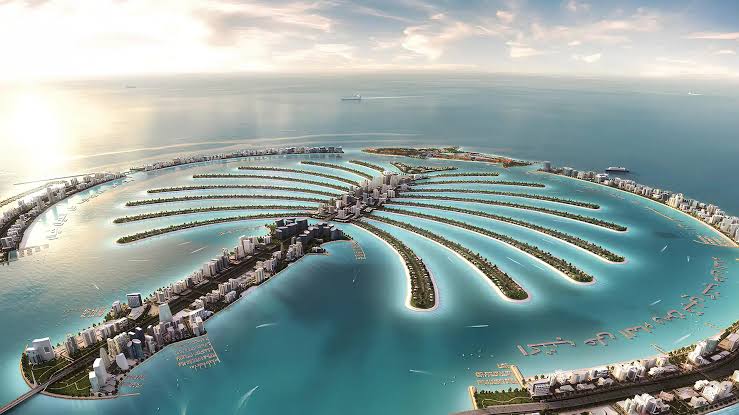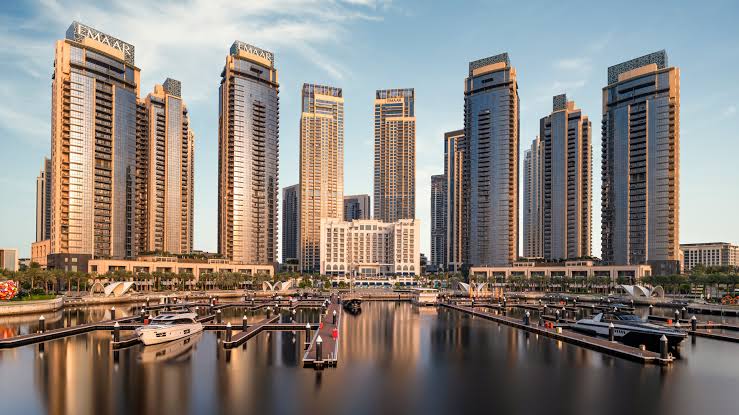
Dubai’s real-estate boom can be measured through cranes, new communities and rapidly changing skylines.
It can also be measured through one less visible number: backlog.
Emaar Development ended the first half of 2026 with AED 127.7 billion of revenue backlog.
That represents property already sold but still moving through the construction and revenue-recognition process.
The figure reveals something important about the scale of Dubai’s current property cycle.
Buyers are committing enormous amounts of capital to homes that will be delivered over several years.
For Emaar Development, that creates a pipeline of future business unlike almost any other industry.
The company has become one of the purest ways to understand the economics of Dubai’s build-to-sell property market.
Emaar Development Is Different From Emaar Properties
The names are similar, but the businesses should not be confused.
Emaar Properties is the wider parent group.
It includes malls, hospitality, international businesses and recurring-income activities alongside property development.
Emaar Development is focused primarily on developing and selling residential property in the UAE.
This makes it a more concentrated business.
Its fortunes are closely connected to Dubai’s housing market.
When property sales are strong, Emaar Development benefits directly.
When the market eventually slows, it will feel that change more clearly than a highly diversified group.
The Company Sits Behind Some of Dubai’s Largest Communities
Emaar Development operates across major master-planned destinations.
These include established communities and large emerging districts.
The company does not simply build individual towers.
It develops neighbourhoods containing villas, townhouses, apartments, parks and supporting amenities.
This strategy allows Emaar to monetise land over many years.
One masterplan can contain dozens of phases.
Each successful launch strengthens the value of later launches because infrastructure and community activity have already been established.
Master Planning Changes the Economics of Development
Consider the difference between one apartment building and an entire community.
A standalone project has a relatively short commercial life.
Once units are sold and handed over, the developer largely moves on.
A master-planned community can generate repeated launches for years.
Early buyers create a resident base.
Schools and retail follow.
Parks mature.
Transport connections improve.
Later phases may sell at higher prices because the destination has become more established.
The developer therefore benefits from value creation across the entire district.
Dubai’s Population Growth Provides the Structural Demand
Dubai’s population continues increasing.
This creates genuine housing demand beyond investment speculation.
New professionals need rental accommodation.
Longer-term residents increasingly purchase homes.
Families move from apartments into townhouses or villas.
Wealthy international buyers purchase second homes or relocate entirely.
A developer with a broad range of housing types can serve customers at multiple stages of this progression.
Population growth therefore provides the fundamental support behind property sales.
Longer Residency Is Changing Buyer Behaviour
Dubai was once viewed by many expatriates primarily as a temporary employment destination.
That is changing.
Long-term visas, business opportunities and lifestyle factors have encouraged residents to remain much longer.
When someone expects to stay for a decade rather than three years, purchasing property becomes more attractive.
This structural shift supports developers.
A larger share of the population begins thinking like long-term residents rather than temporary renters.
International Investors Add Another Layer of Demand
Dubai’s property market is global.
Buyers come from Europe, Asia, the Middle East, Africa and beyond.
International demand provides a much larger potential customer base than the local population alone.
Dubai benefits from straightforward property ownership rules for foreign buyers in designated areas, international air connectivity and relatively low property taxation.
For Emaar Development, the global recognition of the Emaar name also helps.
An international buyer may recognise the developer before understanding every local neighbourhood.
Brand Trust Is Extremely Valuable in Off-Plan Property
Buying a completed apartment is relatively simple.
The customer can inspect exactly what is being purchased.
Off-plan buying is different.
The customer may commit substantial money years before completion.
Trust in the developer therefore becomes critical.
The Emaar name has substantial value because the group has delivered large numbers of projects over decades.
This reduces perceived risk.
A recognised developer can often achieve stronger off-plan demand than an unfamiliar competitor offering a similar property.
H1 2026 Sales Reached AED 22.4 Billion
Emaar Development recorded AED 22.4 billion in property sales during the first half of 2026.
That amount demonstrates the scale of customer demand even after the company adopted a more measured approach to new launches during part of the period.
Revenue reached AED 13.3 billion.
Net profit after tax climbed to AED 6.7 billion.
These are extraordinary margins for a business ultimately based on constructing and selling physical property.
They reflect both strong pricing and the economics of large-scale development.
A 43 Percent Increase in Profit Shows Operating Leverage
Net profit rose 43 percent year-on-year in the first half of 2026.
Real-estate developers can experience significant operating leverage.
Land and infrastructure costs are substantial, but once a masterplan has been established, strong pricing and sales can create high incremental profitability.
This works positively during strong markets.
It can also work in reverse when prices weaken.
The profitability of development therefore reflects both operational execution and market conditions.
The Backlog Is More Important Than One Quarter’s Sales
Quarterly property sales can be volatile.
Launch timing matters enormously.
A company introducing several major projects in one quarter may report unusually strong bookings.
Another quarter with fewer launches can look weak.
Backlog smooths some of this volatility.
Emaar Development had AED 127.7 billion of backlog by June 2026.
That provides visibility into revenue expected to be recognised as construction progresses.
It gives the company a substantial foundation before considering future launches.
Construction Execution Becomes the Critical Challenge
Once properties are sold, the job is far from finished.
Thousands of units need to be constructed and handed over.
Contractors need to be managed.
Materials must be sourced.
Infrastructure must be completed.
Customers expect delivery according to promised schedules and specifications.
A huge backlog therefore represents opportunity and responsibility simultaneously.
Selling property is only the first stage.
The developer ultimately earns long-term trust by delivering it.
Dubai’s Construction Sector Must Keep Pace
Large property backlogs across multiple developers place enormous pressure on contractors and suppliers.
Skilled labour is required.
Concrete, steel, glass and finishing materials need to be available.
Infrastructure must expand around new communities.
Construction costs can rise when the entire market is busy.
Developers therefore need strong procurement and contractor relationships.
Execution capacity may become as important as customer demand during a sustained property boom.
Community Infrastructure Influences Future Pricing
The value of a home is not determined only by the building.
Buyers care about schools, parks, retail, roads and public spaces.
Master developers can influence all of these.
A successful community becomes more desirable as amenities improve.
This can support resale prices and make later project launches easier.
Emaar’s long experience with community development therefore creates an advantage that goes beyond architecture.
Dubai Hills Estate Demonstrates Long-Term Value Creation
Dubai Hills Estate provides a good example.
The development contains villas, apartments, parks, retail and other amenities.
As the community has matured, it has become a major residential district rather than simply a collection of new properties.
This maturity creates value for existing owners while allowing developers to launch additional phases into an established destination.
The same principle applies across other large masterplans.
Emaar South Benefits From Dubai’s Geographic Expansion
Dubai continues expanding toward new growth corridors.
Areas that once felt distant gradually become integrated into the metropolitan economy as roads, communities and employment centres develop.
Emaar South is positioned within one of these expanding zones.
The nearby aviation and logistics ecosystem around Dubai South can support long-term residential demand.
Large developers benefit when they own land ahead of future urban expansion.
The Valley Targets Family-Oriented Demand
Villa and townhouse communities have grown strongly as families seek more living space.
The Valley serves this part of the market.
The pandemic accelerated interest in larger homes, but the trend has continued because Dubai is attracting more long-term families.
Outdoor space, community amenities and additional bedrooms become priorities.
This creates demand beyond the traditional high-rise apartment model associated with the city.
Dubai Creek Harbour Represents Another Major Pipeline
Dubai Creek Harbour is another long-term growth platform connected to the wider Emaar ecosystem.
Waterfront property typically commands strong demand.
The district combines residential development with future commercial and leisure components.
Large projects of this nature can take decades to reach full maturity.
This gives developers repeated opportunities to respond to changing market preferences over time.
Property Buyers Are Increasingly Sophisticated
Today’s Dubai buyer can compare hundreds of projects online.
Floor plans are available instantly.
Payment plans can be evaluated across several developers.
Rental yields and transaction histories are widely discussed.
This transparency raises the standard.
A strong brand helps, but customers still examine pricing and design carefully.
Developers therefore need to maintain product quality even during periods when demand is exceptionally strong.
Payment Plans Are Part of the Product
Property competition extends beyond the physical home.
Payment structures can influence purchasing decisions substantially.
Off-plan buyers often make payments according to construction milestones.
Developers can adjust these schedules to make purchases more accessible.
This effectively turns financing structure into a marketing tool.
However, developers must also maintain healthy cash collections to fund construction.
Generous terms need to be balanced against financial discipline.
Technology Is Changing the Sales Process
Property sales have become increasingly digital.
International customers can explore developments through virtual tours.
Documents can be processed remotely.
Customer data can help developers understand demand.
AI may eventually influence pricing, design and launch timing.
Large developers possess enormous datasets covering buyer preferences and transaction behaviour.
Using this information effectively could become an important competitive advantage.
AI Could Influence What Gets Built
Imagine a developer analysing thousands of historical sales.
It could identify which floor plans sell most quickly.
Which views generate the highest premiums.
Which apartment sizes attract specific nationalities.
Which amenities influence family buyers.
AI could analyse these patterns much more quickly than traditional methods.
This may eventually influence community design before construction begins.
Property development could become increasingly data-driven.
Sustainability Matters More in a Hot Climate
Buildings in Dubai require substantial cooling.
This makes energy efficiency particularly important.
Better insulation, efficient cooling systems and smart controls can reduce electricity consumption.
Water efficiency matters as well.
For homeowners, these improvements can reduce service and utility costs.
For the city, efficient development reduces pressure on infrastructure.
Sustainability therefore has practical economic value rather than being purely an environmental feature.
A Strong Property Market Supports the Wider Economy
Real estate creates activity far beyond developers.
Construction companies receive contracts.
Banks provide mortgages.
Furniture and interior businesses gain customers.
Agents earn commissions.
Retail follows new residents.
Schools and healthcare facilities open near expanding communities.
The growth of Emaar Development therefore connects indirectly to many other sectors.
Property is one of the engines through which Dubai’s population growth becomes economic activity.
The Biggest Risk Is Cyclicality
No property market rises forever.
Interest rates can change.
International capital flows can weaken.
Supply can eventually exceed demand.
Geopolitical events can affect investor confidence.
Developers therefore need to remain disciplined even during strong markets.
A large backlog provides protection, but future sales still depend on customers continuing to see value.
The most successful property companies are those capable of operating through both booms and corrections.
Emaar Development Has Taken a More Measured Approach to Launches
During 2026, the company became more selective about the timing of certain project launches.
This is notable.
Developers can be tempted to release as much inventory as possible when demand is strong.
A more measured strategy can help protect pricing and prevent oversupply.
It also allows construction teams to focus on delivery.
The objective should not simply be maximum short-term sales.
It should be sustainable value across the entire masterplan.
The Company Is Closely Linked to Emaar Properties
Emaar Properties remains the majority owner of Emaar Development.
This relationship gives the development company significant advantages.
It benefits from the Emaar brand, existing masterplans and the broader group ecosystem.
Retail, hospitality and community management can strengthen the value of developments.
At the same time, Emaar Development provides investors with a more focused exposure to UAE residential property development.
Why Emaar Development Matters
Emaar Development offers a particularly clear window into Dubai’s current growth story.
Its sales reflect international confidence in the city.
Its backlog reveals future construction activity.
Its masterplans show where new residential districts are emerging.
Its profitability demonstrates the economic value created when land, infrastructure, brand and demand come together effectively.
The AED 127.7 billion backlog may be the most important number.
It represents homes already purchased but not yet fully delivered.
In other words, a significant part of Dubai’s next generation of neighbourhoods has already been sold.
The challenge for Emaar Development now is turning that extraordinary pipeline into completed communities that justify the confidence buyers have placed in them.
Contributed by GuestPosts.biz.