Parking rarely looks like a technology business.
Most drivers experience it as a simple transaction.
They find a space.
They pay.
They leave.
But in a city such as Dubai, parking is becoming part of a much larger mobility system involving digital payments, enforcement technology, traffic management, real-estate development and increasingly sophisticated data.
Parkin Company sits at the centre of that system.
As Dubai’s exclusive operator of public paid parking, the company controls one of the city’s most important pieces of everyday transport infrastructure.
Its business model is unusually attractive.
Parking spaces require relatively little capital compared with airports, roads or railways.
Payments are increasingly automated.
Enforcement can be supported by cameras and digital systems.
And population growth creates more demand without the company needing to manufacture a physical product.
The result is a business capable of generating very high margins and strong cash flow from something most people barely notice.
Parkin Was Created From Dubai’s Existing Parking Network
Parkin became a standalone company as Dubai continued transferring major government-related assets into publicly listed businesses.
The company inherited the city’s public paid-parking operations and later listed on the Dubai Financial Market.
Its most important structural advantage comes from its relationship with Dubai’s Roads and Transport Authority.
Parkin operates public parking under a long-term concession arrangement.
That gives the company exclusive rights over a large part of the city’s public paid-parking network.
A competitor cannot simply install another parking meter next to Parkin’s spaces and begin collecting fees.
That creates a powerful economic moat.
The Concession Runs for Decades
Parkin’s public-parking concession extends for 49 years.
Long concessions are valuable because they create visibility.
Management can invest in technology knowing that the underlying operating rights extend far into the future.
Investors can model demand over decades rather than worrying that the company may lose access to its core asset next year.
The arrangement also aligns Parkin closely with Dubai’s broader mobility strategy.
Parking policy is not developed independently from transportation planning.
It affects road congestion, commercial districts and how people choose to move around the city.
The Portfolio Has Expanded Rapidly
By the first half of 2026, Parkin managed approximately 268,300 paid parking spaces.
That represented year-on-year growth of around 27 percent.
The expansion came from several sources.
Public spaces increased.
Developer-owned parking grew much faster.
The company also manages public multi-storey car parks and other parking assets.
Scale matters because technology and management systems can be spread across a larger portfolio.
A centralised digital platform can support tens of thousands of additional spaces without operating expenses increasing proportionally.
Developer Parking Is Becoming a Major Growth Engine
One of the most interesting areas is parking owned by private developers.
Large residential communities, shopping destinations, entertainment districts and mixed-use developments all need parking management.
Developers may not want to operate these systems themselves.
Parkin can provide pricing, payment systems, enforcement and operational management.
Its developer-parking capacity more than tripled year-on-year by mid-2026, reaching roughly 61,500 spaces.
That changes the company’s growth story.
It is no longer dependent only on adding public roadside parking.
It can expand through partnerships with the private real-estate sector.
Dubai’s Property Boom Creates More Parking Demand
Every new residential community creates mobility requirements.
New malls need parking.
Hotels require vehicle access.
Office districts attract commuters.
Entertainment venues produce concentrated traffic during events.
Dubai’s continuing property development therefore gives Parkin a natural pipeline of opportunities.
The company can participate in the growth of the city without building the towers itself.
When developers create a new destination, parking becomes part of the supporting infrastructure.
Seasonal Cards Are More Important Than They Look
Many customers do not want to pay individually every time they park.
Seasonal permits allow regular users to purchase access for longer periods.
This creates revenue that is more predictable than purely hourly parking.
Parkin’s seasonal-card and permit revenue increased dramatically in H1 2026.
Revenue from this category rose by more than 60 percent year-on-year.
Sales volumes also expanded strongly.
For the company, prepaid access improves cash visibility.
For customers, it simplifies repeated parking use.
Parking Is Becoming a Subscription Business
Seasonal cards demonstrate an interesting change in business model.
Instead of generating revenue only when a specific parking event occurs, Parkin can generate recurring revenue from customers who purchase ongoing access.
This resembles a subscription model.
A commuter knows parking will be required regularly.
The company knows a portion of revenue has already been secured.
Subscriptions can also strengthen customer loyalty because the user becomes less likely to seek alternatives during the subscription period.
Enforcement Is a Significant Revenue Stream
Parking systems only function when rules are enforced.
If drivers believe they can avoid payment without consequences, compliance deteriorates rapidly.
Parkin therefore operates extensive enforcement systems.
In H1 2026, enforcement-related revenue reached more than AED 227 million.
That was approximately 27 percent higher than a year earlier.
This category demonstrates that parking management involves more than simply collecting fees.
The operator also needs systems capable of monitoring thousands of spaces consistently.
Technology Makes Enforcement More Scalable
Traditional parking enforcement depends on employees physically inspecting vehicles.
Technology changes this dramatically.
Cameras can read number plates.
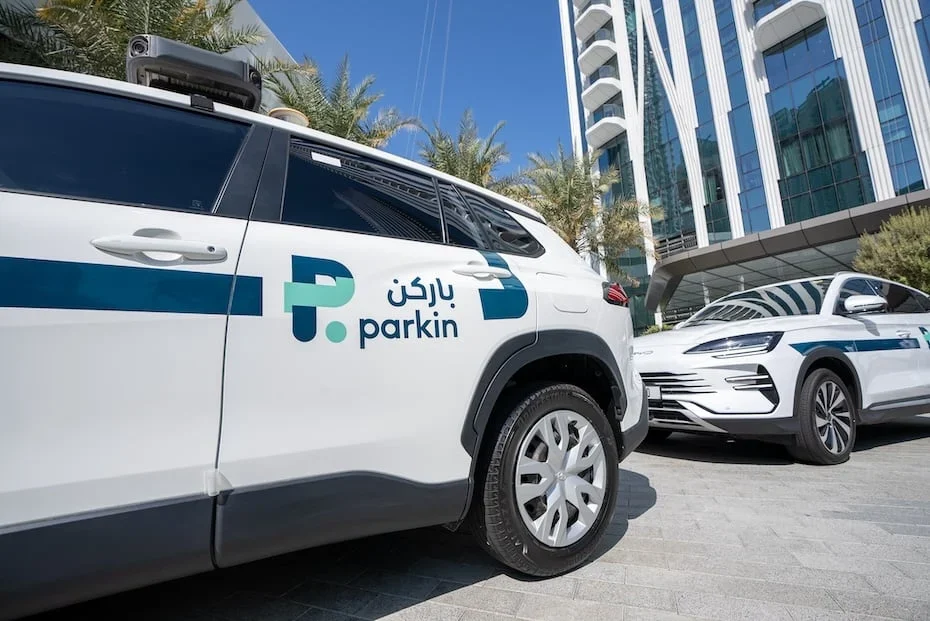
Vehicles equipped with automated recognition systems can scan parked cars while moving.
Databases can identify whether payment or permits are valid.
This allows one enforcement unit to monitor far more spaces.
Automation improves consistency while reducing the amount of manual checking required.
The same technology can also provide information about occupancy and parking behaviour.
ANPR Is Turning Parking Into a Data Business
Automatic Number Plate Recognition, or ANPR, has become central to modern parking systems.
A camera identifies the vehicle automatically.
The system can match it with payment records or subscriptions.
This enables ticketless and barrierless parking environments.
From the driver’s perspective, parking becomes easier.
From Parkin’s perspective, the transaction becomes digital and measurable.
Every entry and exit produces data.
Over time, the company can understand when parking demand is highest and how different locations behave.
Dynamic Pricing Could Become Increasingly Important
Not every parking space has the same value.
A space in a busy commercial district at 10 a.m. may be far more valuable than the same space late at night.
Cities around the world are increasingly experimenting with variable pricing.
Higher prices can discourage long stays during peak periods.
Lower prices can attract drivers when capacity is underused.
Dubai has already moved toward variable parking tariffs in certain areas.
A digital operator is well positioned to manage this type of pricing more intelligently.
Parking Prices Can Influence Traffic
Parking policy has consequences beyond Parkin’s revenue.
Cheap, unlimited parking can encourage more people to drive.
Scarce or expensive parking can make public transport more attractive.
Parking therefore becomes part of congestion management.
Dubai is simultaneously expanding Metro, bus and taxi infrastructure.
A well-designed parking system can complement these alternatives rather than simply competing with them.
For example, pricing can discourage vehicles from occupying high-demand spaces all day.
Public Transport Does Not Eliminate Parking Demand
A larger Metro network may reduce some car journeys.
But Dubai’s population is growing rapidly enough for multiple transport modes to expand simultaneously.
Many communities remain car-oriented.
Families often own vehicles even when they also use Metro or taxis.
Tourists rent cars.
Businesses operate fleets.
The result is continued demand for organised parking even as public transportation improves.
The Business Has Very Low Capital Intensity
One of Parkin’s most attractive financial characteristics is the limited amount of capital required relative to revenue.
The company does not need to manufacture vehicles.
It does not build an entire road network.
Many of the parking spaces already exist as part of Dubai’s urban infrastructure.
Parkin invests in technology, signage, equipment and certain parking facilities, but capital expenditure remains modest compared with many infrastructure businesses.
In H1 2026, capital expenditure was only around AED 11 million.
High Cash Conversion Follows Naturally
Because capital requirements are relatively low, much of Parkin’s operating profit can turn into cash.
The company reported approximately 97 percent cash conversion in H1 2026.
Free cash flow to equity reached around AED 342 million.
This is important to shareholders.
Accounting profit can look impressive while a capital-intensive business consumes most of the money building new assets.
Parkin has the opposite profile.
The business can generate substantial cash without requiring equivalent reinvestment.
H1 2026 Revenue Jumped 26 Percent
Parkin reported total revenue of approximately AED 748 million in the first half of 2026.
That represented year-on-year growth of 26 percent.
The performance was supported by a larger parking portfolio, seasonal permits, developer parking and enforcement activities.
The revenue mix is becoming increasingly diversified.
Traditional hourly public parking remains important, but other categories are growing more rapidly.
That reduces dependence on any one transaction type.
Net Profit Reached AED 351 Million
Net profit rose approximately 23 percent to AED 351 million during H1 2026.
EBITDA reached about AED 449 million.
The EBITDA margin was approximately 60 percent.
That level of profitability is exceptional for a company connected to physical infrastructure.
It demonstrates the economics of combining exclusive operating rights with digital payment and relatively low capital requirements.
Developer Parking Can Improve Growth Without Changing the Core Model
Private parking contracts are attractive because Parkin can apply capabilities it already possesses.
The company does not need to invent a new business.
The same payment systems, enforcement technologies and operational expertise can be used in private developments.
This allows expansion without losing strategic focus.
Dubai Sports City and other large developments represent examples of the type of opportunity available.
Shopping Malls Create Another Natural Opportunity
Parking is critical to retail destinations.
A badly managed car park can create frustration before the customer even enters the mall.
Long queues, unclear payment systems and poor traffic flow damage the visitor experience.
Professional management therefore has value beyond collecting fees.
Parkin can help property owners improve utilisation while generating revenue.
The more Dubai’s retail and entertainment economy expands, the larger this addressable market becomes.
Parking Reservation Could Become More Valuable
Drivers often spend time searching for parking.
In highly congested areas, uncertainty itself has a cost.
Digital reservation systems could allow customers to secure spaces before arrival.
This improves convenience and provides operators with additional revenue.
Parkin already generates some revenue from reservation services.
The category remains relatively small, but the broader idea could become increasingly important as the city becomes denser.
AI Could Improve Demand Forecasting
Parking demand depends on many variables.
Weekdays differ from weekends.
Concerts create sudden peaks.
Weather influences movement.
Major conferences increase demand near venues.
Artificial intelligence can analyse these patterns.
Parkin could use forecasting to improve pricing, enforcement and capacity planning.
Data from millions of parking events provides a valuable foundation for these models.
Smart Parking Could Reduce Unnecessary Driving
Drivers searching for spaces contribute to congestion.
In dense districts, vehicles may circle repeatedly until parking becomes available.
Real-time occupancy information can reduce this behaviour.
An app could direct a driver toward available capacity.
The benefit extends beyond convenience.
Less searching means lower fuel consumption and fewer unnecessary vehicle kilometres.
Parking technology can therefore contribute to broader sustainability objectives.
Electric Vehicles Will Change Parking Infrastructure
As EV adoption increases, parking spaces can become charging locations.
This creates another potential service layer.
Drivers often leave vehicles parked for hours.
That makes parking facilities natural places for slower charging.
Public and developer parking operators may eventually integrate charging directly into the customer experience.
Parkin does not need to become an electricity company to benefit.
It can partner with charging providers while managing the location and payment relationship.
Autonomous Vehicles Create a More Complicated Future
Self-driving vehicles could eventually change parking demand dramatically.
An autonomous vehicle may drop off a passenger and park itself farther away.
Shared autonomous fleets might reduce private car ownership.
Alternatively, autonomous cars could travel more frequently and increase demand for short-term stopping areas.
The final impact is uncertain.
What matters is that parking infrastructure will need to become more intelligent and flexible.
A data-driven operator is better positioned to adapt.
The IPO Changed Public Ownership
Parkin listed on the Dubai Financial Market in 2024.
The listing formed part of Dubai’s broader programme of bringing government-related businesses to public markets.
The IPO gave investors access to a highly cash-generative infrastructure business.
It also increased transparency.
Quarterly operational statistics now provide a detailed view of parking activity across the city.
This makes Parkin almost an economic indicator for Dubai mobility.
Parking Activity Reflects Urban Behaviour
Changes in parking usage can reveal broader patterns.
Strong activity may indicate busy commercial districts.
Seasonal changes show how summer affects movement.
Developer parking growth reflects new property openings.
Enforcement patterns provide information about compliance.
In this sense, Parkin sits on top of a dataset describing how vehicles interact with the city.
That information may become increasingly valuable over time.
Dividends Are a Natural Part of the Model
Strong free cash flow and limited capital expenditure support significant shareholder distributions.
Parkin paid approximately AED 344 million in dividends during H1 2026.
For income-oriented investors, this is an important part of the investment case.
The company can still invest in technology while returning substantial cash.
Few growth businesses can combine both characteristics so easily.
The Main Risk Is Dependence on Dubai
Parkin’s strongest advantage is also a concentration risk.
Its core concession and operations are deeply linked to Dubai.
A major change in local transport policy could influence the business.
Greater public-transport usage may eventually change parking patterns.
Pricing remains regulated within the wider mobility framework.
The company therefore does not have complete freedom over every strategic decision.
Its performance remains closely tied to one city’s development.
Yet Dubai Is an Attractive City to Depend On
Concentration becomes less concerning when the underlying market is expanding.
Dubai continues attracting residents, tourists and businesses.
New communities are being developed.
Vehicle activity remains high.
The city is investing heavily in infrastructure.
Parkin’s growth therefore rests on a market with powerful structural tailwinds.
The challenge is converting those tailwinds into increasingly sophisticated services rather than relying only on existing public spaces.
Why Parkin Matters
Parkin shows how an ordinary municipal function can evolve into a sophisticated listed business.
It manages hundreds of thousands of spaces.
Its systems process digital payments.
Technology supports enforcement.
Private developers are becoming larger customers.
Subscriptions generate recurring revenue.
And H1 2026 produced approximately AED 748 million of revenue and AED 351 million of net profit.
But the bigger opportunity lies in what comes next.
As parking becomes connected with EV charging, reservations, dynamic pricing and urban-mobility data, the humble parking space becomes part of a much larger digital system.
Parkin’s real asset may therefore be more than the right to collect parking fees.
It is the company’s increasingly central position inside the way Dubai manages vehicles, space and movement.
Contributed by GuestPosts.biz.