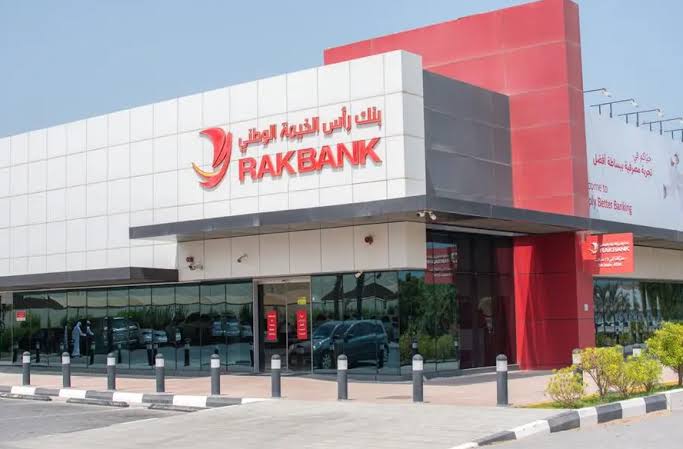
RAKBANK occupies an unusual position in the UAE financial system.
It does not have the enormous balance sheet of the country’s largest Abu Dhabi banks.
It does not carry the international brand recognition of some Dubai institutions.
Its home Emirate, Ras Al Khaimah, is much smaller than Abu Dhabi or Dubai.
Yet RAKBANK has developed one of the UAE’s most distinctive banking franchises.
For years, the bank became particularly associated with entrepreneurs, small businesses and retail customers.
More recently, it has expanded aggressively into wholesale banking, wealth management, digital assets, artificial intelligence and increasingly sophisticated financial services.
The result is a bank attempting to combine two identities.
It wants to remain the accessible institution serving SMEs and ordinary customers.
At the same time, it is building the technology and balance-sheet capabilities expected from a much larger national financial platform.
The Bank Was Founded in 1976
The National Bank of Ras Al Khaimah was established in 1976.
The Government of Ras Al Khaimah remains its largest shareholder.
For much of its early history, the bank followed a relatively traditional commercial-banking model.
A major strategic change occurred around the beginning of the twenty-first century.
RAKBANK increasingly focused on retail customers and small businesses.
This created a differentiated position.
Many major banks concentrated heavily on large corporations and government-related entities.
RAKBANK became known for serving smaller customers more aggressively.
SMEs Became Part of the Bank’s Identity
Small and medium-sized enterprises form a huge part of the UAE economy.
Restaurants, trading companies, professional firms, technology startups and manufacturers often begin small.
Yet these companies can find banking frustrating.
They may not have long financial histories.
Their borrowing requirements are too small to attract traditional corporate bankers.
Credit analysis can be expensive relative to the size of the loan.
RAKBANK built capabilities around this segment.
That created customer relationships with businesses that might later become much larger.
More Than Banking Products Are Needed by Entrepreneurs
An entrepreneur needs an account.
But that is only the beginning.
Businesses require payment services.
They may need trade finance.
They need credit cards and working capital.
Companies importing goods may need foreign exchange.
As they grow, they require payroll, cash management and larger financing.
Serving SMEs successfully therefore creates opportunities across multiple products.
The bank can grow alongside the customer.
The SME Franchise Has Continued Expanding
RAKBANK has kept SME and business banking at the centre of its strategy even while expanding into other areas.
By H1 2026, Business Banking loans stood at approximately AED 11.4 billion.
Business deposits were even larger.
The bank has also continued opening large numbers of new SME accounts.
This base gives it exposure to the entrepreneurial side of the UAE economy.
When new companies form and existing businesses expand, RAKBANK can participate directly.
Ras Al Khaimah Itself Is Changing Rapidly
The home Emirate is becoming increasingly important economically.
Ras Al Khaimah is attracting manufacturing.
Tourism investment is expanding.
New resorts are under development.
Free-zone activity continues growing.
Property investment has accelerated.
This creates banking demand close to RAKBANK’s historical base.
A bank headquartered in the Emirate may benefit directly as its home economy becomes more internationally visible.
But RAKBANK Is No Longer a Regional Bank
Despite the name, RAKBANK operates across the UAE.
Customers in Dubai and Abu Dhabi form major parts of the franchise.
Its digital channels make geographic distinctions even less important.
A customer can open an account and complete transactions without thinking about where the bank is headquartered.
This is one of the biggest consequences of digital banking.
A smaller Emirate no longer limits the potential national customer base.
Assets Have Passed AED 100 Billion
RAKBANK crossed AED 100 billion in total assets during 2025.
By June 2026, assets had reached AED 108.6 billion.
That represented approximately 14 percent year-on-year growth.
Gross loans and advances increased 19 percent to AED 60.8 billion.
Customer deposits rose even faster, increasing 23 percent to AED 75.1 billion.
The bank therefore entered 2026 with a balance sheet substantially larger than only a few years earlier.
Wholesale Banking Is Now a Major Growth Engine
One of the most important strategic shifts has been the expansion of wholesale banking.
Corporate loans grew strongly.
By H1 2026, wholesale loans and advances had reached approximately AED 23.6 billion.
This reduces the bank’s historical dependence on retail and SME customers.
Large corporations can generate significant financing and transaction-banking revenue.
They also provide deposit relationships.
The challenge is entering this segment without losing the differentiated culture that made RAKBANK successful elsewhere.
Aviation Finance Shows the Change
RAKBANK has participated in aircraft financing transactions involving UAE airlines.
This would once have looked unusual for an institution associated mainly with retail and SME banking.
Aircraft finance involves large amounts of capital, international assets and sophisticated legal structures.
Participating in such transactions demonstrates how the wholesale platform is becoming more capable.
It also gives the bank exposure to one of the UAE’s most important industries.
Retail Banking Remains Strong
Personal banking still represents a major part of the loan book.
By mid-2026, personal-banking loans and advances had reached approximately AED 25.8 billion.
Mortgages have been an important source of growth.
The UAE’s strong property market creates opportunities as more residents decide to purchase homes.
Expatriate lending has also expanded.
Population growth therefore supports the retail business directly.
Credit Cards Have Become More Competitive
The UAE has an extremely competitive credit-card market.
Banks offer airline miles, cashback and lifestyle rewards.
Customers can switch relatively easily.
RAKBANK has expanded card acquisition aggressively.
Cards provide both transaction revenue and a way to deepen customer relationships.
They also generate valuable information about spending behaviour.
The challenge is controlling credit risk while attracting customers with competitive rewards.
Wealth Management Is Growing
The UAE is attracting increasing numbers of wealthy residents.
Entrepreneurs, professionals and international investors are relocating to the country.
These customers need investment products rather than only loans and accounts.
RAKBANK has expanded its wealth proposition to include funds, bonds, sukuk, commodities and other asset classes.
This is strategically useful because wealth management produces fee income.
It also allows the bank to retain customers as their financial needs become more sophisticated.
Crypto Has Become Part of the Product Offering
RAKBANK attracted significant attention by enabling cryptocurrency trading access through its mobile banking environment.
Customers can access a regulated third-party crypto platform while funding transactions in dirhams.
This was an unusual move for a conventional UAE bank.
The strategy reflects changing customer demand.
Some investors increasingly view digital assets as part of a broader portfolio.
Rather than forcing customers to move money away from the bank to access crypto, RAKBANK can keep the relationship closer.
The Bank Is Also Expanding Islamic Digital Services
RAKBANK operates Islamic-banking services alongside conventional products.
In 2026, its Islamic platform expanded access to digital-asset functionality as well.
This illustrates how rapidly financial categories are beginning to overlap.
Islamic banking, digital banking and crypto once appeared to belong to completely different parts of finance.
Institutions increasingly need to understand all three.
Selling the Merchant Acquiring Business Changed the Portfolio
In 2026, RAKBANK completed the sale of its merchant-acquiring business to Network International.
Merchant acquiring involves processing card payments for businesses.
The transaction produced an approximately AED 473 million gain.
Selling a successful business may appear counterintuitive.
But portfolio decisions depend on strategic priorities.
The bank can redeploy capital toward areas where it believes future returns will be stronger.
The Sale Boosted H1 Profit
RAKBANK reported profit before tax of approximately AED 1.9 billion in the first half of 2026.
Profit after tax reached around AED 1.7 billion, approximately 25 percent higher year-on-year.
Part of this performance came from the merchant-acquiring sale.
However, the underlying banking business also expanded strongly.
Operating income increased 22 percent to AED 3.1 billion.
This distinction is important.
Investors need to separate recurring earnings from one-off transaction gains.
Non-Interest Income Increased 58 Percent
One of the strongest developments was growth outside traditional lending margins.
Non-interest income reached approximately AED 1.3 billion in H1 2026.
That was up 58 percent year-on-year.
Fees, foreign exchange, trading and the merchant-acquiring gain contributed.
Non-interest revenue represented more than 40 percent of total income.
A more diversified earnings mix reduces reliance on interest rates.
Net Interest Margin Remained Strong
RAKBANK reported a net interest margin of 3.9 percent during H1 2026.
Net interest margin measures the difference between what a bank earns on interest-producing assets and what it pays for funding.
A strong margin reflects loan pricing and funding economics.
RAKBANK benefits significantly from a large base of low-cost current and savings deposits.
These deposits represented around 64 percent of total customer funding.
Deposits Are Growing Faster Than Lending
Customer deposits rose 23 percent to AED 75.1 billion.
Gross lending grew 19 percent.
This is generally a healthy relationship.
Deposit growth provides funding for loan expansion.
It can reduce reliance on more expensive wholesale markets.
A granular deposit base also tends to be more stable than depending heavily on a small number of institutional funders.
The Balance Sheet Is Becoming More Diversified
RAKBANK’s assets increasingly span personal banking, SMEs, wholesale loans and investment securities.
This reduces concentration.
A downturn in one customer segment may be offset by another.
However, diversification also makes the organisation more complicated.
Risk systems need to understand mortgages, SME credit and large corporate exposures simultaneously.
The bank needs expertise across many industries.
Asset Quality Has Improved
The impaired-loan ratio declined to approximately 1.8 percent in H1 2026 from 2.1 percent a year earlier.
This is an important indicator.
Rapid loan growth can become dangerous if credit standards weaken.
RAKBANK has managed to expand lending while improving reported asset quality.
Stage 3 coverage stood at nearly 86 percent.
Strong provisioning provides an additional buffer against potential losses.
Capital Remains Strong
The capital adequacy ratio stood at approximately 19.3 percent.
Banks need capital because lending creates risk.
A borrower may fail to repay.
Financial markets can become volatile.
Capital absorbs losses and protects depositors.
A strong capital ratio also creates room for future expansion.
RAKBANK can grow its loan book without immediately requiring additional shareholder capital.
Return on Equity Reached 25 Percent
RAKBANK reported return on equity of 25.2 percent in H1 2026.
That is a high level for a mature bank.
Return on assets also reached approximately 3.2 percent.
These figures demonstrate the profitability of the franchise.
The challenge is maintaining returns once one-off gains are removed and interest rates continue evolving.
Sustainable profitability ultimately depends on the core businesses.
Cost Efficiency Improved Sharply
The bank’s cost-to-income ratio improved to 29.3 percent from 34.6 percent a year earlier.
This is particularly notable because RAKBANK continues investing heavily in technology.
A bank can spend more on AI and digital systems while still becoming more efficient if revenue grows faster and automation reduces other costs.
Efficiency becomes increasingly important as customers expect lower fees and faster service.
‘Digital With a Human Touch’ Defines the Strategy
RAKBANK frequently describes its strategy as being digital with a human touch.
The phrase reflects a real challenge.
Customers want efficient apps and automated processes.
But financial decisions can be complicated.
A small business owner may need advice.
A mortgage customer may have questions that do not fit a chatbot.
Wealth-management clients expect personal relationships.
The goal is therefore not to eliminate people.
It is to use technology for routine activity while keeping human expertise available where it adds value.
Digital Usage Has Exploded
RAKBANK recorded more than 34 million digital logins during H1 2026.
That was more than double the number from the comparable period a year earlier.
This shows how quickly customer behaviour is shifting.
Branches may still matter, but the mobile interface is becoming the main relationship for many customers.
Digital activity also creates more data.
The bank can understand behaviour more accurately and potentially personalise services.
Rai Shows How AI Is Entering Customer Service
The bank’s AI-powered assistant, Rai, has already handled more than one million customer conversations.
RAKBANK reported a very high positive-engagement rate.
AI assistants can answer routine questions instantly.
Customers do not need to wait for call-centre agents.
Employees can concentrate on more complicated issues.
The economic effect becomes meaningful when millions of interactions are automated.
AI Is Also Being Introduced Internally
RAKBANK has launched AI education programmes for employees.
This is important because AI transformation cannot happen only through the technology department.
Relationship managers, compliance employees and operational teams need to understand how new tools can support their work.
A workforce comfortable with AI may identify applications that management would never discover centrally.
Training therefore becomes part of technology strategy.
SME Banking Could Benefit Enormously From AI
Small-business lending traditionally requires significant manual analysis.
Financial statements may be limited.
Transaction histories can vary.
AI and data analytics may improve credit decisions.
A bank can analyse cash flows, payment behaviour and industry patterns more efficiently.
This could allow RAKBANK to lend to more SMEs without increasing risk proportionally.
Given its existing SME strength, this is particularly relevant.
The Bank Is Becoming More Nationally Important
RAKBANK was once easier to categorise as a smaller bank associated strongly with Ras Al Khaimah.
That description no longer fits comfortably.
Its assets exceed AED 100 billion.
It serves businesses across the UAE.
Its wholesale banking capabilities are expanding.
Its digital products compete nationally.
Its technology initiatives are increasingly ambitious.
The bank has grown into an institution of much broader economic significance.
Why RAKBANK Matters
RAKBANK shows how a relatively smaller UAE bank can compete without trying to become a copy of the country’s largest financial institutions.
It built a strong identity around SMEs and retail customers.
It is now adding wholesale banking, wealth management, digital assets and artificial intelligence.
The result is a more diversified business with AED 108.6 billion in assets and AED 75.1 billion in customer deposits.
H1 2026 produced record profits and a return on equity above 25 percent.
But the bank’s most interesting competitive advantage may still be cultural.
RAKBANK has spent years serving customers that larger institutions sometimes found too small or complicated.
Technology now gives it the opportunity to scale that relationship-driven model much further.
If it can remain accessible while becoming larger and more sophisticated, a bank from Ras Al Khaimah could continue becoming one of the UAE’s most interesting financial challengers.
Contributed by GuestPosts.biz.