The UAE may produce energy on land and offshore, but getting those products to customers around the world requires another enormous industry.
Ships need to transport crude oil, liquefied natural gas and other energy products.
Offshore platforms require a constant flow of equipment, materials and personnel.
Ports need to operate safely.
Warehouses have to manage thousands of items.
Tankers need fuel, maintenance and specialist support.
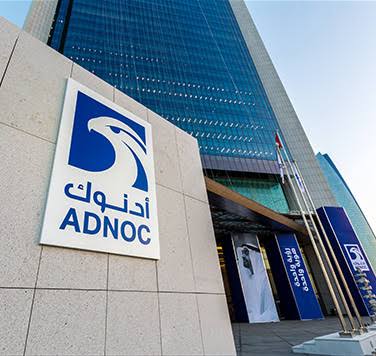
ADNOC Logistics & Services sits behind much of this activity.
The Abu Dhabi-based company has evolved from a domestic support operation into one of the world’s largest integrated maritime logistics platforms for the energy industry.
Its growth provides a useful reminder that energy production is only one part of the value chain.
Moving energy reliably can be just as strategically important as producing it.
Energy Has to Move Before It Can Create Value
An oilfield may produce millions of barrels, but those barrels only become useful to an international customer once they reach a refinery or trading hub.
The same is true for LNG.
Natural gas can be liquefied in Abu Dhabi, but specialised ships are needed to transport it thousands of kilometres.
Offshore production adds another layer of complexity.
Workers need transportation.
Drilling equipment must reach platforms.
Replacement parts, food, fuel and supplies all need to move continuously.
Maritime logistics therefore connects production with the wider global economy.
ADNOC L&S operates directly inside this connection.
The Business Is Much Broader Than Shipping
It would be easy to describe ADNOC L&S simply as a shipping company.
That would miss much of the business.
The group operates through integrated logistics, shipping and marine services.
Its activities include offshore support, warehousing, material handling, port operations, tankers, LNG carriers, bulk shipping and specialist environmental response.
This creates a business model that stretches from an oilfield supply base in Abu Dhabi to an energy cargo moving across an international shipping route.
That breadth is strategically valuable.
A customer can use several services within one integrated platform rather than coordinating dozens of separate providers.
The Fleet Has Become Enormous
ADNOC L&S now operates, owns or charters hundreds of vessels across its global network.
Its fleet includes LNG carriers, crude tankers, gas carriers, offshore support vessels and other specialised ships.
Scale is important in maritime logistics.
A large fleet allows the company to serve several routes and customers simultaneously.
Ships can be deployed according to market conditions.
Maintenance schedules become easier to manage without leaving customers without capacity.
Purchasing power also improves.
The company can negotiate shipbuilding and operational contracts from a much stronger position.
LNG Is Driving a Major Fleet Expansion
Liquefied natural gas is becoming particularly important.
Global LNG demand is expected to remain significant as countries seek flexible energy supplies and diversify away from dependence on single pipeline sources.
The UAE is increasing its own LNG ambitions.
ADNOC L&S therefore needs ships capable of carrying this additional production.
During 2026, the company continued receiving new 175,000-cubic-metre LNG carriers ordered several years earlier.
These vessels are considerably more efficient than older generations and are designed to reduce methane emissions.
The investment illustrates an important principle.
Shipping capacity has to be ordered years before it is needed.
New LNG Carriers Require Enormous Capital
A modern LNG carrier is an extremely sophisticated vessel.
The cargo must remain at temperatures around minus 162 degrees Celsius.
Specialised containment systems are required.
Safety standards are exceptionally strict.
Propulsion and emissions performance also matter increasingly.
In July 2026, ADNOC L&S placed another order for four next-generation LNG carriers worth approximately $900 million.
Delivery is expected in 2029.
This means capital decisions being made today are based on energy demand expected several years into the future.
Crude Shipping Is Expanding Too
LNG is only part of the strategy.
In August 2026, ADNOC L&S announced the acquisition of six Very Large Crude Carriers and five Very Large Gas Carriers for approximately $1.3 billion.
The acquisition rapidly increases shipping capacity rather than waiting years for every vessel to be constructed.
Very Large Crude Carriers, commonly called VLCCs, are among the largest ships in global energy transportation.
They can move enormous quantities of crude across international routes.
Adding several at once materially changes the scale of a shipping platform.
Acquiring Existing Ships Can Accelerate Growth
Newbuild vessels offer efficiency and modern technology, but they require long construction periods.
Buying existing vessels provides another option.
Ships purchased on the secondary market can enter service much more quickly.
ADNOC L&S is using both approaches.
Some vessels are acquired from existing owners.
Others are ordered directly from shipyards.
This balance gives the company immediate capacity while also modernising the fleet over the longer term.
The Navig8 Acquisition Changed the International Business
One of the most important strategic moves was the acquisition of a controlling interest in Navig8.
Navig8 operates globally across commercial shipping pools, ship management and bunkering.
This gave ADNOC L&S something that is difficult to build quickly: an established international shipping platform with customers, vessels, systems and commercial expertise already in place.
The acquisition significantly increased geographic diversification.
ADNOC L&S could move beyond supporting mainly ADNOC-related cargoes and participate more broadly in global shipping markets.
Bunkering Adds Another Layer
Ships themselves need fuel.
Navig8’s Integr8 business participates in marine fuel supply.
This gives ADNOC L&S exposure to another part of the shipping ecosystem.
Bunkering can generate revenue even when the company does not own the ship being fuelled.
It also strengthens customer relationships.
A maritime group capable of providing shipping, ship management, logistics and marine fuel becomes increasingly integrated into the customer’s operations.
Integrated Logistics Supports Offshore Energy
Shipping attracts attention because the vessels are large and visible.
Integrated offshore logistics may be equally important.
ADNOC L&S transports personnel, equipment and supplies needed to maintain energy production.
Its logistics bases, warehouses and marine fleets support offshore operations across Abu Dhabi.
These services need to function continuously.
An offshore platform cannot simply pause production for several days because a replacement component has not arrived.
Reliability becomes critical.
The Integrated Logistics Services Platform Uses Technology
The company has developed an Integrated Logistics Services Platform designed to coordinate complex offshore logistics through a digital interface.
This is significant because logistics is fundamentally an optimisation problem.
Many vessels, warehouses, cargoes and destinations need to be coordinated simultaneously.
Poor scheduling leads to idle ships and delayed equipment.
Digital systems can improve planning, vessel utilisation and inventory movement.
The value comes not only from owning more ships but from using existing assets more intelligently.
Data Can Reduce Empty Journeys
An offshore support vessel costs money whether it is carrying cargo or travelling empty.
The same principle applies throughout logistics.
Technology can analyse planned movements and combine loads more efficiently.
Routes can be optimised.
Departure times can be coordinated.
Warehouses can anticipate what offshore facilities will need.
Reducing unnecessary trips can lower both costs and emissions.
At fleet scale, these improvements can become financially significant.
Port Operations Form Another Strategic Business
ADNOC L&S operates important petroleum marine terminals.
These include facilities connected to Abu Dhabi’s energy exports.
Port operations involve vessel coordination, towing, mooring, pilot services and numerous safety activities.
The company holds the licence to service all petroleum ports in Abu Dhabi.
This creates a strategically important position.
Ports are critical nodes in the energy supply chain.
A disruption at the export terminal can affect shipments even when production facilities themselves are operating normally.
The New TA’ZIZ Chemicals Port Expands the Opportunity
ADNOC and its partners are building the TA’ZIZ industrial chemicals zone at Ruwais.
The project is intended to expand the UAE’s chemical manufacturing capabilities.
ADNOC L&S signed a long-term agreement to establish and operate a dedicated chemicals port for the development.
This is a natural extension of the business.
Petrochemical and chemical plants require specialised logistics infrastructure.
Products need to be loaded safely and transported internationally.
A dedicated port creates another long-term revenue opportunity linked to the UAE’s industrial diversification.
Aluminium Creates Another Supply-Chain Opportunity
In 2026, ADNOC L&S and Emirates Global Aluminium agreed to explore deeper logistics cooperation.
EGA is one of the UAE’s largest industrial companies and a major global aluminium producer.
The aluminium supply chain involves raw materials, finished metal and international shipping.
A potential logistics partnership could give ADNOC L&S exposure to cargo beyond traditional oil and gas.
This is strategically important.
The company can use capabilities built for the energy sector to support other large industrial customers.
Diversification Reduces Dependence on One Cargo
A company serving only crude exports would be highly exposed to one energy market.
ADNOC L&S is becoming much broader.
It transports LNG.
It transports crude.
It provides offshore logistics.
It operates marine terminals.
It supplies marine fuel.
It manages vessels.
It is exploring industrial logistics beyond energy.
Each new activity reduces reliance on a single revenue stream.
This diversification can make the overall company more resilient.
International Operations Are Growing Rapidly
ADNOC L&S now serves more than 100 customers across over 50 countries.
That international reach changes the company’s identity.
Its historic relationship with ADNOC remains central, but it increasingly competes for business globally.
International customers may not care that the company originated as part of Abu Dhabi’s energy system.
They care about price, reliability, fleet quality and operational performance.
This forces ADNOC L&S to compete according to global commercial standards.
Long-Term ADNOC Contracts Provide a Strong Foundation
The company’s relationship with ADNOC still provides a significant advantage.
Long-term contracts create revenue visibility.
Ships ordered for specific cargo programmes can be deployed against predictable demand.
Integrated logistics contracts provide ongoing activity.
This is different from a shipping company relying entirely on volatile spot markets.
Contracted earnings can provide stability while the international commercial business adds growth opportunities.
Shipping Rates Can Still Create Upside
Contracted revenue does not completely isolate the company from shipping markets.
Some vessels and commercial activities benefit when market rates rise.
Shipping prices can move dramatically when global supply chains become disrupted.
Limited vessel availability can increase rates quickly.
This introduces a cyclical element to earnings.
A diversified fleet allows ADNOC L&S to participate in attractive market conditions while still maintaining a base of long-term contracts.
Q2 2026 Demonstrated the Earnings Potential
The company’s second-quarter 2026 results were unusually strong.
EBITDA reached approximately $1.1 billion.
Quarterly net profit rose to $951 million.
The results benefited from strong shipping activities and services connected with moving UAE energy into global markets.
These numbers demonstrate how valuable maritime logistics can become when fleet capacity, shipping rates and customer demand align.
Regional Disruption Also Revealed the Risks
Shipping through the Middle East carries geopolitical risk.
Important maritime routes such as the Strait of Hormuz are essential to global energy trade.
Disruptions can affect vessel movements, insurance costs and schedules.
ADNOC L&S experienced serious regional operating challenges during 2026.
Yet diversified routes and international operations helped support performance.
This highlights why resilience is strategically important.
A logistics company needs contingency plans for events it cannot control.
Supply-Chain Resilience Has Become More Valuable
The pandemic, geopolitical conflict and shipping disruptions have changed how companies think about logistics.
For many years, supply chains were optimised mainly for low cost.
Businesses increasingly value resilience as well.
Alternative routes, spare capacity and flexible fleets may appear inefficient during normal periods.
During a disruption, they can become extremely valuable.
ADNOC L&S is investing in scale partly because global customers increasingly want dependable access to transportation capacity.
Environmental Performance Is Becoming a Commercial Requirement
Shipping is under increasing pressure to reduce emissions.
Large vessels consume enormous amounts of fuel.
International regulations are gradually becoming more demanding.
Customers are also setting their own carbon targets.
Newer ships can use more efficient propulsion systems and reduce emissions per tonne of cargo transported.
ADNOC L&S’s fleet-renewal programme therefore has both environmental and economic benefits.
More efficient vessels consume less fuel.
Alternative Marine Fuels Could Change Shipping
The long-term future of maritime fuel is still uncertain.
LNG, methanol, ammonia, biofuels and other technologies are being explored.
No single solution has won.
Ships also remain in operation for decades.
This creates a difficult investment decision.
A vessel ordered today may still be operating in the 2040s.
Fleet owners need to choose technology that remains economically useful while regulation continues changing.
ADNOC L&S will have to manage this transition carefully.
Scale Creates a Financing Advantage
Ships require enormous amounts of capital.
A single expansion programme can cost billions of dollars.
Large publicly listed groups can generally access financing more easily than smaller operators.
ADNOC L&S also benefits from strong cash generation.
This gives it flexibility to purchase vessels when opportunities appear.
The 2026 acquisitions demonstrate how quickly the company can deploy capital when it identifies attractive capacity.
The Business Connects Directly to the UAE’s Export Strategy
The UAE is increasing production, LNG exports, chemicals manufacturing and other industrial activities.
All of this creates logistics demand.
ADNOC L&S therefore benefits from investment happening elsewhere in the national economy.
A new gas project can require LNG carriers.
A new chemical complex requires port services.
Higher offshore production requires more supply vessels.
Industrial exports need shipping capacity.
The logistics company effectively grows alongside the wider Abu Dhabi industrial ecosystem.
Why ADNOC Logistics & Services Matters
ADNOC L&S is a useful example of how the UAE is moving deeper into global value chains.
The country does not simply want to produce energy and hand responsibility to foreign shipping companies.
It increasingly wants to control more of the transportation, logistics and services surrounding those exports.
That creates additional revenue, expertise and international reach.
ADNOC L&S now combines hundreds of vessels, offshore logistics, international shipping, marine services, terminals and technology into one platform.
The company is investing billions more to expand.
As the UAE sends increasing volumes of energy and industrial products to customers around the world, ADNOC L&S is becoming the maritime system responsible for making sure those products actually arrive.
Contributed by GuestPosts.biz.