Banking growth can happen in two ways.
A bank can gradually attract more customers, increase lending and open new services.
Or it can transform itself through consolidation.
Abu Dhabi Commercial Bank has experienced both.
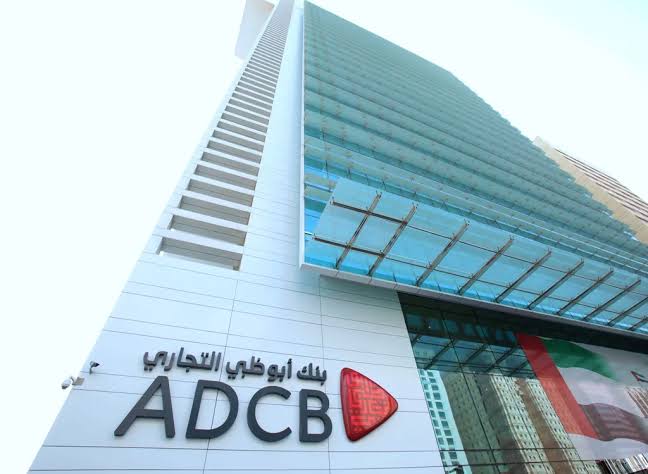
ADCB has developed from a major domestic lender into one of the UAE’s largest banking groups, supported by mergers, digital investment and expanding relationships with corporations and individuals.
Its development reflects a broader trend in Abu Dhabi.
As the Emirate’s economy becomes larger and more internationally connected, its financial institutions are becoming larger and more sophisticated as well.
Consolidation Created a Much Larger Bank
An important moment came through the combination of ADCB and Union National Bank, together with the acquisition of Al Hilal Bank.
The transaction created a banking group with substantially greater scale.
Consolidation can produce several advantages.
Duplicate systems can be reduced.
Technology investment can be spread across a much larger customer base.
The combined institution gains additional deposits and lending capacity.
Most importantly, a larger balance sheet allows the bank to support much bigger corporate transactions.
This matters in Abu Dhabi, where projects in infrastructure, real estate, energy and industry can require billions of dirhams of financing.
ADCB Has Become One of the UAE’s Largest Financial Institutions
The group’s balance sheet now places it among the country’s major banks.
Its loan portfolio has grown strongly while customer deposits have expanded alongside it.
This scale provides access to several different types of business.
ADCB can serve an individual opening a salary account while simultaneously financing major companies and government-related organisations.
These activities may appear completely different, but they are connected through the bank’s balance sheet.
Deposits provide funding.
That funding supports lending.
Interest and fees generate revenue.
Twenty Consecutive Quarters of Profit Growth Show Momentum
By the second quarter of 2026, ADCB reported twenty consecutive quarters of year-on-year profit growth.
First-half profit before tax reached AED 7.607 billion.
This track record is significant because banking profits move through changing interest-rate and economic environments.
Consistent growth suggests the group has benefited from more than one temporary market condition.
Loan expansion, fee income, digitalisation and efficiency have all contributed.
Loan Growth Connects ADCB Directly to the Economy
Banks expand their loan books when households and businesses borrow.
A company may need financing to construct a factory.
A developer may fund a property project.
An individual may obtain a mortgage.
Each loan therefore represents economic activity somewhere else.
ADCB has reported strong growth in customer lending.
The quality of that growth is just as important as the size.
Banks must expand without lowering credit standards to dangerous levels.
The challenge is always balancing growth with risk.
Deposits Are the Other Half of the Equation
Loans receive more attention, but deposits are fundamental to banking.
Customer deposits provide a relatively stable source of funding.
ADCB has continued attracting substantial deposit inflows.
Current and savings accounts are particularly valuable because they usually cost banks less than wholesale funding.
Strong deposits therefore support both liquidity and profitability.
A bank able to build long-term customer relationships has an advantage because deposits often remain within the institution even as individual financial needs change.
Digital Banking Is Transforming the Customer Relationship
Banking branches still matter, but most everyday transactions increasingly occur digitally.
Customers expect to transfer money immediately.
They want to freeze a card, update personal information or apply for products from a smartphone.
This creates enormous pressure on traditional institutions.
A poorly designed app can damage the experience even when the underlying bank is financially strong.
ADCB has invested heavily in digital banking to respond to these expectations.
Technology is no longer an optional support function.
It is one of the main ways customers interact with the bank.
Hayyak Changed the Account-Opening Experience
ADCB’s Hayyak platform was one of the bank’s notable moves toward digital customer acquisition.
Instead of requiring a potential customer to complete an entirely branch-based process, digital onboarding reduces friction.
This is particularly important in the UAE.
Large numbers of professionals arrive in the country every year.
They need accounts quickly after beginning employment.
The easier a bank makes the process, the greater its opportunity to establish the relationship early.
That first account can later develop into cards, loans, mortgages and investment products.
AI Could Make Banking More Personal
Artificial intelligence creates another opportunity.
Banks possess large quantities of transaction and behavioural data.
Used responsibly, this information can help identify fraud, understand customer needs and improve service.
AI can help employees analyse documents or answer questions more quickly.
It can also improve risk models.
The challenge is maintaining privacy and appropriate human oversight.
Financial institutions handle some of the most sensitive data customers possess.
Innovation therefore has to occur within strong security and governance frameworks.
Corporate Banking Connects ADCB to Major UAE Projects
ADCB’s role in corporate finance makes it part of Abu Dhabi’s broader economic development.
Large companies need working capital, project finance, trade facilities and cash-management services.
Infrastructure developments can require complex long-term financing.
The bank’s balance sheet gives it the ability to support these activities.
As Abu Dhabi diversifies into advanced manufacturing, tourism, technology and renewable energy, corporate lenders gain new sectors to finance.
This creates growth beyond traditional oil-related activity.
Real Estate Remains Important
Property is one of the UAE’s largest economic sectors.
Banks interact with it from several directions.
Developers need financing.
Homebuyers need mortgages.
Investors may borrow against property.
Construction companies require working capital.
This makes careful property exposure management particularly important.
Periods of strong demand create opportunities, but banking history around the world demonstrates that excessive property lending can create risk.
Large UAE banks therefore need disciplined underwriting even during strong market cycles.
A Collaboration With Emaar Shows How Banking Can Integrate With Property
In 2026, ADCB and Emaar Development announced a strategic collaboration intended to improve the home-buying and financing experience.
This illustrates how financial institutions can integrate more closely with other sectors.
Instead of requiring customers to navigate property purchase and mortgage arrangements completely separately, partnerships can make the process more seamless.
Digital integration may eventually reduce paperwork and approval times significantly.
For the bank, this creates access to customers at the exact moment they require financing.
Islamic Banking Broadens the Group
Al Hilal Bank provides ADCB with a dedicated Islamic banking platform.
Islamic finance is particularly significant in the UAE and across the wider Muslim world.
Customers may seek financing structures consistent with Sharia principles.
Businesses also use Islamic funding.
Sukuk provide an alternative to conventional bonds.
Maintaining both conventional and Islamic capabilities therefore expands the potential customer base.
It also positions ADCB within one of the region’s most important financial specialisations.
International Operations Provide Another Growth Route
ADCB’s activities extend outside the UAE.
The group has operations in markets including Egypt and Kazakhstan.
International expansion diversifies geographic exposure and provides access to larger customer populations.
However, it also adds complexity.
Currencies fluctuate.
Regulatory systems differ.
Economic conditions vary significantly between markets.
Banks therefore need strong local expertise while maintaining group-wide risk controls.
Egypt Offers Significant Long-Term Potential
Egypt is one of the Arab world’s largest markets by population.
Its banking penetration and economic scale create opportunities unavailable in the much smaller UAE domestic market.
For Gulf banks, expanding into Egypt can provide access to millions of additional customers and businesses.
The risks are different, but so is the potential.
A successful international subsidiary can eventually become a major source of earnings diversification.
Capital Strength Determines How Quickly a Bank Can Grow
Banks cannot simply lend without limits.
Regulations require them to maintain sufficient capital to absorb potential losses.
ADCB completed a substantial rights issue in late 2025.
Additional shareholder capital strengthens the balance sheet and can support future growth.
For investors, raising capital may initially appear less exciting than paying dividends.
But if that capital is deployed into profitable lending and business expansion, it can create long-term value.
Efficiency Has Become a Major Competitive Advantage
Digital banking should not only improve customer convenience.
It can also reduce operating costs.
Automated processes require less manual handling.
Customers conducting transactions through mobile platforms reduce pressure on branches.
AI can make internal operations more efficient.
ADCB’s cost-to-income ratio has improved as revenue growth and operational efficiency have combined.
For large banks, even small percentage improvements can translate into hundreds of millions of dirhams.
The UAE’s Population Growth Creates Retail Opportunities
More people living in the country means more potential banking customers.
New residents need salary accounts.
Families may eventually need mortgages.
Consumers use cards and personal finance.
Entrepreneurs open businesses.
Wealthier residents require investment services.
The UAE’s continued ability to attract talent therefore benefits banks directly.
Population growth expands the financial-services market without institutions necessarily needing to enter another country.
Wealth Management Could Become Increasingly Important
Abu Dhabi and Dubai are attracting growing numbers of wealthy individuals and family offices.
These customers require more complex services than traditional retail banking.
They may own assets across several countries.
They need investment management, international financing and succession planning.
Large banks with global networks can compete for this business.
ADCB’s expanding capabilities give it an opportunity to participate in the UAE’s rise as a wealth-management centre.
Sustainable Finance Creates New Lending Markets
The energy transition requires enormous amounts of capital.
Renewable power projects, efficient buildings, lower-carbon industrial infrastructure and cleaner transportation all need financing.
Banks therefore play an important role in sustainability.
They determine which projects can access capital and under what conditions.
For ADCB, sustainable finance is both a responsibility and a commercial opportunity.
The UAE’s net-zero ambitions could create decades of investment demand.
Why ADCB Matters
ADCB demonstrates how banking consolidation can create a more powerful financial institution.
Its enlarged balance sheet allows it to support individuals, corporations and major projects.
Digital platforms are transforming how customers interact with the bank.
International operations create another source of growth.
Islamic banking broadens the group’s reach.
At the same time, the institution remains closely connected to the economic development of Abu Dhabi and the wider UAE.
As the country builds larger companies, more complex industries and increasingly global investment platforms, it needs banks capable of growing with them.
ADCB has positioned itself to be one of those banks.
Contributed by GuestPosts.biz.