Few industries are as important to everyday life yet as invisible to most consumers as fertilizer.
A supermarket may appear completely disconnected from a chemical plant.
In reality, modern agriculture depends heavily on nitrogen fertilizers that increase crop yields.
Without them, feeding billions of people would become far more difficult.
Fertiglobe sits near the centre of this global system.
Headquartered in Abu Dhabi, the company has developed into the largest nitrogen fertilizer producer in the Middle East and North Africa and one of the world’s largest seaborne exporters of urea and ammonia.
Its importance extends beyond agriculture.
Ammonia is also emerging as a potential lower-carbon energy carrier and industrial fuel.
That gives Fertiglobe an unusual strategic position.
The same production expertise that supports global food systems today may also participate in the energy transition tomorrow.
Nitrogen Is Essential to Plant Growth
Plants require nitrogen to grow.
Although nitrogen makes up most of the Earth’s atmosphere, plants cannot simply absorb atmospheric nitrogen efficiently in its natural form.
Industrial processes convert nitrogen into ammonia.
That ammonia can then be used to manufacture fertilizers such as urea.
This process transformed agriculture during the twentieth century.
Crop yields increased dramatically.
Land could produce much more food.
Nitrogen fertilizer became one of the foundations of modern food security.
Fertiglobe operates at this critical point in the agricultural value chain.
Urea Is One of the World’s Most Important Fertilizers
Urea contains a high concentration of nitrogen.
It can be transported relatively efficiently and applied across many crops.
This has made it one of the most widely traded fertilizers globally.
Farmers purchase urea according to crop cycles, commodity prices and local conditions.
Demand therefore connects Fertiglobe directly with agricultural economics.
When crop prices are strong, farmers have greater incentive to maximise yields.
When fertilizer prices become too high relative to crop values, demand can weaken.
The market constantly balances these forces.
Fertiglobe Operates Across Three Countries
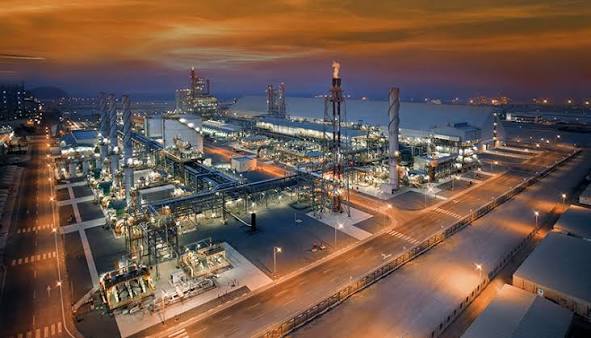
The company has four major production facilities in the UAE, Egypt and Algeria.
Fertil operates in Ruwais, Abu Dhabi.
EFC and EBIC operate in Egypt.
Sorfert operates in Algeria.
Together, these facilities provide annual capacity of approximately 6.6 million tonnes of sellable urea and merchant ammonia.
Geographic diversification is a major advantage.
The plants do not depend on one country’s operating conditions or one export route.
Location Provides a Logistics Advantage
The production facilities sit near important ports across the Arabian Gulf, Red Sea and Mediterranean.
This gives Fertiglobe access to major agricultural markets across Europe, Africa, Asia, Australia and the Americas.
Shipping costs matter greatly in fertilizer.
The product is bulky and relatively expensive to transport.
A plant located closer to customers can therefore enjoy a meaningful competitive advantage.
Fertiglobe’s geographic footprint places it near several major trade corridors.
Natural Gas Is the Critical Input
Ammonia production depends heavily on natural gas under conventional production methods.
Gas provides both feedstock and energy.
This means fertilizer economics are strongly linked to energy prices.
A producer with secure and competitively priced gas can operate lower on the global cost curve.
Fertiglobe’s facilities benefit from long-term gas supply arrangements.
This creates an important advantage compared with producers exposed directly to volatile spot gas prices.
European Gas Prices Can Reshape the Fertilizer Market
Europe has historically been an important fertilizer-producing region.
But high natural-gas prices can make European ammonia and urea plants expensive to operate.
When European production declines, imported fertilizer becomes more important.
Lower-cost producers in the Middle East and North Africa can benefit.
This demonstrates how energy markets and food markets are closely connected.
A change in natural-gas prices can eventually influence the cost of producing wheat or corn thousands of kilometres away.
Food Security Gives Fertilizer Strategic Importance
Governments became much more aware of food-security vulnerabilities following pandemic disruptions and geopolitical conflicts.
Countries want reliable access to fertilizer because agricultural production depends on it.
A shortage can reduce yields.
Lower yields can increase food prices.
This gives companies such as Fertiglobe strategic importance beyond ordinary industrial manufacturing.
Fertilizer supply can influence inflation, political stability and food availability.
Trading Provides Flexibility Beyond Own Production
Fertiglobe does not rely only on selling products from its own factories.
The company also maintains a trading platform.
Trading allows it to source third-party product and supply customers according to market conditions.
This provides additional flexibility.
If one plant experiences disruption, the trading business can help maintain customer supply.
It can also capture pricing opportunities between regions.
A large global trading network becomes increasingly valuable during volatile markets.
2026 Demonstrated the Value of Geographic Diversification
The first half of 2026 included significant regional logistics challenges.
Export shipments from the UAE faced disruption.
However, Fertiglobe’s plants in Egypt and Algeria continued performing strongly.
The company redirected volumes and used its trading and logistics network to maintain customer supply.
This demonstrated why geographic diversification matters.
A company dependent entirely on one production site would have had far fewer options.
Utilisation Reached 92 Percent Across the Platform
Despite the disruption, Fertiglobe reported urea utilisation rates of approximately 92 percent across its platform in H1 2026.
Operations in Egypt and Algeria performed particularly strongly.
High utilisation is essential in chemical manufacturing.
Plants have enormous fixed costs.
When production is low, those costs are spread over fewer tonnes.
When facilities operate close to capacity, unit economics improve.
Reliability therefore becomes one of the biggest drivers of profitability.
The Manufacturing Improvement Plan Is Raising Performance
Fertiglobe has implemented a Manufacturing Improvement Plan designed to improve plant reliability and production.
The programme focuses on operational efficiency, maintenance and other measures capable of increasing output.
In heavy industry, small improvements can create substantial value.
A one-percent increase in utilisation across a plant producing millions of tonnes can generate significant additional volumes without building an entirely new facility.
This makes operational improvement one of the cheapest forms of growth.
H1 2026 Revenue Reached $2 Billion
Fertiglobe reported $2.0 billion in revenue for the first half of 2026.
That represented year-on-year growth of 59 percent.
Adjusted EBITDA increased 63 percent to $713 million.
Adjusted net profit attributable to shareholders reached $289 million, more than tripling from the previous year.
The results reflected stronger pricing, strong operating performance and the company’s ability to navigate logistics disruption.
Q2 Was Particularly Strong
Second-quarter revenue reached approximately $1.1 billion.
Adjusted EBITDA rose to $371 million, more than double the previous year’s level.
Adjusted attributable net profit reached $145 million.
These results demonstrate how sensitive fertilizer earnings can be to market conditions.
Strong product pricing combined with high plant utilisation can increase profitability very quickly.
The reverse is also true during weak fertilizer cycles.
Urea Prices Can Move Dramatically
Fertilizer prices respond to several variables.
Natural-gas costs influence production.
Crop prices influence farmer affordability.
Government export policies affect supply.
Plant shutdowns can tighten markets.
Shipping disruption changes regional availability.
In 2026, urea prices experienced major swings.
This volatility creates both opportunity and risk.
Fertiglobe cannot control global market prices.
Its competitive advantage comes from producing efficiently and maintaining flexibility when conditions change.
Agricultural Commodity Prices Matter Too
Farmers do not evaluate fertilizer cost in isolation.
They compare fertilizer prices with the expected value of crops.
If wheat or corn prices rise, farmers may be willing to pay more for fertilizer because higher yields become more valuable.
This relationship is called affordability.
Fertiglobe monitors agricultural economics closely because strong farmer affordability generally supports fertilizer demand.
The business therefore connects chemical manufacturing directly with farm profitability.
Ammonia Is More Than a Fertilizer Input
Ammonia traditionally serves as the foundation for nitrogen fertilizer production.
But its future role could become much broader.
Ammonia can carry hydrogen.
It can potentially be used as a fuel in certain industrial and maritime applications.
It can also be transported using established infrastructure more easily than pure hydrogen in some circumstances.
This has created significant interest in low-carbon and renewable ammonia.
Fertiglobe is positioning itself to participate in this emerging market.
Low-Carbon Ammonia Could Create a New Industry
Conventional ammonia production generates significant carbon emissions.
Low-carbon production seeks to capture or reduce those emissions.
Renewable ammonia can potentially be produced using hydrogen generated from renewable electricity.
These technologies remain more expensive than conventional methods today.
But government climate policies and corporate decarbonisation targets could create increasing demand.
A company already producing and trading ammonia has useful experience if these markets scale.
Shipping May Become an Important Future Customer
The maritime industry is searching for lower-emission fuels.
Large ocean-going ships are difficult to electrify because batteries would be extremely heavy.
Ammonia is one of several fuels being explored as an alternative.
It contains no carbon in the molecule itself.
However, producing it cleanly and managing emissions during combustion remain challenges.
If ammonia-based shipping grows, fertilizer producers could eventually gain an entirely new category of customer.
Power Generation Creates Another Potential Market
Some countries are testing ammonia co-firing in power plants.
The idea is to use ammonia alongside conventional fuels to reduce carbon intensity.
The economics and environmental performance are still developing.
But the possibility demonstrates how the ammonia market could extend beyond agriculture.
Fertiglobe’s strategic value may therefore grow even if traditional fertilizer demand expands only gradually.
TA’ZIZ Could Strengthen the UAE’s Ammonia Position
Abu Dhabi is investing in major new chemicals projects through the TA’ZIZ industrial ecosystem.
Fertiglobe has been exploring partnerships related to low-carbon ammonia supply.
The UAE has several advantages in this field.
It possesses existing energy infrastructure.
It has access to natural gas.
It can deploy solar power at large scale.
It has established export ports.
This combination could help the country develop a significant low-carbon ammonia industry.
ADNOC and XRG Strengthen the Strategic Connection
Fertiglobe is backed by XRG, ADNOC’s international investment company.
This connects the business closely with Abu Dhabi’s broader energy and chemicals strategy.
The relationship provides potential access to resources, infrastructure and large-scale development opportunities.
It also reflects a shift in how traditional energy companies think about their future.
The strategy is not limited to oil.
Chemicals, low-carbon fuels and international energy investments are becoming increasingly important.
Grow 2030 Defines the Next Stage
Fertiglobe’s Grow 2030 strategy targets higher earnings through operational improvements, commercial optimisation and strategic growth projects.
The objective is to expand profitability without relying entirely on favourable commodity prices.
Improving plant utilisation is one part.
Trading optimisation is another.
Low-carbon ammonia and future investment projects could create longer-term growth.
This is important because fertilizer markets will always remain cyclical.
Structural improvement can make the company stronger across the cycle.
Debt Has Declined Significantly
At the end of June 2026, Fertiglobe reported net debt of $621 million.
This was down from approximately $1 billion at the end of 2025.
Net debt represented only around 0.5 times trailing adjusted EBITDA.
A strong balance sheet provides strategic flexibility.
The company can continue paying dividends while still investing in growth.
It also becomes better prepared for periods when fertilizer prices weaken.
Commodity businesses benefit enormously from conservative financial structures.
Dividends Are Central to the Investment Case
Fertiglobe proposed a minimum H1 2026 dividend of $150 million.
This represented an increase of more than 20 percent from the previous year.
Since its IPO, the company has returned billions of dollars to shareholders through dividends and other capital returns.
High cash distributions can make fertilizer companies attractive to income investors.
However, payouts need to remain balanced against future capital requirements.
The emerging low-carbon ammonia industry could eventually require substantial investment.
Share Buybacks Add Another Form of Capital Return
The company has also been executing a share-buyback programme.
Buybacks reduce the number of shares outstanding.
When undertaken at attractive valuations, they can increase the value of each remaining shareholder’s ownership.
They also give management another way to distribute excess capital.
Fertiglobe therefore combines dividends with buybacks as part of its shareholder-return strategy.
Fertilizer Demand Has Long-Term Support From Population Growth
The world population continues growing.
Urbanisation reduces the amount of agricultural land available in some regions.
Consumers in developing economies may shift toward more resource-intensive diets as incomes increase.
Farmers therefore need to produce more food from limited land.
Higher crop yields remain essential.
Nitrogen fertilizer is one of the most important tools available for achieving those yields.
This creates structural support for long-term demand.
Efficiency Will Become More Important in Agriculture
More fertilizer is not always better.
Excessive application can create environmental damage, including water pollution and greenhouse-gas emissions.
Agriculture increasingly needs to use nutrients more precisely.
Advanced farming techniques can apply fertilizer according to soil conditions and crop needs.
This could improve yields while reducing waste.
Fertilizer manufacturers may eventually need to provide more specialised products and services rather than simply selling bulk volume.
The Industry Needs to Reduce Its Own Emissions
Nitrogen fertilizer is essential for food production, but conventional ammonia manufacturing is carbon-intensive.
The industry therefore faces pressure from both sides.
It needs to supply more food while reducing emissions.
This challenge is central to Fertiglobe’s future.
Carbon capture, renewable hydrogen and more efficient plants could all contribute.
Companies that reduce emissions while remaining cost competitive may gain an advantage as customers increasingly consider carbon intensity.
Why Fertiglobe Matters
Fertiglobe sits at the intersection of three enormous global challenges.
The first is food security.
Billions of people depend indirectly on nitrogen fertilizers for affordable food.
The second is energy security.
Ammonia production depends on reliable energy supplies and global trade.
The third is decarbonisation.
Ammonia itself may become part of a lower-carbon energy system if cleaner production technologies develop successfully.
That combination makes Fertiglobe much more than an ordinary fertilizer producer.
Its four facilities currently produce millions of tonnes of essential agricultural inputs each year.
But the company’s future may increasingly involve supplying energy and industrial customers as well.
The same molecule helping grow crops today could eventually help power ships or carry low-carbon hydrogen around the world.
Contributed by GuestPosts.biz.