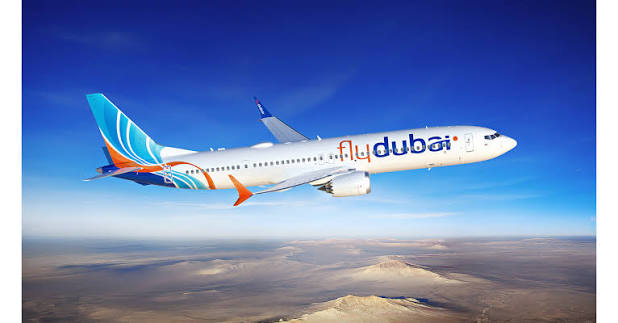
Dubai already had one of the world’s most successful international airlines when flydubai was created.
That raised an obvious question.
Why did the city need another carrier?
The answer became clearer over time.
Emirates was built primarily around large wide-body aircraft, major global cities and long-haul connections through Dubai.
flydubai pursued a different opportunity.
It used smaller Boeing 737 aircraft to connect Dubai with destinations that often could not support the capacity of a large wide-body jet.
Cities in Central Asia.
Regional capitals.
Secondary airports.
Emerging tourism destinations.
Markets across Africa, Eastern Europe, the Caucasus and South Asia.
The strategy created a complementary aviation network rather than simply a smaller version of Emirates.
By 2025, flydubai was carrying a record 15.7 million passengers, operating a fleet of 97 aircraft and serving 140 destinations.
It had become one of the most important airlines in Dubai’s aviation ecosystem.
flydubai Began Operations in 2009
The airline’s first commercial flight took place in 2009.
Its original concept was relatively straightforward.
Use efficient narrow-body aircraft.
Keep the operating model simpler than a traditional full-service airline.
Connect Dubai with underserved regional markets.
The airline could enter routes where passenger demand was insufficient for a large wide-body aircraft but still substantial enough for direct service.
That opened an enormous number of potential destinations.
Narrow-Body Aircraft Create Flexibility
flydubai has built its fleet primarily around the Boeing 737 family.
This standardisation provides several benefits.
Pilot training is simpler.
Maintenance teams work across related aircraft types.
Spare-parts inventories can be more efficient.
Aircraft can move between routes relatively easily.
Most importantly, the capacity is appropriate for many smaller markets.
A Boeing 737 does not need hundreds of passengers on every departure to make a route viable.
That allows flydubai to experiment with destinations a larger aircraft might make economically impossible.
The Airline Often Enters Markets Before Competitors
This willingness to serve less obvious destinations has become part of flydubai’s identity.
The airline has launched routes to cities that previously had limited or no direct connectivity with Dubai.
That can create an early-mover advantage.
A new direct route changes passenger behaviour.
Travellers who previously connected through another city may begin choosing Dubai instead.
Businesses gain easier access.
Tourism agencies can market direct travel.
Once demand develops, the route may become difficult for later competitors to displace.
Dubai’s Geography Makes the Model Powerful
A Boeing 737 based in Dubai can reach an enormous geographic area.
The Middle East is naturally close.
India, Pakistan and Central Asia are accessible.
Large parts of Eastern Europe and Africa fall within practical range.
Newer 737 variants extend that reach further.
This allows flydubai to connect a very diverse collection of markets using essentially one aircraft family.
Few locations provide such a broad potential network from a single hub.
The Network Reached 140 Destinations in 2025
flydubai ended 2025 with a network covering 140 destinations.
Passenger numbers reached 15.7 million.
The airline operated 126,604 flights during the year.
This scale demonstrates how far the original regional-airline concept has developed.
flydubai is no longer simply serving nearby Gulf cities.
Its network stretches across dozens of countries and several regions.
2026 Demonstrated the Importance of Flexibility
Regional disruption affected aviation significantly during 2026.
Airspace restrictions and route changes forced airlines to adjust operations.
flydubai temporarily operated reduced schedules and rerouted certain flights.
By September 2026, it had restored operations to approximately 85 percent of its network and was serving more than 125 destinations across 56 countries.
The ability to adjust capacity quickly is one advantage of operating a flexible narrow-body fleet.
Aircraft can be reassigned as conditions change.
The Emirates Partnership Changed the Network Economics
One of flydubai’s most important strategic developments has been its partnership with Emirates.
The two airlines remain separate companies with different fleets and operating models.
But passengers can connect between their networks.
This creates enormous additional value.
A flydubai passenger arriving from a smaller city can transfer in Dubai onto an Emirates long-haul flight.
An Emirates passenger arriving from North America or Australia can connect onto flydubai to reach a regional destination.
Each airline effectively expands the other’s network.
The Partnership Allows Different Aircraft to Serve Different Markets
Consider a smaller destination in Central Asia.
It may not generate enough passengers for an Emirates Boeing 777.
But it may easily support a flydubai Boeing 737.
flydubai brings those passengers to Dubai.
Some terminate their journey there.
Others transfer onto Emirates flights.
The combined system captures demand that neither airline would necessarily serve as efficiently alone.
This makes fleet differences strategically valuable rather than inconvenient.
Business Class Changed the Low-Cost Identity
flydubai was originally associated strongly with low-cost aviation.
Over time, that description became less accurate.
The airline introduced Business Class and continued upgrading the product.
Business Class demand increased 19 percent during 2025.
The carrier has invested in dedicated check-in facilities, lounges and upgraded cabins.
This creates a hybrid model.
flydubai retains many structural advantages of a narrow-body airline while targeting higher-yield premium passengers as well.
Premium Demand Can Transform Route Economics
A relatively small number of Business Class passengers can contribute disproportionately to revenue.
Corporate travellers may pay significantly more for flexibility and comfort.
Wealthier leisure passengers increasingly expect premium options even on shorter routes.
A route that looks only moderately attractive based on Economy fares can become much more profitable when strong premium demand exists.
This helps explain flydubai’s continued investment in Business Class.
New Business Suites Raise the Product Further
flydubai has introduced new premium seating on parts of its fleet, including suites designed to provide greater privacy.
This is unusual for an airline historically grouped with low-cost carriers.
The development reflects changing competition.
Passengers increasingly compare the product rather than the airline category.
If a narrow-body aircraft can offer flat-bed seating and premium service, the distinction between low-cost and full-service becomes less obvious.
The Airline Is Becoming a Hybrid Carrier
flydubai does not fit neatly into traditional aviation categories anymore.
It is not a classic European-style low-cost carrier where almost every element beyond the seat costs extra.
It is not a long-haul full-service carrier like Emirates.
It combines characteristics of both.
This hybrid structure allows management to adjust products according to route demand.
Some customers prioritise price.
Others are willing to pay significantly more for premium comfort.
Serving both broadens the revenue base.
2025 Revenue Reached AED 13.6 Billion
flydubai reported annual revenue of AED 13.6 billion for 2025.
That represented growth of 6 percent.
Profit before tax reached AED 2.2 billion.
Profit after tax stood at AED 1.9 billion.
EBITDA reached AED 4 billion.
These figures demonstrate strong profitability for an airline operating predominantly narrow-body aircraft.
The company also ended the year with AED 5.6 billion in cash assets, including pre-delivery payments.
Passenger Growth Was Accompanied by Capacity Growth
The airline increased available seat capacity by approximately 6 percent during 2025.
Passenger numbers rose to a record 15.7 million.
Growth was particularly strong across several geographic regions.
The Middle East recorded a substantial increase in traffic.
Africa and Europe also expanded.
This indicates that flydubai’s opportunity is not concentrated in one market.
Its network can benefit from several different travel flows simultaneously.
Cargo Adds Another Revenue Stream
flydubai carried approximately 60,400 tonnes of cargo during 2025.
Narrow-body aircraft have less cargo capacity than large wide-bodies, but belly freight still adds useful revenue.
Cargo can improve the economics of routes where passenger demand alone would be less attractive.
Time-sensitive goods, e-commerce shipments and commercial products can move alongside passenger baggage.
More destinations also increase the number of cargo markets flydubai can serve.
The Fleet Reached 97 Aircraft
At the end of 2025, flydubai operated 97 aircraft.
The average fleet age was only around 5.5 years.
A relatively young fleet can improve reliability and fuel efficiency.
Newer aircraft generally require less maintenance than older ones.
Cabins can also offer more modern products.
However, the airline’s growth has been affected by aircraft-delivery delays.
Fleet planning becomes difficult when manufacturers cannot deliver planes according to the original schedule.
Boeing Delivery Delays Have Constrained Growth
flydubai relies heavily on Boeing.
That creates simplicity but also supplier concentration.
When aircraft deliveries are delayed, planned routes may need to be postponed.
Existing planes must work harder.
Leasing alternative aircraft can become expensive.
The problem demonstrates the trade-off of fleet standardisation.
Using one main aircraft family improves efficiency, but disruptions at that manufacturer affect the entire growth plan more directly.
The Boeing 737 MAX Is Central to the Future
The newer 737 MAX family offers improved fuel efficiency and range compared with older generations.
Range is particularly important for flydubai.
Every additional kilometre allows the airline to consider destinations farther from Dubai while retaining narrow-body economics.
This expands the addressable network.
Markets that once required a larger aircraft may become viable using a lower-capacity 737.
A Wider Fleet Strategy Is Emerging
flydubai has also placed orders for Boeing 787 Dreamliners, marking an important strategic change.
Wide-body aircraft would allow the airline to operate longer routes and higher-capacity services.
This does not necessarily mean abandoning the narrow-body model.
Instead, a small wide-body fleet can expand the network into markets beyond the practical range of the 737.
It gives flydubai another growth option.
Wide-Bodies Could Blur the Line With Emirates
Adding 787s creates an interesting strategic question.
The more flydubai expands into long-haul flying and premium products, the closer its business may appear to Emirates.
The key will be network coordination.
If each carrier continues serving distinct demand while connecting passengers between them, the broader Dubai aviation system can benefit.
Poor coordination could instead create unnecessary overlap.
Underserved Markets Remain the Main Opportunity
flydubai’s greatest strength is still its willingness to fly where others do not.
Large network airlines tend to focus on major destinations.
That leaves hundreds of secondary cities with limited direct connectivity.
Economic growth in Central Asia, Africa and other emerging markets can make these destinations increasingly attractive.
Opening them early allows flydubai to build recognition before competition becomes intense.
Central Asia Has Become a Signature Market
The airline has built an extensive network across countries such as Kazakhstan, Uzbekistan and surrounding markets.
These economies have deepening business and tourism ties with the Gulf.
UAE investment in Central Asia is also increasing.
Direct air links support that economic relationship.
flydubai therefore benefits from broader geopolitical and commercial ties between the UAE and these countries.
Africa Provides Another Long-Term Growth Region
Africa’s population is expanding rapidly.
Air connectivity remains relatively limited in many markets.
Travel between African cities and the Gulf can therefore involve complicated connections.
Direct services create significant value.
flydubai has gradually expanded its African network.
The long-term opportunity could be substantial as incomes rise and aviation penetration increases.
South Asia Remains Fundamental
Millions of South Asian expatriates live in the Gulf.
India, Pakistan, Bangladesh and surrounding markets generate enormous visiting-friends-and-relatives demand.
Price matters heavily, but passengers also value frequency and direct service.
flydubai’s narrow-body economics fit this traffic particularly well.
The airline can serve secondary cities that may not justify larger aircraft.
Tourism Destinations Add Seasonal Opportunities
The airline also serves leisure markets.
Some destinations may have highly seasonal demand.
Narrow-body aircraft can be redeployed more easily when seasons change.
A route to a summer tourism destination may require more flights during one period and fewer later.
Fleet flexibility allows capacity to follow demand rather than remaining locked into one market year-round.
Technology Supports Revenue Management
Airlines continuously adjust ticket prices.
Demand changes according to booking date, holidays, events and competitor capacity.
Revenue-management systems analyse this information to determine how many seats should be sold at each fare.
AI can make these systems increasingly sophisticated.
For flydubai, better revenue management means extracting more value from the same aircraft.
Even a small increase in average revenue per seat can produce significant annual profit.
Technology Also Improves Operations
Aircraft scheduling is an enormous optimisation problem.
Planes need to rotate between routes.
Crews must be available.
Maintenance requirements have to be respected.
Delays can spread through the network.
AI and advanced analytics can improve planning.
Predictive maintenance may identify potential technical problems before an aircraft needs to be removed from service unexpectedly.
Operational reliability directly affects both costs and customer satisfaction.
On-Time Performance Improved in 2025
flydubai reported a 6 percent improvement in on-time departure performance during 2025.
This is significant.
Delays create costs.
Passengers miss connections.
Crews may exceed legal working hours.
Aircraft utilisation declines.
Baggage connections become more complicated.
Improving punctuality therefore has economic value far beyond customer convenience.
Fuel Represented 25 Percent of Operating Costs
Fuel accounted for approximately one-quarter of annual operating expenses in 2025.
That makes energy prices one of the airline’s biggest financial variables.
Newer aircraft reduce fuel consumption.
Efficient routing helps.
But market fuel prices remain outside management control.
Airlines therefore need enough profitability and cash reserves to absorb periods of expensive fuel.
The Workforce Has Expanded Alongside the Fleet
flydubai employed 6,763 people at the end of 2025.
Aircraft growth requires pilots, cabin crew, engineers and operational staff.
Training capacity therefore becomes a constraint.
The airline has invested in workforce development and aviation-training infrastructure.
This is essential because qualified pilots and engineers cannot be created instantly.
Growth plans need human-capital planning years in advance.
Dubai Benefits From Every New Route
The airline’s contribution extends beyond its own financial results.
A new destination sends tourists to Dubai.
It connects foreign companies with the city.
It makes property ownership more convenient for international residents.
It generates demand for airports, hotels and ground transportation.
flydubai therefore contributes to Dubai’s economy through connectivity in much the same way Emirates does, but often across different markets.
The Two-Airline System Is a Competitive Advantage
Many cities rely on one dominant national carrier.
Dubai effectively has two complementary network airlines.
Emirates specialises primarily in large international flows using wide-body aircraft.
flydubai can enter smaller or thinner markets with narrow-bodies.
Passengers can connect between both.
This gives Dubai an unusually dense range of destinations.
That connectivity strengthens the city as a business and tourism hub.
Why flydubai Matters
flydubai matters because it solved a problem Emirates was never designed to solve completely.
Not every market can fill a Boeing 777.
Not every destination needs an A380.
But hundreds of cities can support direct connectivity with Dubai using smaller aircraft.
flydubai built a business around those routes.
By 2025, it served 140 destinations, carried 15.7 million passengers and generated AED 13.6 billion in revenue.
Its Business Class is expanding.
Its fleet is approaching 100 aircraft.
Wide-body aircraft are planned for the future.
And its partnership with Emirates gives passengers access to a much larger combined global network.
The airline began by filling gaps.
Those gaps eventually became a global business.
Contributed by GuestPosts.biz.